
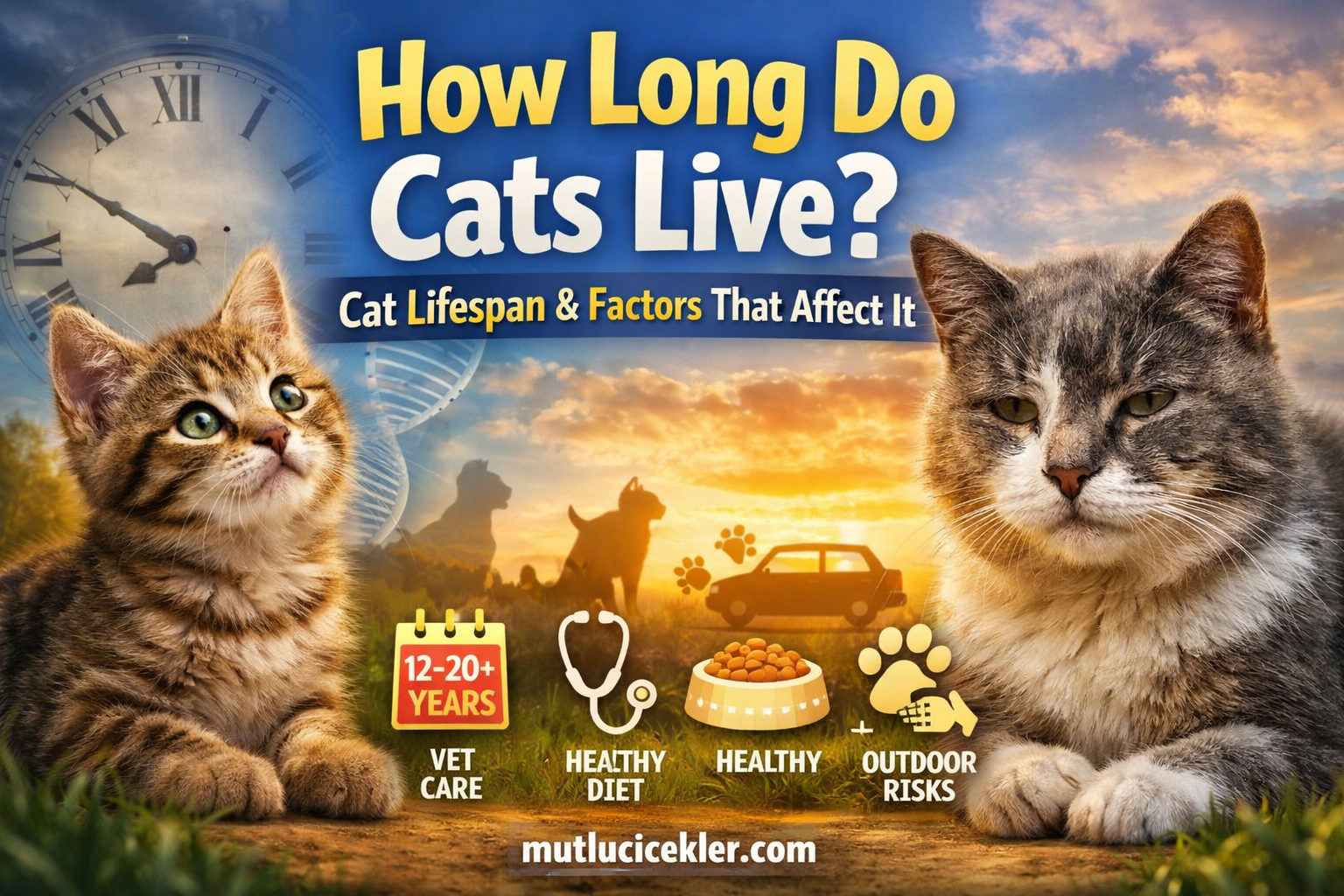
Cats are adorable companions that bring joy and comfort into our lives. But how long do cats actually live? Can you extend your cat’s lifespan? In this detailed guide, we explore the average lifespan of cats, key factors that influence it, and practical tips to help your feline friend live longer and healthier.
🐾 What Is the Average Lifespan of a Cat?
Domestic cats typically live between 12 to 18 years, but with proper care, some cats can live 20 years or more.
👉 General averages:
- 🏠 Indoor cats: 12 – 18 years
- 🌳 Outdoor cats: 3 – 8 years
- 🧬 Well-cared cats: 20+ years
Indoor cats tend to live longer because they are protected from many external risks.
🧬 Factors That Affect a Cat’s Lifespan
Several important factors determine how long your cat will live:
🥗 1. Nutrition
A balanced and high-quality diet plays a major role in a cat’s lifespan.
- Protein-rich food
- Clean, fresh water
- Weight control
👉 Poor nutrition can lead to serious health problems.
🏡 2. Living Environment
Indoor cats generally live longer due to a safer environment.
- No traffic risks
- Lower exposure to diseases
- Regular care and monitoring
🩺 3. Veterinary Care
Routine vet visits are essential for early diagnosis and prevention.
- Vaccinations
- Parasite control
- Regular health check-ups
👉 Early detection can significantly extend lifespan.
🧬 4. Genetics
Some cat breeds are naturally more long-lived than others.
Examples:
- British Shorthair → long lifespan
- Persian cats → prone to certain health issues
🎾 5. Activity and Mental Stimulation
Inactive cats are more prone to health issues.
- Daily playtime
- Mental stimulation
- Interactive toys
👉 Active cats tend to live longer and healthier lives.
⏳ Cat Age vs Human Age
Cats age differently compared to humans:
- 1-year-old cat ≈ 15 human years
- 2-year-old cat ≈ 24 human years
- Each additional year ≈ +4 years
👉 A 10-year-old cat is roughly equivalent to a 56-year-old human.
🐈 Lifespan by Cat Breeds
Different breeds have different life expectancies:
- 🐱 British Shorthair: 14 – 20 years
- 🐱 Siamese: 15 – 20 years
- 🐱 Maine Coon: 10 – 15 years
- 🐱 Persian: 12 – 17 years
- 🐱 Mixed breeds: 15 – 20+ years
👉 Mixed-breed cats are often more resilient and long-lived.
🧓 Signs of Aging in Cats
As cats grow older, you may notice:
- Reduced activity
- Increased sleeping
- Dull coat
- Changes in appetite
- Vision or hearing loss
👉 These are normal but should be monitored.
🩹 Common Health Problems in Cats
Health issues can significantly impact lifespan:
- Kidney disease
- Dental problems
- Obesity
- Diabetes
- Infections
👉 Regular check-ups help prevent serious complications.
💡 7 Tips to Help Your Cat Live Longer
✔ Provide high-quality food
✔ Always ensure fresh water
✔ Schedule regular vet visits
✔ Keep vaccinations up to date
✔ Maintain a safe indoor environment
✔ Encourage play and activity
✔ Reduce stress
⚠️ Why Do Outdoor Cats Live Shorter?
Outdoor cats face many risks:
- Hunger and dehydration
- Traffic accidents
- Diseases
- Harsh weather conditions
👉 Supporting stray cats can make a big difference.
🧾 Conclusion
A cat’s lifespan depends heavily on care, nutrition, and environment. With proper attention and love, your feline companion can live a long, healthy, and happy life by your side.
❓ Frequently Asked Questions (FAQ)
How long can cats live at most?
Some cats can live up to 20–25 years.
Do indoor cats live longer than outdoor cats?
Yes, indoor cats generally live longer due to fewer risks.
How can I increase my cat’s lifespan?
By providing proper nutrition, regular vet care, and a stress-free environment.
👉 For more pet care tips, helpful guides, and practical advice, don’t forget to follow us! mutlucicekler.com




Bir Cevap Yazın