
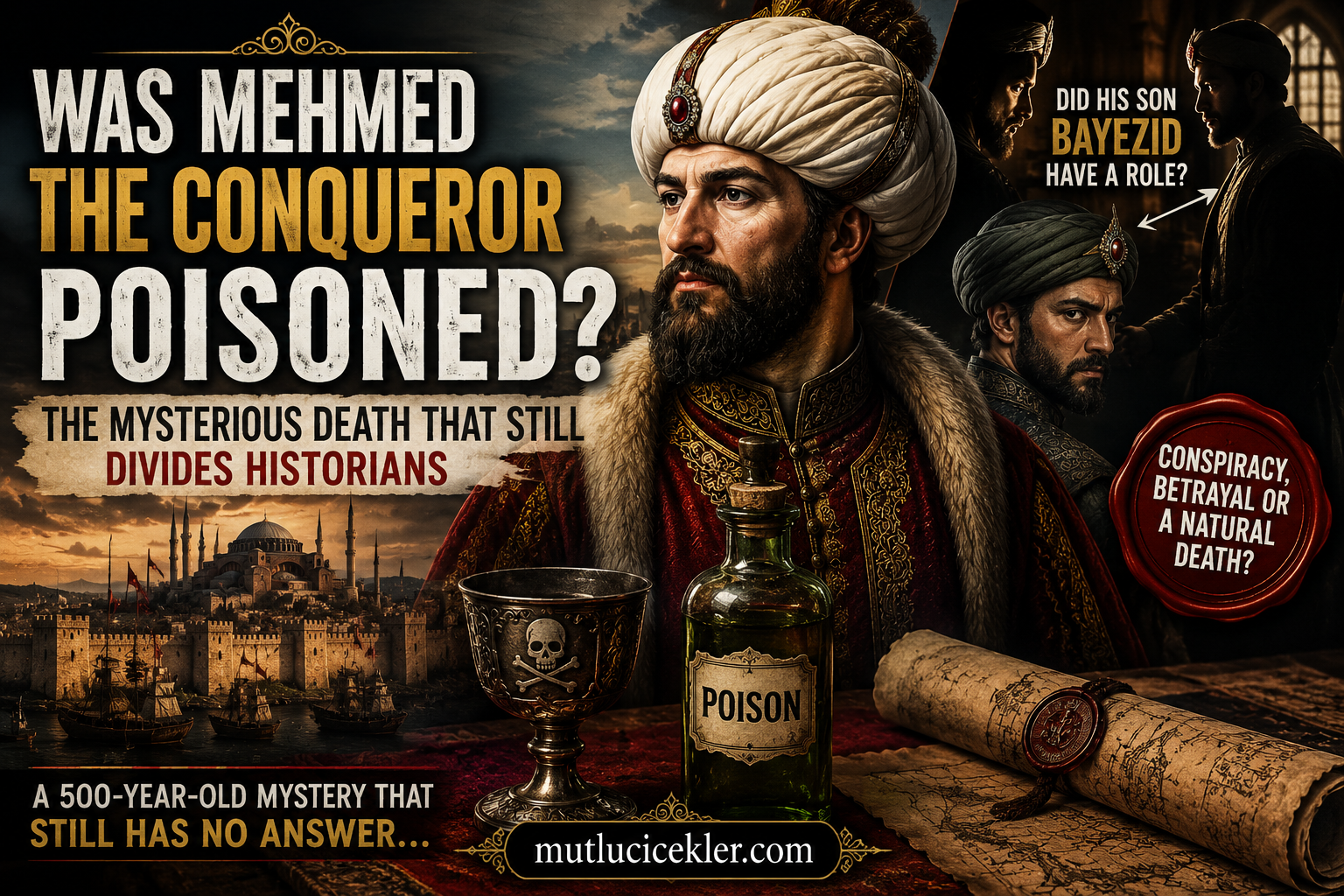
History is full of mysteries, but few are as intriguing as the death of one of the world’s most powerful rulers: Mehmed II, known globally as Mehmed the Conqueror.
The man who captured Constantinople and changed world history died suddenly in 1481. More than five centuries later, historians still ask the same question:
Did he die of natural causes… or was he assassinated?
Even more shocking, one long-standing theory suggests that people close to him — possibly linked to his own son — may have played a role.
Let’s explore one of history’s greatest unsolved mysteries.
👑 Who Was Mehmed the Conqueror?
Mehmed II was born in 1432 and became one of the most influential rulers in history.
His greatest achievement came in 1453 when he conquered Constantinople.
This historic victory:
✅ Ended the Byzantine Empire
✅ Marked the beginning of a new era
✅ Expanded the Ottoman Empire into a global power
He was known not only as a military genius but also as a ruler interested in science, culture and art.
Yet his death remains one of history’s biggest mysteries.
📅 When Did Mehmed II Die?
Mehmed II died on May 3, 1481, near an area called Hünkâr Meadow close to Gebze.
The strange part?
He had already begun preparations for another major military campaign.
But historians still debate where he intended to go.
Possible destinations included:
- Italy
- Rhodes
- Egypt and the Mamluks
- Deeper parts of Europe
Before reaching his destination, his health suddenly worsened.
Within days, he was dead.
That sudden decline sparked centuries of suspicion.
🧪 Was He Poisoned?
One of the strongest theories claims that Mehmed II may have been poisoned.
Several details continue to fuel that speculation:
Sudden illness
Historical records suggest his health deteriorated rapidly.
Some researchers believe the symptoms described in historical texts seem unusual.
Questions surrounding his physician
Some accounts focus on his physician:
Yakup Pasha
Over the years, rumors emerged claiming incorrect treatment or intentional poisoning.
No definitive proof has ever been discovered.
😳 The Shocking Theory: Did His Son Bayezid Have Something To Do With It?
Perhaps the most controversial theory involves his son:
Bayezid II
After Mehmed’s death, a fierce struggle for the Ottoman throne began.
Some historians argue that supporters of Bayezid feared Mehmed’s future plans and political direction.
Over time, a dramatic theory emerged:
Could people close to Bayezid have accelerated events for political gain?
It is important to emphasize one crucial fact:
There is no conclusive historical evidence proving Bayezid ordered any poisoning.
Most historians classify this as an unproven historical theory rather than established fact.
Still, the possibility keeps fueling debate centuries later.
🌍 Did Foreign Powers Want Him Gone?
Another theory reaches beyond the Ottoman palace.
After conquering Constantinople, Mehmed became a major concern across Europe.
Some historians believe European powers feared future Ottoman expansion.
This created another long-discussed question:
Could outside forces have influenced events from within?
No clear evidence exists.
But the theory remains popular among history enthusiasts.
🔍 Conclusion: A Mystery That Refuses To Die
More than 500 years later, the mystery surrounding Mehmed II remains unsolved.
Did illness end the life of a powerful ruler?
Or was one of history’s greatest political conspiracies hidden behind palace walls?
The truth may never be fully known.
But one thing is certain:
Mehmed the Conqueror left behind not only an empire — but also one of history’s most fascinating unanswered questions.
❓FAQ
How old was Mehmed II when he died?
He was 49 years old.
Was Mehmed II poisoned?
There is no definitive evidence. Historians continue debating the possibility.
Did Bayezid poison his father?
No historical proof confirms this. It remains a controversial theory.
Why is his death still debated?
Because historical records leave room for multiple interpretations and no definitive conclusion exists.
📲 Follow for more historical mysteries, hidden stories and fascinating discoveries. Visit mutlucicekler.com












Bir Cevap Yazın