
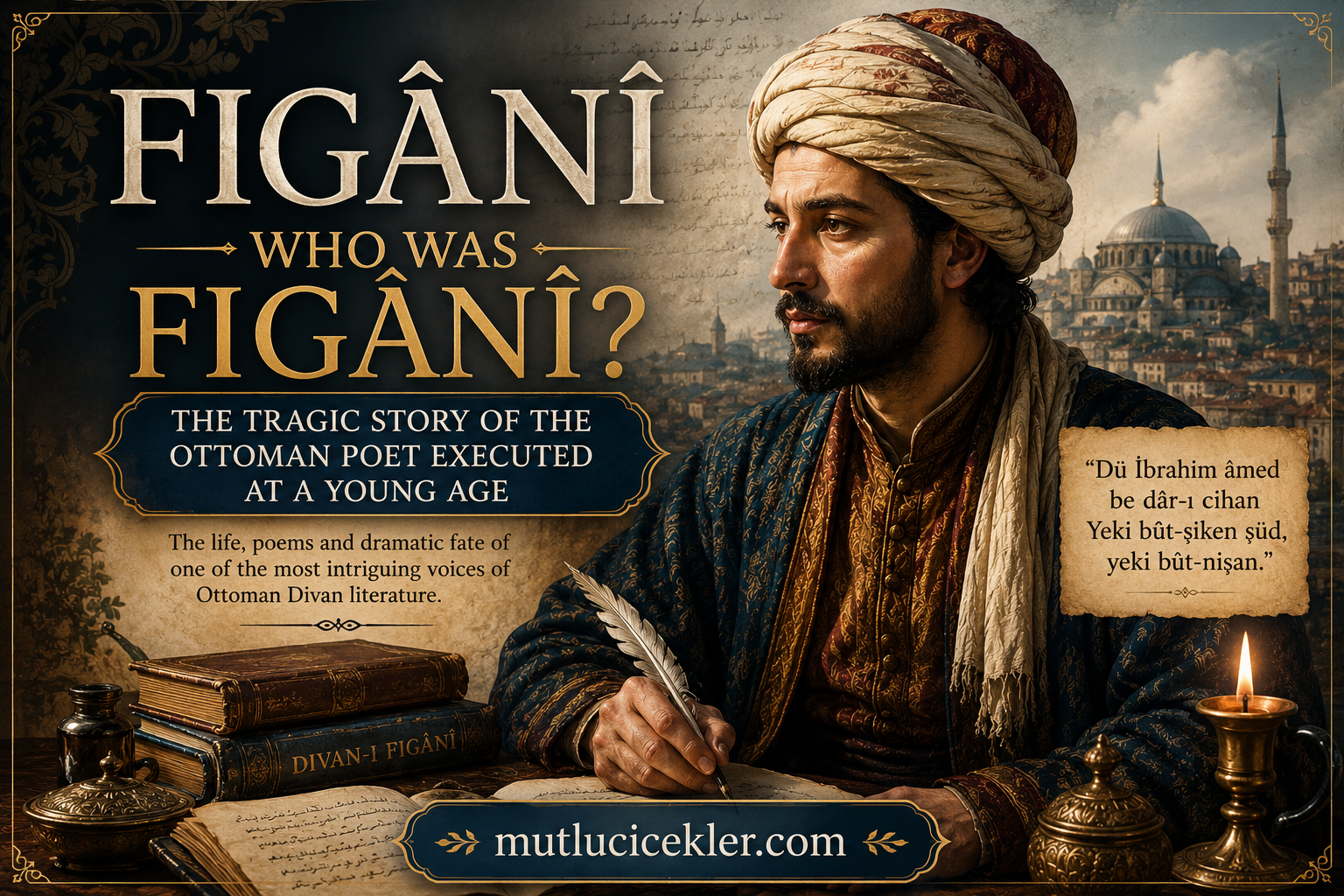
Among the unforgettable names of Ottoman Divan literature, Figânî stands out as one of the most tragic and intriguing poets in history. Despite his short life, he left behind a lasting literary legacy through his sharp wit, emotional poetry, and dramatic fate. Living during the reign of Sultan Suleiman the Magnificent, Figânî became famous not only for his verses but also for the controversial lines that allegedly led to his execution.
Who Was Figânî?
Figânî was a prominent Ottoman Divan poet who lived during the 16th century. His real name was believed to be Ramazan, and historians think he was born in Trabzon in the early 1500s.
At a young age, he moved to Istanbul, where he received an education in Arabic, Persian literature, poetry, and even medicine. Sources suggest that he worked as a clerk for some time while building his reputation in literary circles thanks to his poetic talent and intellectual style.
The pen name “Figânî” means “one who cries out” or “lamenting,” reflecting the melancholic and emotional tone often found in his poetry.
Figânî’s Personality and Lifestyle
Unlike many traditional court poets of his era, Figânî was known for his free-spirited and rebellious personality. Historical accounts describe him as a poet who spent time in the taverns of Galata and enjoyed the bohemian atmosphere of Istanbul.
He was famous for his sharp tongue, fearless criticism, and clever satire. His poetry frequently explored themes such as:
- Love and heartbreak
- The temporary nature of life
- Loneliness and sorrow
- Social criticism
- Human emotions and desire
Because of his bold personality and daring expressions, Figânî quickly became a noticeable figure in Ottoman literary society.
The Work That Made Him Famous
One of Figânî’s most well-known works was the “Sûriyye Kasidesi,” a ceremonial poem written for the grand circumcision festival organized for the sons of Sultan Suleiman the Magnificent.
This work earned him recognition within palace circles and helped him gain popularity among influential literary figures of the Ottoman Empire.
His elegant ghazals and kasides demonstrated both his literary skill and his powerful imagination.
The Poem That Allegedly Led to His Execution
The most dramatic chapter of Figânî’s life involves a controversial couplet allegedly written about Grand Vizier Pargalı Ibrahim Pasha.
After the Battle of Mohács, several statues were reportedly brought from Buda to Istanbul and displayed publicly. According to historical accounts, Figânî criticized Ibrahim Pasha with the following Persian lines:
“Two Ibrahims came into this world;
One destroyed idols, the other erected them.”
The verse compared Ibrahim Pasha to Prophet Abraham, who is famous in Islamic tradition for destroying idols. The implication that Ibrahim Pasha was promoting idol worship through statues was considered extremely dangerous at the time.
Although historians still debate whether Figânî truly wrote these lines, the accusation alone was enough to seal his fate.
Figânî’s Execution
Figânî was executed at a very young age, believed to be around 29 years old. Historical sources claim he was publicly displayed in Istanbul before being hanged.
He is remembered as one of the first Ottoman poets to be executed because of his words and criticism.
Many literary historians believe that if he had lived longer, Figânî could have become one of the greatest poets in Ottoman literary history.
Figânî’s Place in Ottoman Literature
Although only a limited number of his works have survived, Figânî is still considered an important figure in Divan poetry because of his:
✨ Elegant literary language
✨ Strong imagination
✨ Sharp satirical style
✨ Emotional depth
✨ Fearless expression
His poems continue to attract readers interested in Ottoman culture, literature, and history.
Interesting Facts About Figânî
📜 His real name was Ramazan.
📜 He reportedly studied medicine.
📜 He was known for his bohemian lifestyle in Galata.
📜 He became famous for his satirical poetry.
📜 He was executed at a young age.
📜 He remains one of the most tragic figures in Ottoman literary history.
Conclusion
Figânî remains one of the most fascinating and tragic poets of the Ottoman Empire. His fearless words, emotional poetry, and dramatic death turned him into a legendary literary figure whose story still captures the curiosity of readers today.
Even centuries later, Figânî’s life serves as a powerful reminder of how poetry, politics, and freedom of expression have often collided throughout history.
Frequently Asked Questions (FAQ)
Who was Figânî?
Figânî was a 16th-century Ottoman Divan poet known for his emotional and satirical poetry.
Why was Figânî executed?
He was allegedly executed for writing a controversial poem criticizing Grand Vizier Pargalı Ibrahim Pasha.
What is Figânî famous for?
He became famous for his elegant poetry, sharp satire, and tragic execution.
How old was Figânî when he died?
Historians believe he was around 29 years old.
Did Figânî’s works survive?
Some of his poems and kasides survived, although many of his writings were lost over time.
Follow us for more historical stories, cultural discoveries, and literary content from around the world!












Bir Cevap Yazın