
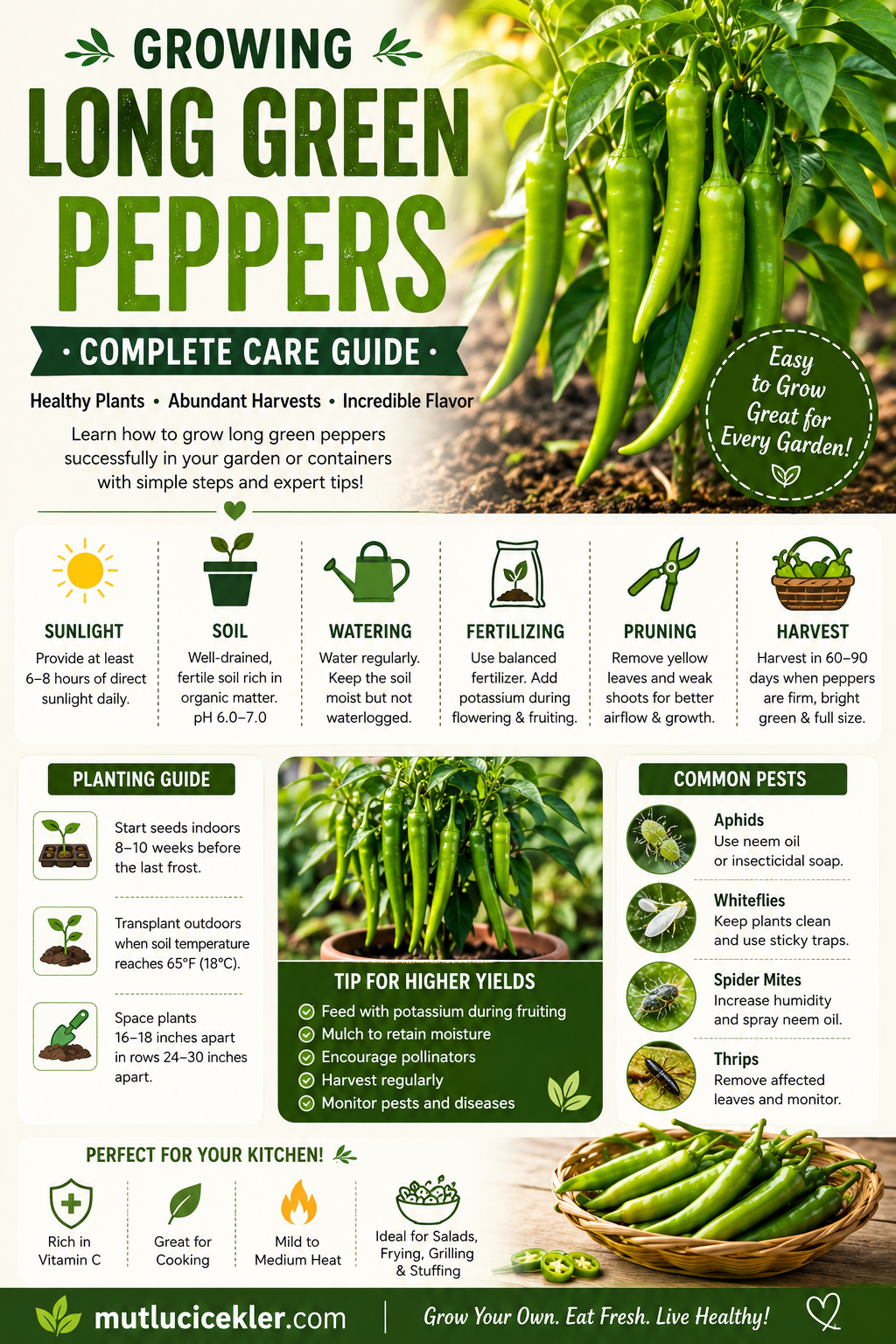
Growing long green peppers is one of the most rewarding gardening projects for beginners and experienced gardeners alike. Whether you have a spacious backyard or a sunny balcony, these productive pepper plants can provide a continuous harvest throughout the growing season.
Long green peppers (Capsicum annuum) are popular worldwide for their crisp texture, mild to medium heat (depending on the variety), and versatility in the kitchen. With proper care, they produce dozens of peppers on a single plant.
In this complete guide, you’ll learn how to grow long green peppers, the best soil, watering schedule, fertilizing tips, pruning methods, common problems, harvesting techniques, and expert advice for maximizing your yield.
What Are Long Green Peppers?
Long green peppers belong to the Capsicum annuum species and include many varieties grown around the world.
Popular examples include:
- Anaheim Pepper
- Italian Frying Pepper
- Turkish Long Green Pepper
- Sweet Long Pepper
- Mild Chili Pepper
- Long Cayenne (when harvested green)
These peppers can be sweet or spicy depending on the cultivar.
Why Grow Long Green Peppers?
Growing your own peppers offers many advantages:
✅ Fresh harvest all season
✅ Excellent flavor
✅ High productivity
✅ Easy to grow
✅ Perfect for containers
✅ Rich in Vitamin C
✅ Great for grilling, frying, stuffing, and salads
Plant Information
| Feature | Details |
|---|---|
| Botanical Name | Capsicum annuum |
| Plant Type | Annual |
| Sun Requirement | 6–8 hours daily |
| Soil Type | Well-drained fertile soil |
| Water Needs | Moderate |
| Germination | 7–21 days |
| Harvest Time | 60–90 days after transplanting |
Best Climate for Growing Long Green Peppers
Peppers thrive in warm weather.
Ideal temperatures:
🌡️ 70–86°F (21–30°C)
Growth slows below:
🌡️ 60°F (15°C)
Temperatures below 50°F (10°C) may damage the plants.
Peppers should always be protected from frost.
Choosing the Right Location
Select an area that receives:
☀️ At least 6–8 hours of direct sunlight every day.
More sunlight generally means:
- More flowers
- Better fruit development
- Higher yields
- Sweeter peppers
Best Soil for Long Green Peppers
Healthy soil is essential for vigorous plants.
Ideal soil should be:
- Loose
- Rich in organic matter
- Well-drained
- Slightly moist
- pH between 6.0 and 7.0
Before planting, mix in:
- Compost
- Aged manure
- Worm castings
- Organic fertilizer
When to Plant Long Green Peppers
Planting time depends on your climate.
Indoors
Start seeds:
8–10 weeks before the last frost.
Outdoors
Transplant seedlings after:
- Frost danger has passed
- Soil temperature reaches 65°F (18°C)
Starting from Seeds
For successful germination:
- Fill seed trays with seed-starting mix.
- Sow seeds about ¼ inch (6 mm) deep.
- Keep soil consistently moist.
- Maintain temperatures around 75–85°F (24–29°C).
- Germination usually occurs within 7–21 days.
Transplanting Seedlings
Seedlings are ready when they have:
- 5–6 true leaves
- Height of 6–8 inches (15–20 cm)
Spacing:
- 16–18 inches (40–45 cm) between plants
- 24–30 inches (60–75 cm) between rows
Good spacing improves airflow and reduces disease risk.
Growing Long Green Peppers in Containers
Container gardening works exceptionally well.
Choose:
- Minimum 5-gallon (20-liter) pot
- Drainage holes
- High-quality potting mix
A mixture of:
- Potting soil
- Compost
- Perlite
provides excellent drainage.
Watering Long Green Peppers
Consistent watering is key.
General guidelines:
- Water deeply 2–3 times per week
- Increase during hot weather
- Water early in the morning
Avoid:
❌ Overwatering
❌ Waterlogged soil
❌ Wet foliage late in the evening
Mulching helps conserve moisture.
Fertilizing Schedule
Balanced nutrition promotes healthy growth.
Before Planting
Apply:
- Compost
- Organic fertilizer
During Vegetative Growth
Use:
Balanced fertilizer (10-10-10)
During Flowering
Increase phosphorus.
During Fruit Production
Use fertilizers rich in potassium.
Avoid excessive nitrogen, which encourages leafy growth instead of fruit.
Flowering and Pollination
Pepper flowers are self-pollinating.
However:
- Bees
- Butterflies
- Wind
can improve fruit production.
Indoor growers can gently shake plants to assist pollination.
Pruning Tips
Pruning improves airflow and productivity.
Remove:
- Yellow leaves
- Damaged branches
- Weak shoots
- Lower leaves touching the soil
Do not over-prune healthy foliage.
Common Problems
Blossom Drop
Causes:
- Heat stress
- Cold temperatures
- Inconsistent watering
- Nutrient imbalance
Yellow Leaves
Possible reasons:
- Overwatering
- Nitrogen deficiency
- Poor drainage
Small Fruits
Often caused by:
- Insufficient sunlight
- Lack of potassium
- Overcrowding
Slow Growth
Usually due to:
- Cold weather
- Compact soil
- Poor nutrition
Common Pests
Watch for:
🐛 Aphids
🐛 Whiteflies
🐛 Spider mites
🐛 Thrips
Natural solutions include:
- Neem oil
- Insecticidal soap
- Sticky traps
- Beneficial insects like ladybugs
Diseases
Common diseases include:
- Root rot
- Powdery mildew
- Leaf spot
- Bacterial spot
- Mosaic viruses
Prevent problems by:
- Good airflow
- Proper spacing
- Avoiding overhead watering
- Removing infected leaves promptly
Harvesting Long Green Peppers
Most varieties are ready 60–90 days after transplanting.
Harvest when peppers are:
- Firm
- Bright green
- Full size
Use pruning shears instead of pulling fruit from the plant.
Frequent harvesting encourages additional pepper production.
Storing Fresh Peppers
Fresh peppers keep well:
🥬 1–2 weeks in the refrigerator.
For long-term storage:
- Freeze
- Dry
- Pickle
- Roast and freeze
Expert Tips for Higher Yields
🌱 Plant in full sun.
💧 Water consistently.
🪴 Add compost regularly.
🌸 Feed with potassium during fruiting.
✂️ Remove damaged leaves.
🐝 Encourage pollinators.
🌶️ Harvest often.
🍂 Mulch around plants.
Mistakes to Avoid
Avoid these common gardening mistakes:
- Planting too early
- Overwatering
- Using heavy clay soil
- Too much nitrogen fertilizer
- Crowding plants
- Ignoring pests
- Harvesting too late
Conclusion
Long green peppers are among the easiest and most rewarding vegetables to grow at home. With warm temperatures, plenty of sunlight, fertile soil, and consistent care, you’ll enjoy an abundant harvest for months. Whether you’re growing them in a backyard garden, raised bed, or patio container, following these simple gardening practices will help you produce healthy, flavorful peppers season after season.
Frequently Asked Questions (FAQ)
How long does it take to grow long green peppers?
Most varieties produce harvestable peppers 60–90 days after transplanting.
Can long green peppers grow in pots?
Yes. A 5-gallon (20-liter) container with good drainage is ideal.
How much sun do pepper plants need?
They require 6–8 hours of direct sunlight daily for optimal growth.
Why are my pepper flowers falling off?
Flower drop is often caused by temperature extremes, inconsistent watering, or nutrient imbalances.
How often should I water long green peppers?
Water when the top inch (2–3 cm) of soil feels dry. Deep watering two to three times per week is usually sufficient.
🌱 Follow mutlucicekler.com
Looking for more gardening tips, vegetable growing guides, plant care advice, and seasonal planting calendars? Follow mutlucicekler.com for expert resources that help gardeners of all experience levels grow healthier plants and enjoy more productive harvests.










Bir Cevap Yazın