

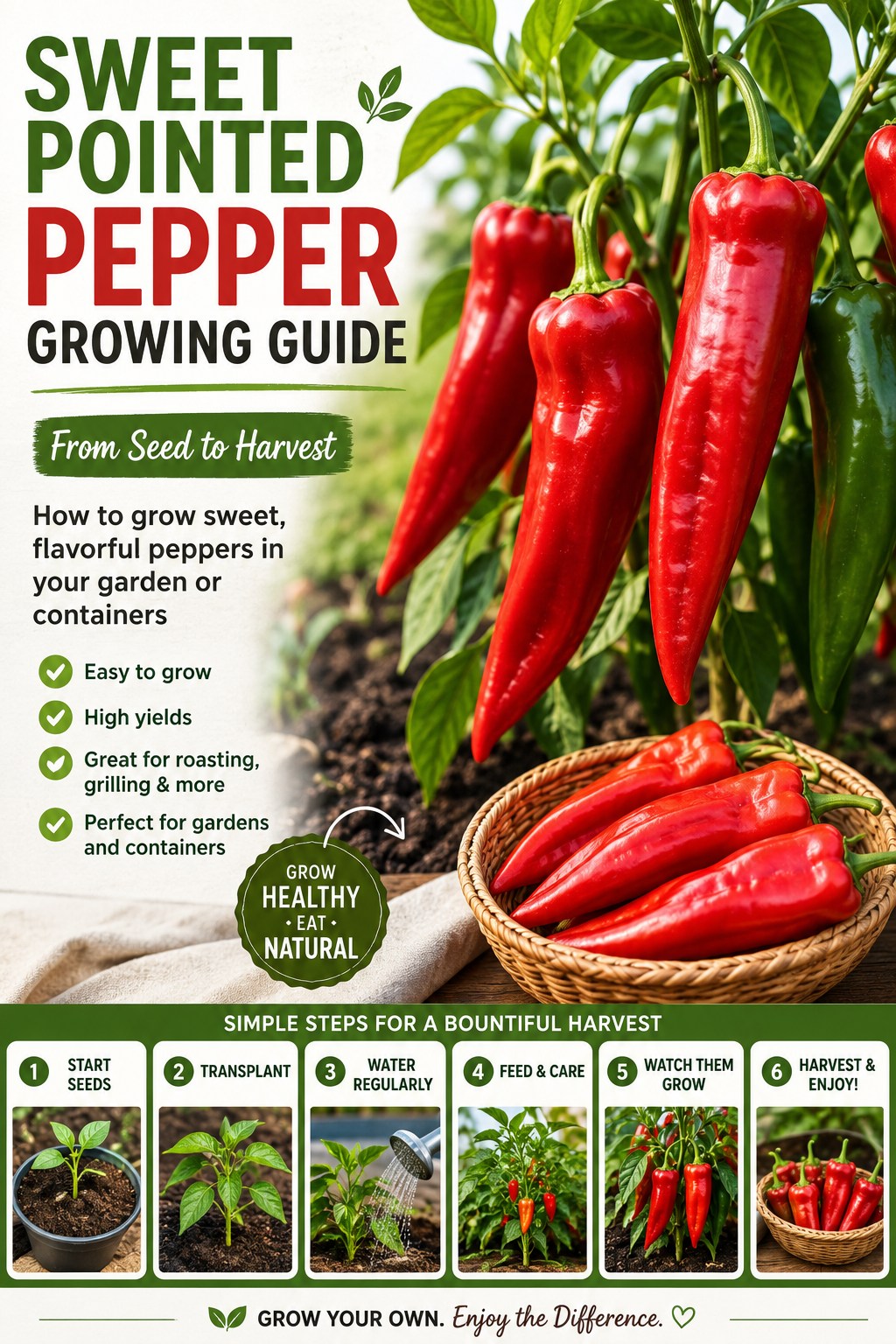
Sweet Pointed Pepper Growing Guide: Everything You Need to Know
Sweet pointed peppers are among the most rewarding vegetables to grow at home. Their naturally sweet flavor, thick flesh, crisp texture, and versatility make them a favorite in home gardens and commercial farms worldwide. Whether you know them as Kapya peppers, Corno di Toro peppers, or simply sweet pointed peppers, these elongated varieties produce generous harvests when given the right growing conditions.
Unlike traditional bell peppers, sweet pointed peppers develop long, tapered fruits with fewer seeds and a sweeter taste. They are excellent for roasting, grilling, stuffing, salads, stir-fries, and homemade sauces.
The good news is that these peppers are relatively easy to grow. With fertile soil, plenty of sunshine, regular watering, and proper care, even beginner gardeners can enjoy an abundant harvest throughout the growing season.
This comprehensive guide will walk you through every stage of growing sweet pointed peppers—from choosing seeds and preparing the soil to transplanting, watering, fertilizing, and encouraging maximum fruit production.
What Are Sweet Pointed Peppers?
Sweet pointed peppers are elongated varieties of Capsicum annuum that are prized for their naturally sweet flavor and thick, juicy walls. Unlike hot peppers, they contain little to no capsaicin, making them suitable for all ages and a wide variety of recipes.
Popular varieties include:
- Turkish Kapya
- Italian Corno di Toro
- Ramiro-type peppers
- Romano peppers
- Other regional long sweet pepper cultivars
These peppers are harvested while green or left on the plant to mature into vibrant shades of red, orange, or yellow, depending on the variety.
Why Grow Sweet Pointed Peppers?
Growing your own peppers provides numerous advantages over buying them from supermarkets.
Fresh, Superior Flavor
Homegrown peppers are harvested at peak ripeness, resulting in richer sweetness and better texture.
Higher Nutritional Value
Fresh peppers are packed with:
- Vitamin C
- Vitamin A
- Vitamin B6
- Potassium
- Fiber
- Antioxidants
Cost Savings
A single healthy pepper plant can produce dozens of peppers during one growing season.
Easy to Grow
Sweet pointed peppers require only basic gardening skills and are suitable for beginners.
Excellent for Small Gardens
They perform well in:
- Vegetable gardens
- Raised beds
- Greenhouses
- Large containers
- Sunny patios
- Balconies
Best Climate for Growing Sweet Pointed Peppers
Peppers are warm-season vegetables that thrive in sunny environments.
Ideal growing conditions include:
| Factor | Recommended Range |
|---|---|
| Temperature | 20–30°C (68–86°F) |
| Minimum Temperature | Above 15°C (59°F) |
| Sunlight | 6–8+ hours daily |
| Humidity | Moderate |
| Frost | Avoid completely |
Cold temperatures slow growth dramatically and can permanently damage young plants.
If you live in cooler climates, starting seeds indoors before the last frost significantly improves success.
Choosing the Right Growing Location
Location plays a major role in overall plant health and productivity.
Choose an area that offers:
- Full sun throughout the day
- Good air circulation
- Protection from strong winds
- Rich, fertile soil
- Excellent drainage
Avoid areas where water pools after heavy rain, as pepper roots are sensitive to standing water.
Sunlight Requirements
Sweet pointed peppers love sunshine.
For maximum fruit production, provide:
☀️ 6–8 hours of direct sunlight every day
Plants grown in shade often produce:
- Fewer flowers
- Smaller fruits
- Slower growth
- Lower yields
In extremely hot climates, light afternoon shade can help reduce heat stress.
Soil Requirements
Healthy soil forms the foundation of productive pepper plants.
The ideal soil should be:
- Loose
- Well-draining
- Rich in organic matter
- Slightly acidic to neutral
Recommended soil pH:
6.0–7.0
Before planting, enrich the soil with:
- Compost
- Well-rotted manure
- Leaf mold
- Coco coir
- Perlite (for drainage)
Healthy soil encourages stronger root development and larger harvests.
Preparing the Soil Before Planting
Preparing the planting area several weeks before transplanting can significantly improve plant growth.
Recommended steps:
- Remove weeds and stones.
- Loosen soil to a depth of 25–30 cm (10–12 inches).
- Mix in organic compost.
- Improve drainage if necessary.
- Water lightly before planting.
Healthy soil supports vigorous root development from the very beginning.
When to Plant Sweet Pointed Peppers
Timing depends on your local climate.
Warm Regions
Start seeds indoors during late winter or sow directly once temperatures remain consistently warm.
Temperate Regions
Start seeds indoors approximately 8–10 weeks before the last expected frost.
Cold Regions
Indoor seed starting is highly recommended.
Never transplant outdoors until:
- Frost danger has completely passed.
- Night temperatures consistently remain above 15°C (59°F).
Growing Sweet Pointed Peppers from Seed
Growing peppers from seed allows gardeners to choose from hundreds of unique varieties.
Step 1: Choose High-Quality Seeds
Purchase seeds from reputable suppliers to ensure high germination rates and healthy plants.
Step 2: Prepare Seed Trays
Fill trays or small pots with sterile seed-starting mix.
The growing medium should be:
- Light
- Moist
- Well-draining
Step 3: Sow the Seeds
Plant seeds:
- 0.5–1 cm (¼–½ inch) deep
- Cover lightly with soil
- Mist gently with water
Avoid burying seeds too deeply.
Step 4: Maintain Warm Temperatures
Pepper seeds germinate best between:
24–28°C (75–82°F)
Using a seedling heat mat often speeds germination.
Step 5: Provide Light
Once seedlings emerge, move them under:
- Bright grow lights
- Sunny windows
- Greenhouses
Seedlings require 12–16 hours of light daily for strong growth.
Germination Timeline
Typical germination occurs within:
7–14 days
Some varieties may take slightly longer depending on temperature and seed quality.
Caring for Young Seedlings
Healthy seedlings produce stronger adult plants.
Maintain:
- Even moisture
- Bright light
- Good airflow
- Warm temperatures
Avoid:
- Overwatering
- Cold drafts
- Crowded trays
Weak seedlings often struggle after transplanting.
Hardening Off Seedlings
Indoor-grown plants should gradually adapt to outdoor conditions before transplanting.
Over 7–10 days:
- Place seedlings outdoors for a few hours.
- Gradually increase exposure.
- Protect from strong wind.
- Bring indoors at night if temperatures drop.
This process reduces transplant shock.
Transplanting into the Garden
Transplant only after plants have:
- 5–7 true leaves
- Thick stems
- Strong root systems
Plant spacing:
| Measurement | Distance |
|---|---|
| Between plants | 45–60 cm (18–24 in) |
| Between rows | 60–75 cm (24–30 in) |
Proper spacing improves:
- Air circulation
- Disease prevention
- Fruit production
- Sunlight penetration
Growing Sweet Pointed Peppers in Containers
Container gardening is an excellent option for balconies, patios, and small spaces.
Choose containers that are:
- 20–30 liters (5–8 gallons)
- At least 30–40 cm deep
- Equipped with drainage holes
Use premium potting mix enriched with compost for best results.
Container-grown peppers may require watering more frequently during hot weather.
Watering Sweet Pointed Peppers
Consistent watering is one of the most important factors for successful pepper production.
Best practices include:
- Water deeply rather than lightly.
- Water early in the morning.
- Keep soil consistently moist.
- Allow the surface to dry slightly before watering again.
Avoid:
- Waterlogged soil
- Standing water
- Wet foliage late in the evening
Adding mulch helps retain moisture and suppress weeds.
Fertilizing Sweet Pointed Peppers
Peppers are moderate to heavy feeders and benefit from regular fertilization throughout the growing season.
Before Planting
Incorporate:
- Compost
- A balanced organic fertilizer
- Well-rotted manure
During Vegetative Growth
Use a balanced fertilizer to support healthy stems and leaves.
During Flowering and Fruiting
Switch to a fertilizer higher in:
- Potassium (K)
- Phosphorus (P)
- Calcium (Ca)
These nutrients encourage flowering, fruit set, and larger, sweeter peppers.
Tip: Avoid excessive nitrogen, as it promotes lush foliage at the expense of fruit production.
Supporting Pepper Plants
As sweet pointed peppers begin producing larger fruits, branches may become heavy and bend under the weight. Supporting your plants early helps prevent broken stems and keeps fruits clean.
Recommended support methods include:
- Bamboo stakes
- Tomato cages
- Wooden garden stakes
- Soft plant ties
Tie the main stem loosely to avoid restricting growth.
Mulching for Healthier Plants
Mulch offers many benefits for pepper plants throughout the growing season.
Benefits include:
- Conserves soil moisture
- Reduces weed growth
- Regulates soil temperature
- Minimizes soil erosion
- Keeps fruits cleaner
Suitable mulch materials:
- Straw
- Shredded leaves
- Grass clippings (chemical-free)
- Wood chips
- Compost
Apply a 5–8 cm (2–3 inch) layer around plants, leaving a small gap around the stem.
Flowering and Fruit Development
Healthy pepper plants produce small white flowers before fruit begins to develop.
To encourage more flowers and fruit:
- Water consistently.
- Avoid excessive nitrogen fertilizer.
- Ensure plants receive full sunlight.
- Encourage pollinating insects.
- Maintain good airflow between plants.
During extremely hot weather (above 35°C / 95°F), flowers may temporarily drop. Fruit production usually resumes once temperatures become milder.
Common Growing Problems
Flowers Drop Without Producing Fruit
Possible causes:
- High temperatures
- Low temperatures
- Irregular watering
- Poor pollination
- Excess nitrogen
Maintain even moisture and avoid over-fertilizing with nitrogen.
Small Fruits
Often caused by:
- Insufficient sunlight
- Nutrient deficiencies
- Water stress
- Crowded plants
Provide at least 6–8 hours of sunlight and feed plants regularly during fruiting.
Leaves Turning Yellow
Yellow leaves may indicate:
- Overwatering
- Poor drainage
- Nitrogen deficiency
- Root damage
Inspect soil moisture before watering again.
Blossom End Rot
Blossom end rot appears as a dark, sunken patch at the bottom of the pepper.
Usually caused by:
- Calcium deficiency
- Inconsistent watering
Prevent it by keeping soil moisture consistent and ensuring adequate calcium levels.
Common Pests
Even healthy gardens occasionally attract pests.
Watch for:
Aphids
Small insects that feed on new growth.
Control methods:
- Spray with water
- Neem oil
- Insecticidal soap
- Ladybugs
Whiteflies
Whiteflies gather beneath leaves and weaken plants.
Reduce infestations by:
- Yellow sticky traps
- Neem oil
- Good airflow
Spider Mites
Spider mites thrive during hot, dry weather.
Symptoms include:
- Tiny webbing
- Speckled leaves
- Yellow foliage
Increase humidity and use appropriate organic treatments if needed.
Thrips
Thrips feed on flowers and developing fruit.
Regular inspections help prevent major damage.
Common Diseases
Proper plant care greatly reduces disease risk.
Common diseases include:
Powdery Mildew
White powder appears on leaves.
Prevention:
- Improve air circulation.
- Avoid wet foliage.
- Remove infected leaves promptly.
Bacterial Leaf Spot
Causes dark spots on leaves and fruit.
Reduce risk by:
- Rotating crops
- Using disease-free seeds
- Watering at soil level
Root Rot
Usually caused by poor drainage or excessive watering.
Healthy drainage is the best prevention.
Anthracnose
A fungal disease affecting mature fruits.
Remove infected fruits immediately to reduce spread.
Companion Plants
Growing compatible plants nearby benefits peppers naturally.
Excellent companions include:
- Basil
- Marigolds
- Garlic
- Onions
- Carrots
- Lettuce
- Spinach
- Parsley
These plants may help deter pests and improve overall garden biodiversity.
Plants to Avoid Nearby
Avoid planting peppers close to:
- Fennel
- Large aggressive vines
- Plants that create excessive shade
Providing enough space helps improve airflow and sunlight exposure.
Harvesting Sweet Pointed Peppers
Harvest timing depends on the flavor and color you prefer.
Harvesting Green Peppers
Green peppers offer:
- Crisp texture
- Mild flavor
- Earlier harvest
Harvesting Fully Colored Peppers
Allow peppers to mature fully for:
- Sweeter taste
- Richer color
- More antioxidants
- Higher vitamin content
Most varieties turn bright red when fully ripe.
How to Harvest Properly
Avoid pulling peppers by hand.
Instead:
- Use clean pruning shears or scissors.
- Cut just above the stem.
- Handle fruits gently to avoid bruising.
Regular harvesting encourages plants to produce additional flowers and fruit.
Storing Fresh Peppers
Fresh sweet pointed peppers store well when handled correctly.
Refrigerator
Store in the vegetable drawer.
Freshness:
1–2 weeks
Freezing
Slice peppers before freezing.
Perfect for:
- Stir-fries
- Soups
- Sauces
- Roasted dishes
Drying
Peppers can be:
- Air-dried
- Oven-dried
- Dehydrated
Dried peppers last for months when stored in airtight containers.
Roasting and Freezing
Roasted peppers freeze exceptionally well and retain excellent flavor.
Nutritional Benefits
Sweet pointed peppers are nutrient-dense while remaining low in calories.
They provide:
- Vitamin C
- Vitamin A
- Vitamin E
- Vitamin B6
- Potassium
- Folate
- Dietary fiber
- Carotenoids
Regular consumption may support:
- Immune function
- Eye health
- Healthy skin
- Heart health
- Digestive health
- Overall wellness
Expert Growing Tips
Professional gardeners often follow these practices for bigger harvests:
✅ Rotate crops every year.
✅ Add compost before each growing season.
✅ Mulch after transplanting.
✅ Water deeply instead of lightly.
✅ Feed plants consistently during flowering.
✅ Remove damaged leaves promptly.
✅ Inspect plants weekly for pests.
✅ Harvest peppers regularly.
✅ Support heavy branches early.
✅ Keep weeds under control.
Small improvements throughout the season often lead to significantly higher yields.
Frequently Asked Questions (FAQ)
How long does it take to grow sweet pointed peppers?
Most varieties mature within 90–120 days, depending on weather, variety, and growing conditions.
Can sweet pointed peppers be grown in containers?
Yes. A 20–30 liter (5–8 gallon) container with good drainage is ideal for one healthy plant.
How much sunlight do sweet pointed peppers need?
They perform best with 6–8 hours of direct sunlight every day.
How often should I water pepper plants?
Water whenever the top layer of soil begins to dry. Keep the soil evenly moist but never waterlogged.
Why are my peppers flowering but not producing fruit?
Possible reasons include:
- Heat stress
- Poor pollination
- Irregular watering
- Excess nitrogen fertilizer
Should I remove the first flowers?
Many experienced gardeners remove the first few flowers on young plants to encourage stronger root and branch development before heavy fruit production.
Can peppers survive more than one season?
In frost-free climates, pepper plants can live for several years. In colder regions, they are usually grown as annuals.
Final Thoughts
Sweet pointed peppers are among the easiest and most rewarding vegetables to grow in home gardens. With plenty of sunshine, fertile soil, consistent watering, and regular feeding, these plants can reward gardeners with an impressive harvest of sweet, colorful peppers throughout the season.
Whether you’re growing them in a backyard, raised bed, greenhouse, or container, following the techniques in this guide will help you produce healthier plants, larger harvests, and better-quality fruit year after year.
🌱 Follow mutlucicekler.com
Discover more expert gardening guides, vegetable-growing tutorials, plant care tips, seasonal gardening advice, and practical solutions at mutlucicekler.com.
Whether you’re a beginner or an experienced gardener, you’ll find valuable resources to help your garden thrive in every season.
Bir yanıt yazın