
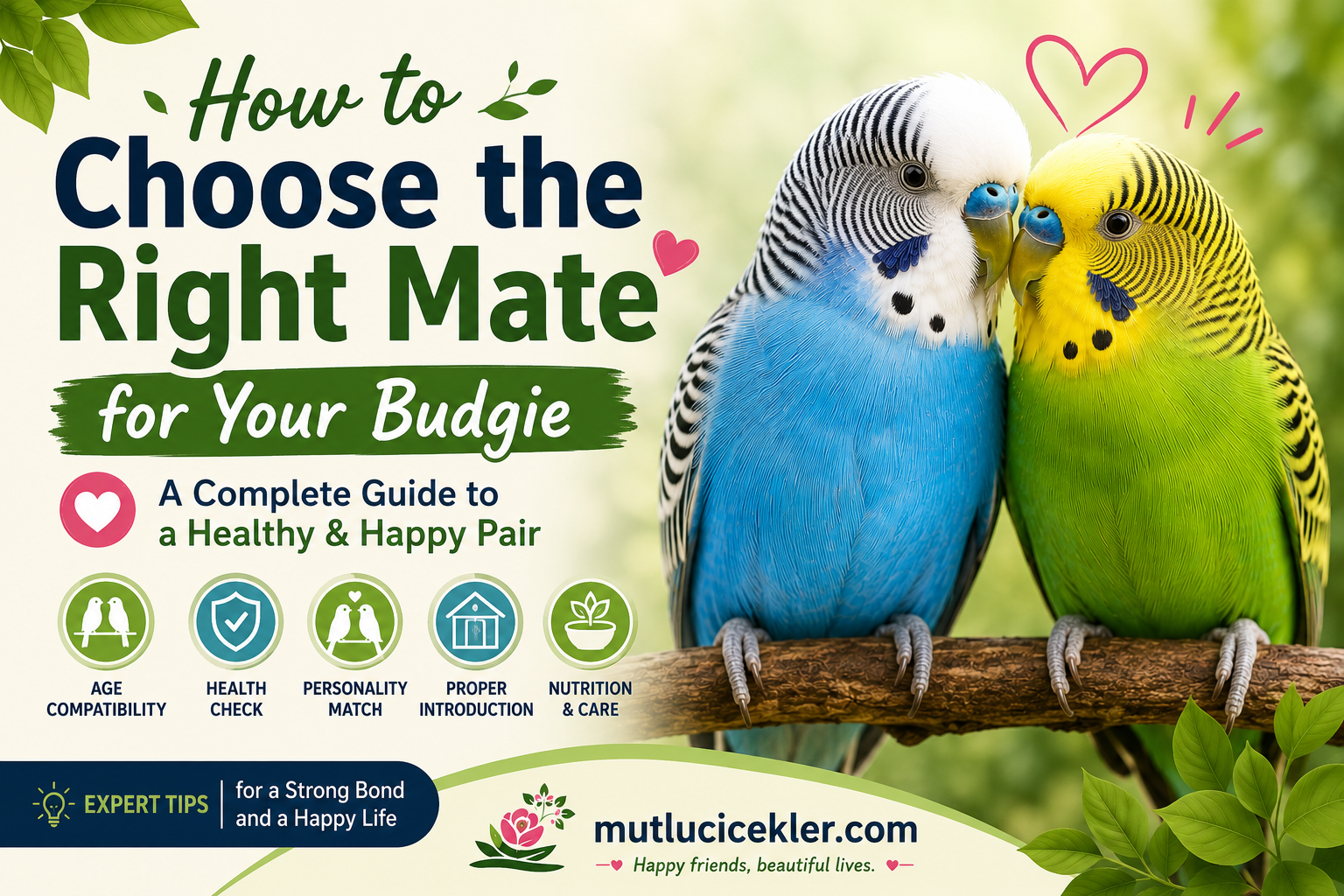
Budgies (also known as parakeets in many parts of the world) are highly social, intelligent birds that naturally form strong pair bonds. Whether your goal is breeding or simply giving your pet a companion, choosing the right mate is one of the most important decisions you can make.
A compatible pair is more likely to live peacefully, stay active, and develop a healthy relationship. On the other hand, poor pairing can lead to stress, aggression, illness, and unsuccessful breeding attempts.
In this comprehensive guide, you’ll learn everything you need to know before introducing a new budgie to your feathered friend.
Do Budgies Need a Mate?
Not every budgie needs a companion.
A single budgie can live a happy life if it receives plenty of:
- Daily interaction
- Mental stimulation
- Toys and enrichment
- Time outside the cage (when safe)
- Human companionship
However, a companion may be beneficial if your budgie:
- Spends many hours alone each day
- Frequently calls for attention
- Seems lonely or bored
- Shows strong interest in mirrors
- Has limited social interaction
Adding another bird should always be done thoughtfully rather than impulsively.
Choose Budgies of a Similar Age
Age compatibility is one of the biggest factors in successful pairing.
Ideal age
- 8 months to 3 years old
- Both birds should be close in age
Avoid pairing:
- Very young birds with mature adults
- Elderly birds with juveniles
- Immature birds for breeding
Birds that mature at similar times generally adapt better to one another.
Make Sure the Sex Is Correct
One of the most common mistakes is accidentally buying two birds of the same sex.
Male Budgie
- Usually has a bright blue cere (adult)
- More vocal
- Frequently sings and chirps
- Often initiates courtship
Female Budgie
- Usually has a brown, beige, tan, or white cere depending on age and breeding condition
- Can be more territorial
- Often displays nesting behaviors
If you’re purchasing a mate specifically for breeding, verify the bird’s sex before bringing it home.
Always Choose a Healthy Bird
Never compromise on health.
A healthy budgie should have:
✅ Bright, alert eyes
✅ Clean nostrils
✅ Smooth feathers
✅ Clean vent area
✅ Strong appetite
✅ Active behavior
✅ Good balance on the perch
Buying a healthy bird protects both pets.
Avoid Sick Birds
Do not choose birds showing symptoms such as:
- Fluffed feathers all day
- Runny eyes
- Nasal discharge
- Sneezing
- Labored breathing
- Diarrhea
- Weight loss
- Lethargy
Even mild illness can spread to your existing budgie.
Personality Matters More Than Many People Think
Just like people, budgies have unique personalities.
Some birds are:
- Gentle
- Shy
- Dominant
- Territorial
- Curious
- Highly energetic
Two birds with compatible temperaments are far more likely to form a successful bond.
English Budgies vs. American (Pet-Type) Budgies
Around the world, you’ll generally find two common budgie types:
- English Budgies (larger exhibition type)
- American/Australian Pet-Type Budgies (smaller, more active)
These varieties can usually live together successfully.
However, significant size differences may occasionally create challenges during breeding.
Never Pair Closely Related Birds
Avoid breeding:
- Parents and offspring
- Brothers and sisters
- Birds from the same clutch
Inbreeding increases the risk of genetic disorders and unhealthy offspring.
Responsible breeding always prioritizes genetic diversity.
Quarantine Every New Bird
One of the biggest mistakes new owners make is introducing birds immediately.
Instead:
Keep the new budgie in a separate cage for 21–30 days.
During quarantine:
- Watch for signs of illness
- Monitor droppings
- Observe eating habits
- Check energy levels
Only introduce the birds after confirming the newcomer is healthy.
Don’t Place Them in the Same Cage Immediately
Introducing birds too quickly can cause unnecessary conflict.
A gradual introduction works best.
Step 1
Place their cages near each other.
Step 2
Allow them to see and hear one another.
Step 3
Watch for positive behaviors.
Step 4
Arrange supervised meetings outside the cage if possible.
Step 5
Move them into the same cage only after they appear comfortable.
Patience usually leads to better long-term relationships.
Is Fighting Normal?
Small disagreements are common.
Normal behaviors include:
- Chasing
- Minor pecking
- Arguing over food
- Short territorial disputes
However, separate them immediately if you notice:
- Blood
- Constant attacks
- Preventing the other bird from eating
- Severe bullying
- Persistent fear or panic
Aggressive behavior should never be ignored.
Signs Your Budgies Like Each Other
Positive bonding behaviors include:
❤️ Preening one another
❤️ Sitting close together
❤️ Sleeping on the same perch
❤️ Feeding each other
❤️ Soft chirping
❤️ Following one another around
These are excellent signs that trust is developing.
Don’t Rush Breeding
Even compatible budgies may not breed immediately.
Some pairs need:
- A few weeks
- One month
- Several months
before becoming comfortable together.
Allow the relationship to develop naturally.
Nutrition Supports Successful Pairing
Healthy birds form stronger bonds.
Provide a balanced diet including:
- High-quality seed mix
- Pellets (recommended by many avian veterinarians)
- Fresh vegetables
- Leafy greens
- Safe fruits in moderation
- Cuttlebone
- Mineral block
- Fresh water daily
Good nutrition supports both health and future breeding success.
Create a Calm Environment
Stress is one of the biggest reasons budgies fail to bond.
Provide:
🌿 A quiet environment
☀️ Consistent daylight schedule
🌡️ Comfortable room temperature (68–79°F / 20–26°C)
🚭 Smoke-free air
🪶 Plenty of perch space
🧸 Toys and enrichment
A calm home encourages healthy relationships.
Common Mistakes to Avoid
- Introducing birds too quickly
- Skipping quarantine
- Choosing an unhealthy bird
- Pairing birds with large age differences
- Forcing interactions
- Poor nutrition
- Frequently moving the cage
- Ignoring signs of aggression
- Expecting immediate bonding
Expert Tips for Choosing the Perfect Budgie Mate
✔ Choose birds of similar age.
✔ Confirm the sex before purchasing.
✔ Buy only healthy birds.
✔ Quarantine every newcomer.
✔ Consider personality compatibility.
✔ Introduce birds gradually.
✔ Feed a balanced diet.
✔ Avoid rushing breeding.
✔ Observe their behavior patiently.
Final Thoughts
Choosing the right mate for your budgie is about much more than simply placing two birds together. Health, age, temperament, and careful introductions all play vital roles in building a happy partnership. By taking your time and allowing the birds to bond naturally, you’ll greatly improve their chances of forming a lifelong friendship—and, if breeding is your goal, producing healthy offspring.
Frequently Asked Questions (FAQ)
What is the best age to pair budgies?
Most avian experts recommend pairing budgies after they are at least 8–12 months old, when they have reached physical and behavioral maturity.
How long should a new budgie be quarantined?
A quarantine period of 21–30 days is generally recommended before introducing a new bird.
Can two male budgies live together?
Yes. Two males often coexist peacefully and may even form close friendships, although they will not produce offspring.
Can two female budgies live together?
Yes, but females are often more territorial than males. Some pairs get along very well, while others may need separate housing.
How do I know if my budgies like each other?
Signs include mutual preening, sitting together, feeding each other, sleeping side by side, and gentle vocalizations.
How long does it take budgies to bond?
Every pair is different. Some bond within days, while others may take weeks or several months.
🦜 Follow MutluCicekler.com!
Looking for more expert budgie care guides, bird health advice, feeding tips, and pet bird resources? Visit mutlucicekler.com for regularly updated articles that help bird owners raise happier and healthier feathered companions.











Bir Cevap Yazın