
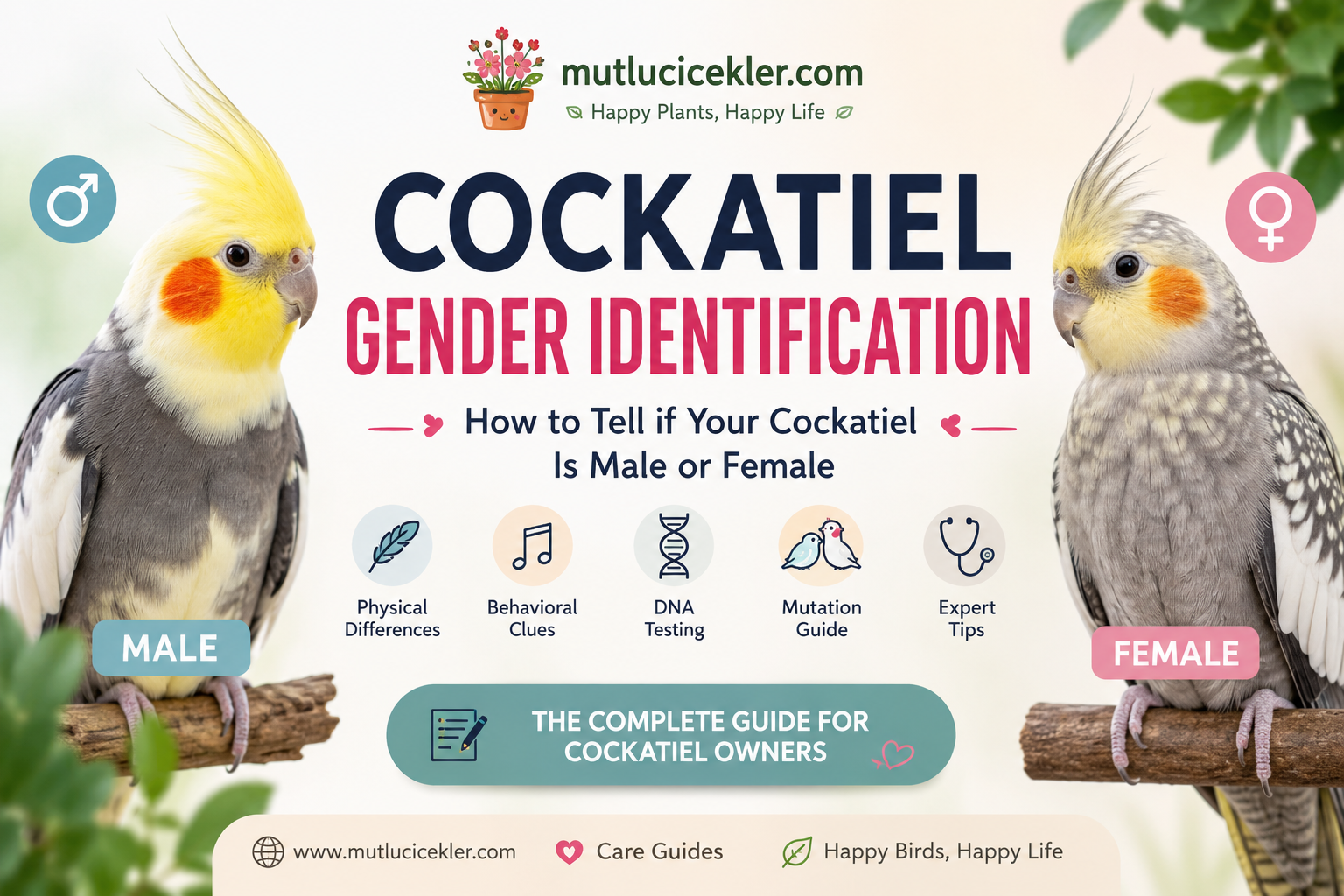
Cockatiel Gender Identification: The Complete Guide for Bird Owners
Cockatiels are among the world’s most popular pet birds thanks to their friendly personalities, intelligence, and charming whistles. One of the most common questions new owners ask is: “Is my cockatiel male or female?”
Determining a cockatiel’s gender isn’t always straightforward. While some birds display obvious physical and behavioral differences, others—especially certain color mutations—can only be accurately sexed through DNA testing.
In this comprehensive guide, you’ll learn every reliable method to identify your cockatiel’s gender, understand age-related changes, and know when professional testing is necessary.
Why Knowing Your Cockatiel’s Gender Matters
Understanding whether your cockatiel is male or female helps with:
✅ Predicting behavior
✅ Choosing compatible companions
✅ Preventing unwanted breeding
✅ Understanding hormonal changes
✅ Providing proper healthcare
✅ Planning breeding programs responsibly
At What Age Can You Tell a Cockatiel’s Gender?
Young cockatiels look remarkably similar regardless of gender.
Generally:
🐣 0–6 months: Very difficult to identify visually.
🪶 6–9 months: Birds experience their first molt.
🐦 After the first molt: Many normal gray cockatiels begin showing clear gender differences.
For some mutations, visual identification remains impossible even after adulthood.
Physical Differences Between Male and Female Cockatiels
Male Cockatiel Characteristics
Adult males usually develop:
- Bright yellow face
- Vibrant orange cheek patches
- Dark gray body
- Solid-colored tail feathers
- Clean wing feathers without heavy spotting
- More striking overall appearance
Their facial coloration becomes much brighter after the first molt.
Female Cockatiel Characteristics
Adult females typically have:
- Softer gray face
- Less vibrant yellow coloration
- Slightly duller orange cheek patches
- Horizontal barring underneath the tail
- Yellow spots underneath flight feathers
- More muted overall coloring
The barring under the tail is often one of the easiest clues.
Tail Feather Patterns
One of the most reliable visual indicators in normal gray cockatiels is the tail.
Male
- Smooth, solid-colored tail
- No horizontal stripes underneath
Female
- Horizontal yellow or gray bars
- Clearly visible under good lighting
Always examine the underside of the tail rather than the top.
Wing Feather Patterns
Female cockatiels usually retain:
- Yellow spots
- Pearl-like markings
- Speckled feather patterns underneath the wings
Adult males generally lose many of these markings after their first molt.
Face Color Differences
Male cockatiels often have:
💛 Bright yellow face
🟠 Bold orange cheek patches
Female cockatiels usually display:
🤍 Grayish face
🟠 Softer cheek coloration
However, this rule mainly applies to Normal Gray Cockatiels.
Behavioral Differences
Behavior can provide valuable clues, although individual personalities vary.
Male Cockatiels Often
🎵 Whistle elaborate tunes
🎶 Mimic household sounds
🗣 Learn whistles more easily
💃 Perform courtship displays
🪽 Raise wings into a heart shape
🥁 Tap objects rhythmically
📢 Vocalize more frequently
Female Cockatiels Often
🕊 Produce softer vocalizations
🤫 Whistle less frequently
🥚 May search for nesting sites
🪺 Display nesting behavior
❤️ Can become protective during hormonal periods
The Famous Heart Wings Display
One classic male behavior is the heart wings display.
During courtship, a male:
- Lifts both wings slightly
- Creates a heart-shaped silhouette
- Sings continuously
- Bobs his head repeatedly
- Taps objects with his beak
This behavior is rarely seen in females.
Can Females Sing?
Yes.
Female cockatiels can whistle and vocalize.
However:
- Males usually develop larger song repertoires.
- Males whistle more frequently.
- Males imitate melodies more successfully.
A singing cockatiel isn’t automatically male, but it increases the likelihood.
Gender Identification by Color Mutation
Color mutations make visual identification much more difficult.
Normal Gray
Visual identification is usually reliable after the first molt.
Lutino
Visual clues are limited.
DNA testing is often recommended.
Whiteface
Adult males develop completely white faces.
Females retain gray facial coloration.
Pearl
Adult males usually lose pearl markings after their first molt.
Females generally keep the pearl pattern for life.
Pied
Visual sexing is extremely unreliable.
DNA testing provides the most accurate answer.
Albino (Whiteface Lutino)
Visual identification is virtually impossible.
DNA testing is strongly recommended.
DNA Testing: The Most Accurate Method
If you want certainty, DNA testing is the gold standard.
Accuracy:
✅ Over 99%
Testing requires only:
- A few chest feathers (when collected correctly), or
- A small blood sample, depending on the laboratory.
Results are usually available within several days to a few weeks, depending on the provider.
Can a Veterinarian Determine Gender?
Yes.
An avian veterinarian can recommend:
- DNA testing
- Endoscopic sexing (rarely needed today)
- Health examinations
Most professionals now recommend DNA testing because it’s highly accurate and minimally invasive.
Common Mistakes When Identifying Gender
Many owners accidentally assume:
❌ Bright colors always mean male.
❌ Quiet birds are always female.
❌ Singing guarantees a male.
❌ Tail feathers alone always reveal gender.
❌ Every mutation follows the same rules.
In reality, genetics, age, and individual personality all influence appearance and behavior.
Signs Your Cockatiel May Be Female
Possible female indicators include:
- Horizontal tail bars
- Wing spots
- Gray facial coloration
- Less elaborate whistling
- Nesting behavior
- Egg laying (definitive, though females can lay infertile eggs without a male)
Signs Your Cockatiel May Be Male
Possible male indicators include:
- Bright yellow face
- Intense orange cheeks
- Frequent singing
- Heart wings display
- Object tapping
- Courtship dances
- Mimicking whistles
Is DNA Testing Worth It?
If you’re planning:
- Breeding
- Buying a companion bird
- Monitoring reproductive health
- Confirming gender in color mutations
DNA testing is well worth the investment.
For many pet owners, it provides peace of mind and eliminates guesswork.
Final Thoughts
Identifying a cockatiel’s gender can be simple for some birds and surprisingly challenging for others. While normal gray cockatiels often reveal their gender after the first molt through facial coloration, tail patterns, and behavior, many color mutations require DNA testing for certainty.
By observing your bird’s appearance, vocalizations, courtship displays, and feather patterns—and using DNA testing when necessary—you can confidently determine whether your feathered companion is male or female.
With patience and careful observation, you’ll better understand your cockatiel’s personality and provide the care that best suits its needs.
Frequently Asked Questions (FAQ)
Can you tell a cockatiel’s gender by appearance alone?
Yes, in many normal gray cockatiels after the first molt. However, several color mutations require DNA testing for reliable identification.
At what age can you determine a cockatiel’s gender?
Visual clues typically become more reliable after the first molt, around 6–9 months of age.
Is DNA testing accurate?
Yes. DNA sexing is more than 99% accurate when performed by a reputable laboratory.
Do all male cockatiels sing?
Most males whistle and sing more than females, but not every male develops an extensive song repertoire.
Can female cockatiels lay eggs without a male?
Yes. Female cockatiels can lay infertile eggs even if they have never been housed with a male.
Which cockatiel colors are hardest to sex visually?
Albino, Lutino, and Pied cockatiels are among the most difficult to identify visually, making DNA testing the preferred method.
Follow MutluCicekler.com for more expert bird care guides, cockatiel health tips, training advice, nutrition information, and pet bird resources from around the world.











Bir Cevap Yazın