

Uzbekistan Travel Guide
Uzbekistan is one of Central Asia’s most fascinating destinations, offering travelers magnificent Islamic architecture, vibrant bazaars, ancient Silk Road cities, and warm hospitality. Home to legendary cities like Samarkand, Bukhara, and Khiva, Uzbekistan combines thousands of years of history with modern infrastructure, making it one of the easiest countries to explore in the region.
Whether you’re interested in history, photography, culture, or food, Uzbekistan delivers unforgettable experiences at every turn.
Quick Facts About Uzbekistan
📍 Capital: Tashkent
🌍 Region: Central Asia
🗣 Official Language: Uzbek
💵 Currency: Uzbek Som (UZS)
✈️ Main Airport: Tashkent International Airport (TAS)
🕒 Time Zone: UTC +5
🚗 Driving Side: Right
🔌 Plug Types: C & F (220V)
👥 Population: Approximately 37 million
Why Visit Uzbekistan?
Uzbekistan is often called the jewel of the Silk Road, where centuries-old caravan routes connected Europe and Asia.
Visitors come to experience:
- Spectacular blue-tiled mosques
- UNESCO World Heritage cities
- Ancient madrasas and mausoleums
- Traditional Uzbek cuisine
- Bustling local bazaars
- Affordable travel
- Rich Islamic heritage
- Desert landscapes
- Friendly locals
- Incredible photography opportunities
Top 10 Places to Visit in Uzbekistan
1. Samarkand
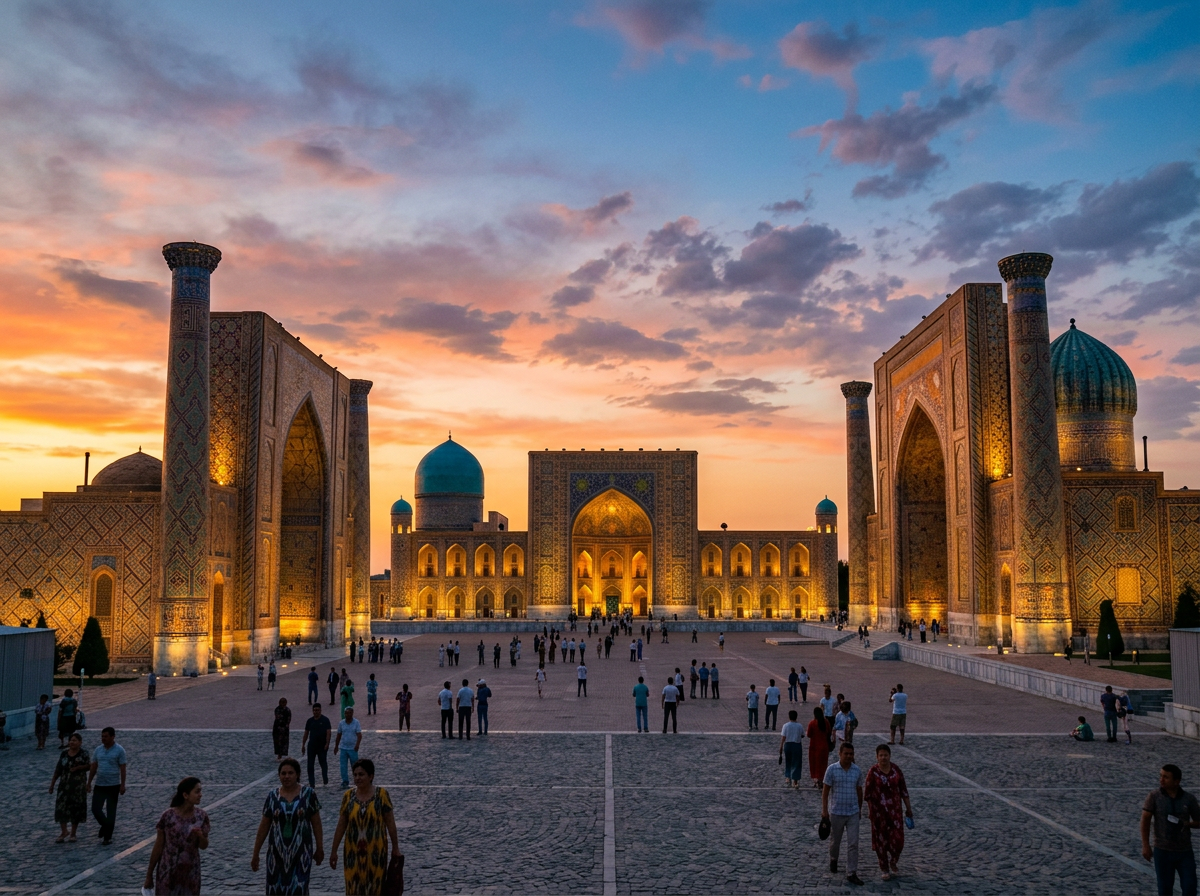
The legendary city of Samarkand is one of the oldest continuously inhabited cities in the world.
Highlights include:
- Registan Square
- Gur-e-Amir Mausoleum
- Shah-i-Zinda Necropolis
- Bibi-Khanym Mosque
- Siyob Bazaar
The breathtaking turquoise domes make Samarkand one of the most beautiful cities in Asia.
2. Bukhara
Bukhara feels like an open-air museum with over 140 protected historical monuments.
Don’t miss:
- Ark Fortress
- Poi Kalyan Complex
- Lyabi-Hauz
- Chor Minor
- Abdulaziz Khan Madrasa
Walking through Bukhara at sunset is a magical experience.

3. Khiva
Khiva’s historic center, Itchan Kala, is entirely surrounded by ancient walls.
Top attractions:
- Kalta Minor Minaret
- Muhammad Amin Khan Madrasa
- Kunya Ark
- Islam Khoja Minaret
- City Walls
Khiva is often considered the best-preserved Silk Road city.

4. Tashkent
Uzbekistan’s modern capital offers a fascinating mix of Soviet architecture and traditional culture.
Top attractions include:
- Chorsu Bazaar
- Hazrat Imam Complex
- Tashkent Metro
- Amir Timur Square
- Museum of Applied Arts

5. Shahrisabz
Birthplace of the famous conqueror Timur.
Highlights:
- Ak-Saray Palace
- Dorus Saodat Complex
- Kok Gumbaz Mosque

6. Nuratau Mountains
Perfect for travelers seeking nature and hiking.
Activities include:
- Mountain trekking
- Village homestays
- Wildlife watching
- Traditional mountain life

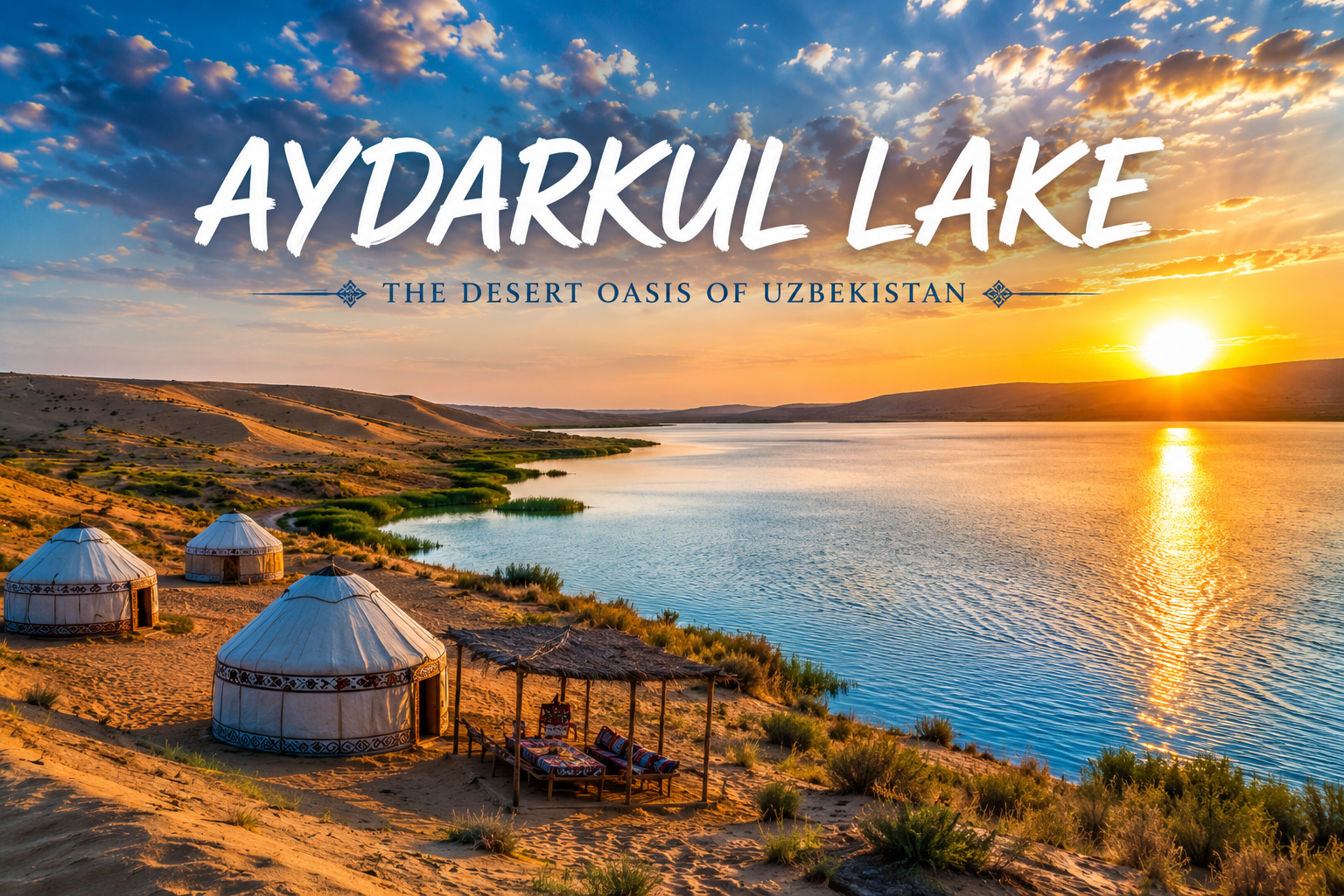
7. Aydarkul Lake
A peaceful desert oasis.
Popular activities:
- Swimming
- Camel rides
- Camping
- Stargazing
- Yurt stays
8. Aral Sea Region
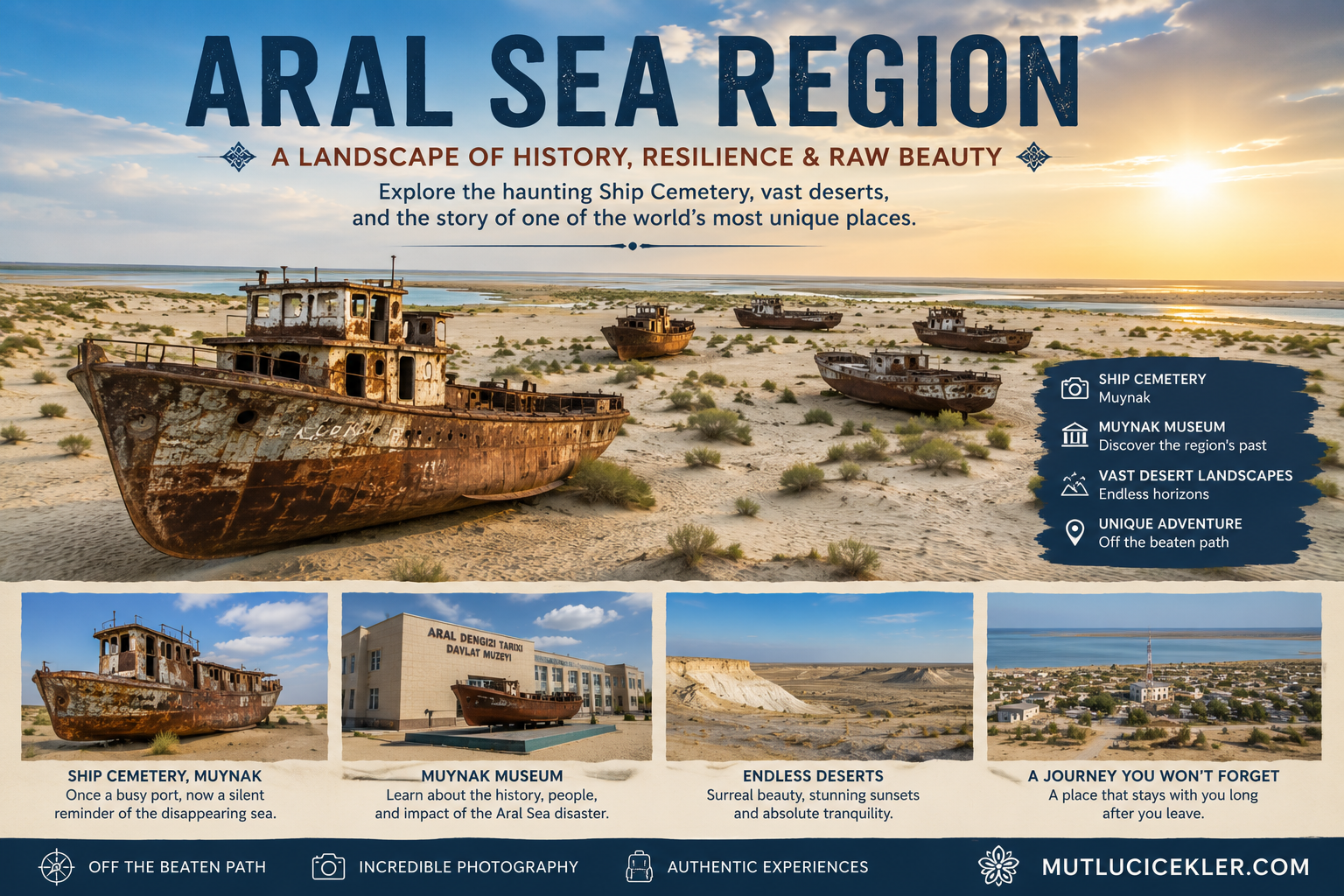
One of the world’s most unique destinations.
See:
- Ship Cemetery
- Muynak Museum
- Desert landscapes
- Environmental history
9. Fergana Valley
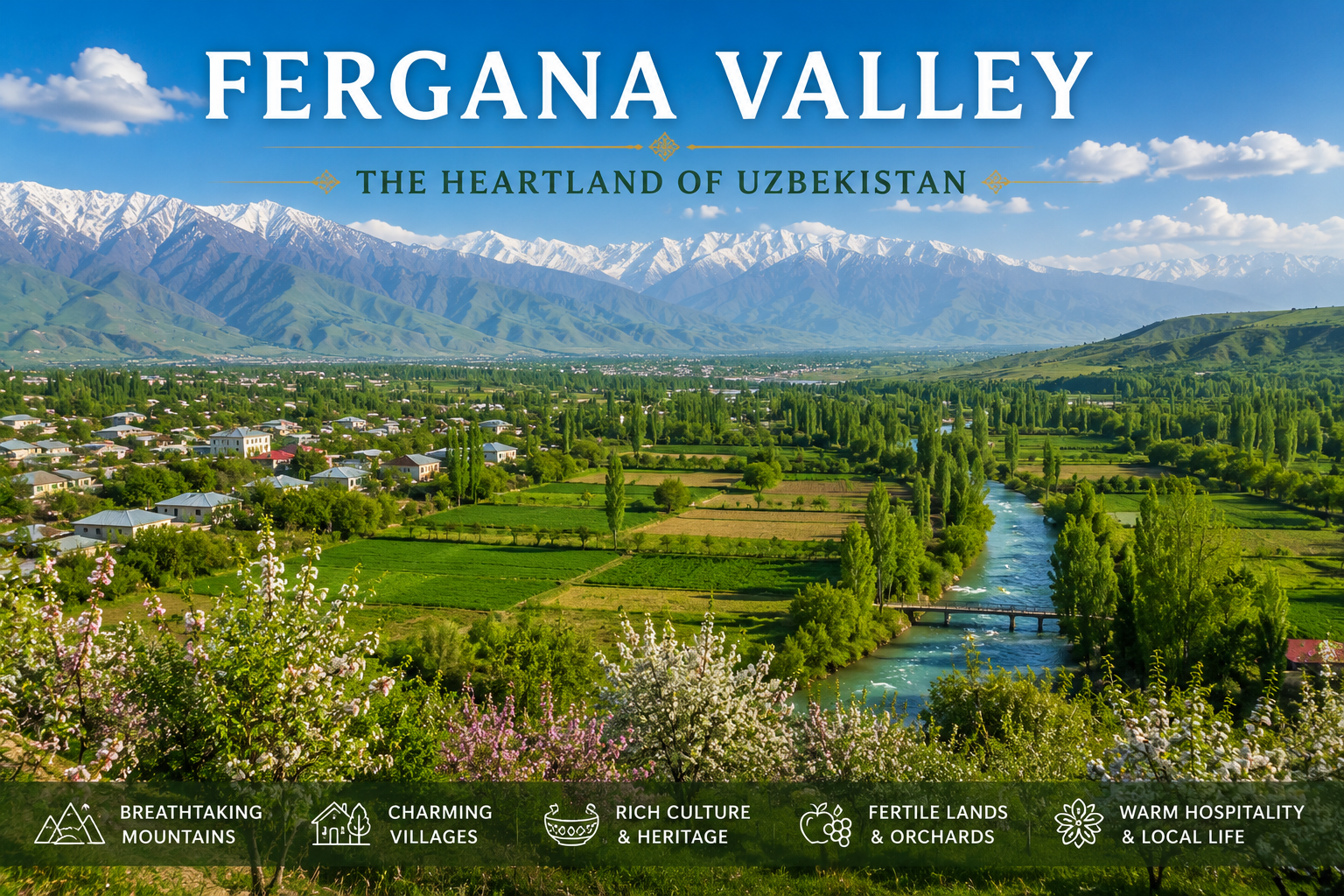
Known for:
- Silk production
- Pottery workshops
- Local crafts
- Beautiful countryside
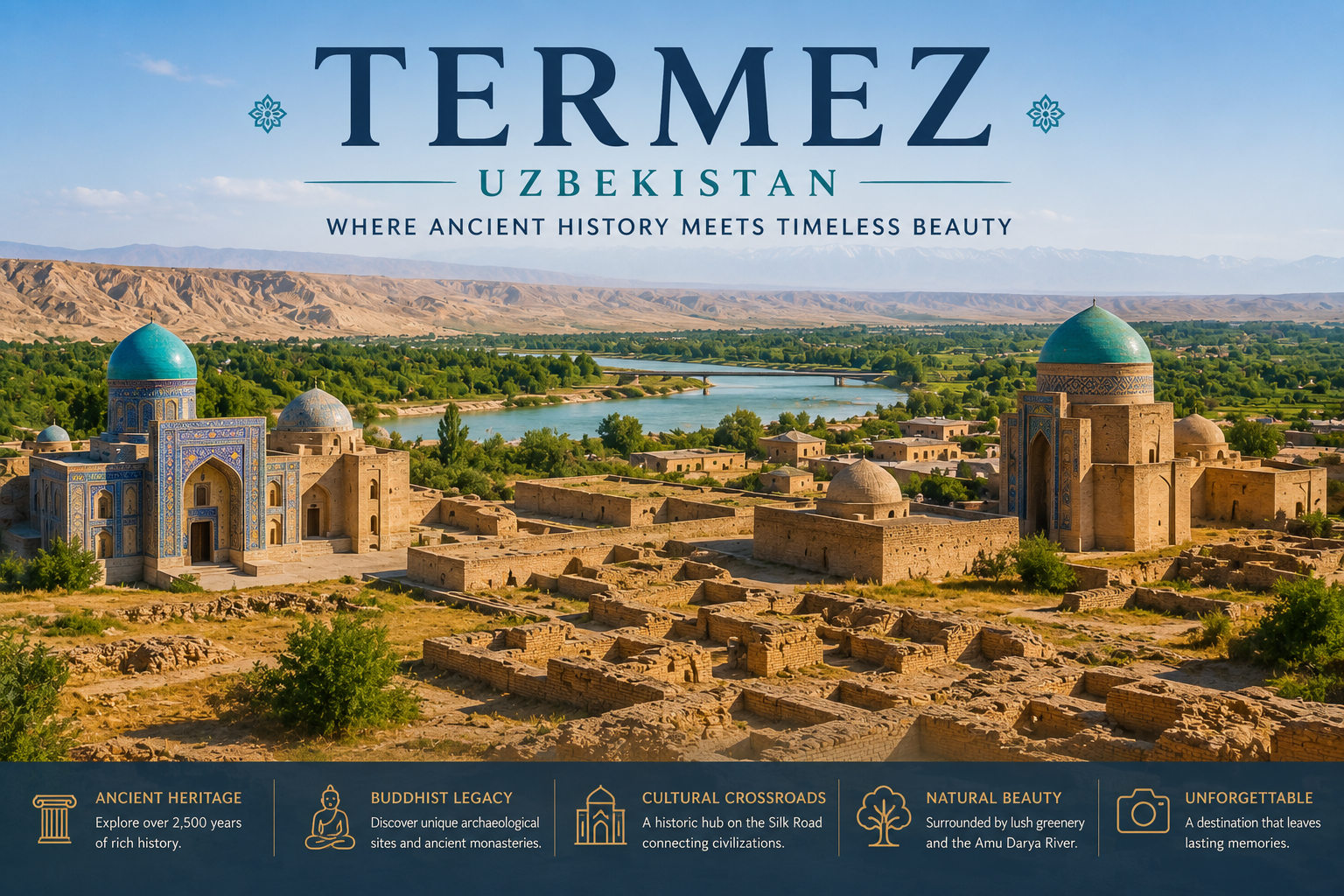
10. Termez
One of Uzbekistan’s oldest cities with fascinating Buddhist history.
Attractions include:
- Fayaz Tepe
- Kampyr Tepe
- Archaeological Museum
- Sultan Saodat Complex
Best Things to Do in Uzbekistan
- Explore UNESCO World Heritage Sites
- Wander through ancient Silk Road cities
- Shop in traditional bazaars
- Ride the famous Tashkent Metro
- Stay in a desert yurt
- Taste authentic Uzbek cuisine
- Photograph stunning Islamic architecture
- Visit colorful local markets
- Experience Uzbek hospitality
- Watch traditional handicrafts being made
Hidden Gems in Uzbekistan
Many visitors only see Samarkand and Bukhara, but Uzbekistan offers many lesser-known treasures.
Discover:
- Boysun
- Sentob Village
- Zaamin National Park
- Sarmishsay Petroglyphs
- Kokand
- Rishtan
- Margilan
- Langar Village
- Nurata
- Chimgan Mountains
Best Time to Visit Uzbekistan
🌸 Spring (March–May)
The most popular season.
Perfect weather for:
- Sightseeing
- Photography
- Hiking
- Festivals
☀️ Summer (June–August)
Expect very hot temperatures.
Best for:
- Desert adventures
- Early morning sightseeing
- Mountain escapes
🍂 Autumn (September–November)
An excellent season featuring:
- Pleasant temperatures
- Harvest festivals
- Beautiful scenery
- Fresh fruits
❄️ Winter (December–February)
Ideal for:
- Lower hotel prices
- Fewer tourists
- Snowy city views
- Skiing near Tashkent
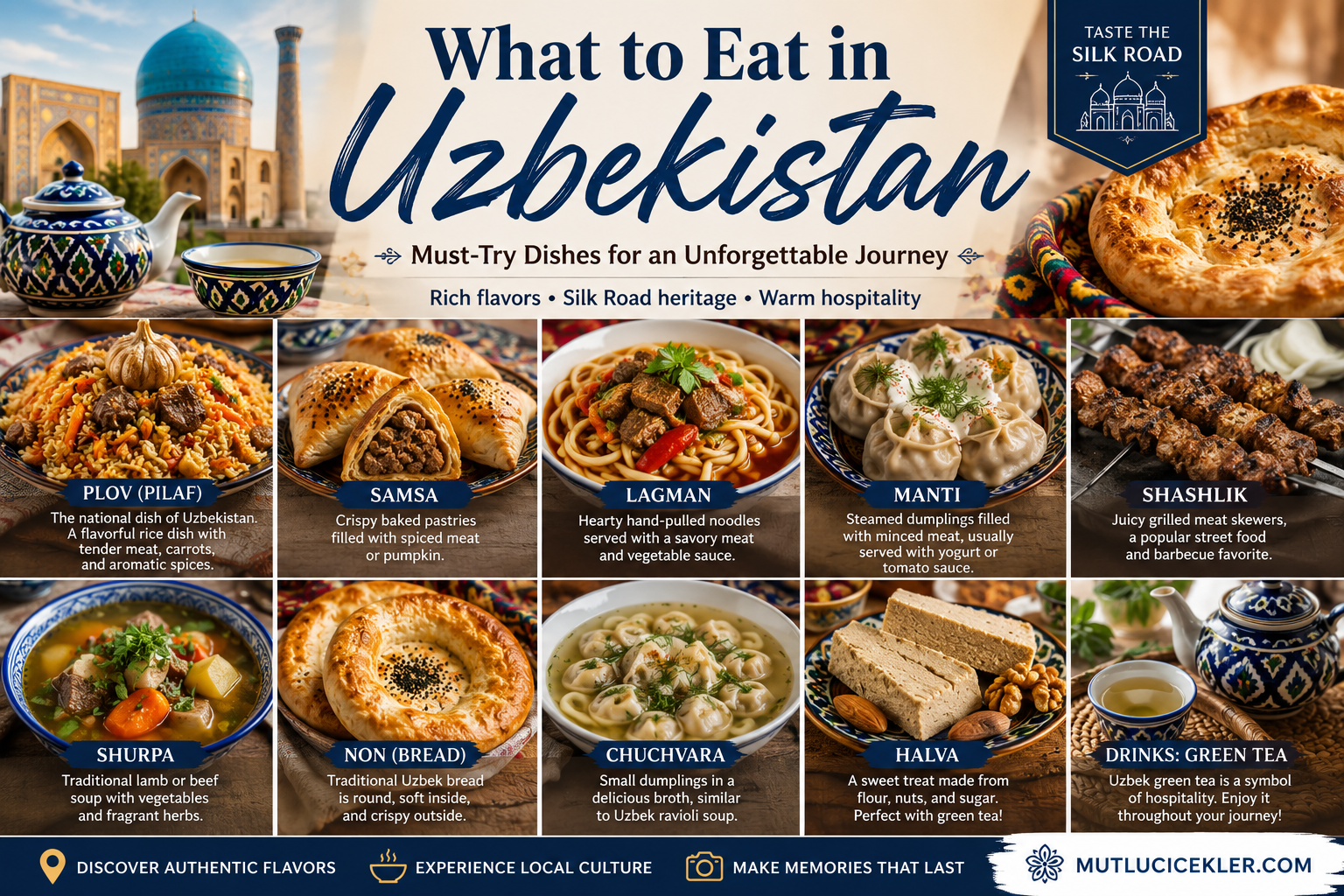
What to Eat in Uzbekistan
Uzbek cuisine is one of Central Asia’s highlights.
Must-try dishes include:
- Plov (Pilaf)
- Samsa
- Lagman
- Shashlik
- Manti
- Dimlama
- Shurpa
- Non (Traditional Bread)
- Chuchvara
- Halva
Don’t forget to enjoy traditional Uzbek green tea after meals.
Getting Around Uzbekistan
Transportation is affordable and reliable.
Options include:
🚄 High-speed Afrosiyob trains
🚆 Overnight trains
🚌 Long-distance buses
🚖 Shared taxis
🚕 Ride-hailing apps
✈️ Domestic flights
The high-speed rail network makes traveling between Tashkent, Samarkand, and Bukhara quick and comfortable.
Shopping in Uzbekistan
Popular souvenirs include:
- Handmade carpets
- Silk scarves
- Ceramics
- Embroidered textiles
- Miniature paintings
- Wooden carvings
- Traditional knives
- Copper crafts
- Spices
- Dried fruits and nuts
Suggested 10-Day Uzbekistan Itinerary
This carefully planned 10-day Uzbekistan itinerary combines the country’s most celebrated Silk Road cities with a memorable desert experience. The route follows a practical westward direction from Tashkent to Samarkand, Nuratau, Bukhara, and Khiva, helping travelers avoid unnecessary backtracking while enjoying a balanced mix of architecture, culture, local food, nature, and relaxation.
Day 1 – Arrival in Tashkent and First Impressions
Begin your journey in Tashkent, Uzbekistan’s lively capital and the main international gateway to the country. After checking into your hotel, keep the first day relaxed so you can adjust after your flight.
Start at Amir Timur Square, one of the city’s most recognizable public spaces, before walking along the broad avenues toward Independence Square. Continue to Broadway Alley, where local artists, cafés, and small souvenir stalls create a welcoming atmosphere.
Later, take your first ride on the Tashkent Metro. Many stations are decorated with chandeliers, marble columns, mosaics, and designs inspired by Uzbek history and culture.
For dinner, visit a traditional restaurant and try your first plate of Uzbek plov, accompanied by fresh salad, warm non bread, and green tea.
Day highlights:
- Amir Timur Square
- Independence Square
- Broadway Alley
- Tashkent Metro
- Traditional Uzbek dinner
Overnight: Tashkent
Day 2 – Historic Tashkent and Chorsu Bazaar
Dedicate your second day to Tashkent’s historic and cultural landmarks. Begin at the Hazrat Imam Complex, an important religious center surrounded by elegant mosques, madrasas, and peaceful courtyards.
Continue to Chorsu Bazaar, one of the best places to experience everyday life in the capital. Inside its enormous blue-domed building, vendors sell spices, fresh fruit, nuts, dried apricots, bread, dairy products, sweets, and prepared foods.
Have lunch at the bazaar or at a nearby chaikhana, a traditional Uzbek teahouse. Try samsa baked in a clay oven, lagman noodles, or shurpa soup.
In the afternoon, visit the Museum of Applied Arts to see traditional embroidery, wood carving, jewelry, ceramics, carpets, and painted interiors. End the day in a modern part of the city, where contemporary cafés and restaurants reveal a different side of Tashkent.
Prepare for an early train to Samarkand the following morning.
Day highlights:
- Hazrat Imam Complex
- Chorsu Bazaar
- Museum of Applied Arts
- Uzbek street food
- Traditional tea experience
Overnight: Tashkent
Day 3 – High-Speed Train to Samarkand
Take an early Afrosiyob high-speed train from Tashkent to Samarkand. The journey is comfortable and allows you to arrive with most of the day still available for sightseeing.
After checking into your hotel, begin at Registan Square, the architectural heart of Samarkand. Surrounded by three monumental madrasas, the square is decorated with brilliant blue tiles, geometric patterns, mosaics, and grand portals.
Continue to the nearby Bibi-Khanym Mosque, once one of the largest mosques in the Islamic world. From there, walk to Siyob Bazaar, where you can taste Samarkand bread, dried fruits, nuts, sweets, and seasonal produce.
In the late afternoon, visit the Gur-e-Amir Mausoleum, the resting place of Amir Timur. Its ribbed blue dome and richly decorated interior make it one of the city’s most impressive monuments.
Return to Registan Square after sunset to see the buildings illuminated.
Day highlights:
- Afrosiyob train journey
- Registan Square
- Bibi-Khanym Mosque
- Siyob Bazaar
- Gur-e-Amir Mausoleum
- Evening photography at Registan
Overnight: Samarkand
Day 4 – The Historic Treasures of Samarkand
Begin your second day in Samarkand at Shah-i-Zinda, a spectacular avenue of mausoleums covered in some of the finest tilework in Central Asia. Arrive early to appreciate the peaceful atmosphere before larger groups arrive.
Next, visit the Ulugh Beg Observatory, where the 15th-century astronomer and ruler Ulugh Beg conducted advanced studies of the stars. The nearby museum explains the scientific achievements of medieval Samarkand.
Continue to the Afrosiab Museum and archaeological site to learn about the city’s history before the Islamic period. This adds valuable context to Samarkand’s role as a major center along the Silk Road.
Spend the afternoon visiting a traditional paper workshop in Konigil, where artisans produce handmade paper using centuries-old methods. You may also explore local carpet, embroidery, or ceramics workshops.
End the day with dinner at a local family-run restaurant. Try manti, dimlama, or shashlik served with fresh salads and bread.
Day highlights:
- Shah-i-Zinda
- Ulugh Beg Observatory
- Afrosiab Museum
- Konigil paper workshop
- Traditional crafts
- Local Uzbek dinner
Overnight: Samarkand
Day 5 – Samarkand to the Nuratau Mountains and Aydarkul Lake
Leave Samarkand in the morning and travel toward the Nuratau Mountains, one of Uzbekistan’s most peaceful rural regions. This part of the journey provides a refreshing contrast to the country’s monumental cities.
Stop in a traditional mountain village such as Sentob or Hayat, where local families operate guesthouses and introduce visitors to rural Uzbek life. Enjoy a home-cooked lunch prepared with seasonal vegetables, bread, dairy products, and locally grown ingredients.
Depending on your chosen village and season, take a gentle hike through the surrounding hills, visit ancient ruins or petroglyphs, and learn about traditional agriculture and village customs.
Later, continue toward Aydarkul Lake or a nearby yurt camp in the Kyzylkum Desert. Take a short walk across the dunes, relax beside the lake, or enjoy a camel ride before sunset.
In the evening, have dinner at the camp and spend time beneath the clear desert sky. Some camps offer traditional music around a fire.
Day highlights:
- Nuratau mountain scenery
- Traditional village visit
- Home-cooked lunch
- Aydarkul Lake
- Desert sunset
- Yurt camp experience
- Stargazing
Overnight: Yurt camp or Nuratau guesthouse
Day 6 – Desert Morning and Journey to Bukhara
Wake up early to enjoy the quiet desert landscape. After breakfast, take a final walk near the lake or dunes before continuing to Bukhara.
The drive provides changing views of open desert, small settlements, farmland, and distant mountains. Stop for lunch along the route before arriving in Bukhara during the afternoon.
After checking into a traditional guesthouse in the Old City, begin with a gentle orientation walk around Lyabi-Hauz. This historic pond is surrounded by madrasas, mulberry trees, cafés, and beautifully restored buildings.
Explore the nearby trading domes, where merchants once exchanged silk, spices, jewelry, carpets, and other goods transported along the Silk Road.
Have dinner in a courtyard restaurant and enjoy the slower rhythm of Bukhara after sunset.
Day highlights:
- Desert sunrise
- Scenic transfer to Bukhara
- Lyabi-Hauz
- Historic trading domes
- Old City evening walk
Overnight: Bukhara
Day 7 – Full-Day Exploration of Bukhara
Begin your full day in Bukhara at the Poi Kalyan Complex, home to the magnificent Kalyan Minaret, Kalyan Mosque, and Mir-i-Arab Madrasa. The scale and harmony of the complex make it one of Uzbekistan’s most memorable architectural sights.
Continue to the Ark of Bukhara, a vast fortress that served as the residence of Bukhara’s rulers. Nearby, visit the Bolo Hauz Mosque, known for its carved wooden columns and beautifully decorated ceiling.
Walk to the Samanid Mausoleum, one of Central Asia’s oldest surviving Islamic monuments, before visiting the Chashma Ayub Mausoleum and the surrounding park.
In the afternoon, explore Chor Minor, a small but distinctive building with four decorative towers. Spend time browsing carpet shops, embroidery studios, miniature painting workshops, and traditional metalwork stores.
Consider visiting a historic hammam or attending a cultural performance in the evening.
Day highlights:
- Poi Kalyan Complex
- Kalyan Minaret
- Ark Fortress
- Bolo Hauz Mosque
- Samanid Mausoleum
- Chor Minor
- Artisan workshops
Overnight: Bukhara
Day 8 – Bukhara to Khiva
Spend a relaxed morning in Bukhara before beginning the journey to Khiva. Depending on the available schedule, travelers can use a train, private transfer, or domestic flight through Urgench.
The overland route crosses the Kyzylkum Desert and can take much of the day, so bring water, snacks, and something to read. Although the journey is long, it follows part of the historic route once used by Silk Road caravans.
After arriving in Khiva, check into a hotel or guesthouse inside or near Itchan Kala, the city’s walled historic center.
Take an evening walk through the old town when the daytime crowds have disappeared. The illuminated minarets, mud-brick walls, carved doors, and narrow lanes create an almost theatrical atmosphere.
Enjoy dinner on a rooftop terrace overlooking the old city.
Day highlights:
- Silk Road desert journey
- Arrival in Khiva
- Itchan Kala evening walk
- Rooftop dinner
- Night photography
Overnight: Khiva
Day 9 – Discover the Walled City of Khiva
Spend the day exploring Itchan Kala, a remarkably preserved historic city filled with palaces, mosques, madrasas, minarets, museums, and traditional houses.
Begin at the western gate, Ata Darvaza, and continue to the unfinished Kalta Minor Minaret, one of Khiva’s most recognizable landmarks. Its turquoise tiles and unusual proportions make it an excellent photography stop.
Explore the Kunya Ark Fortress, once the residence and administrative center of Khiva’s rulers. Climb the watchtower for panoramic views over the old city.
Visit the beautifully decorated Tash Khauli Palace, the Juma Mosque with its forest of carved wooden columns, and the Islam Khoja Complex. Travelers comfortable with stairs can climb the Islam Khoja Minaret for one of the best views in Khiva.
Spend the late afternoon visiting small museums, wood-carving workshops, and carpet or textile shops. Before sunset, walk along a section of the city wall or find a rooftop viewpoint.
For dinner, try local Khorezm specialties such as shivit oshi, green noodles served with meat and vegetables, or tukhum barak, dumplings filled with seasoned egg.
Day highlights:
- Ata Darvaza
- Kalta Minor
- Kunya Ark
- Tash Khauli Palace
- Juma Mosque
- Islam Khoja Minaret
- Khorezm cuisine
- Sunset over Itchan Kala
Overnight: Khiva
Day 10 – Final Morning in Khiva and Departure
Use your final morning for a peaceful walk through Itchan Kala before the streets become busy. This is an ideal time for photography, souvenir shopping, or revisiting your favorite landmark.
Browse shops selling carved wooden objects, embroidered textiles, ceramic plates, traditional hats, carpets, and handmade ornaments. Have a final Uzbek breakfast or lunch before transferring to Urgench International Airport.
Depending on your flight schedule, you can fly directly to Tashkent and connect with your international departure. Travelers with a late flight may also have time for a final café stop or a short visit to Urgench.
Your 10-day Uzbekistan journey ends with memories of majestic Silk Road architecture, ancient cities, desert landscapes, welcoming communities, flavorful cuisine, and some of Central Asia’s most extraordinary cultural treasures.
Day highlights:
- Quiet morning in Itchan Kala
- Final souvenir shopping
- Khorezm food
- Transfer to Urgench Airport
- Flight to Tashkent or onward destination
10-Day Route at a Glance
Days 1–2: Tashkent
Days 3–4: Samarkand
Day 5: Nuratau Mountains and Aydarkul Lake
Days 6–7: Bukhara
Days 8–10: Khiva and departure via Urgench
Practical Tips for This Uzbekistan Itinerary
Book high-speed trains in advance, especially for the Tashkent–Samarkand route and during the busy spring and autumn seasons. Choose accommodation inside the historic centers of Samarkand, Bukhara, and Khiva whenever possible, as this allows you to explore major landmarks on foot.
Arrange the Nuratau and Aydarkul section with a reliable guesthouse, yurt camp, or local tour operator because public transportation is limited in rural areas. Keep one flexible evening in the schedule in case a transfer takes longer than expected.
The best pace is to start sightseeing early, rest during the hottest part of the afternoon, and return outdoors before sunset. Carry cash for small restaurants, local markets, village guesthouses, and souvenir shops, although cards are increasingly accepted in larger hotels and tourist businesses.
Useful Travel Tips
- Carry some cash for local markets.
- Dress modestly when visiting religious sites.
- Learn a few Uzbek greetings.
- Book high-speed trains early during peak season.
- Stay hydrated during summer.
- Respect local customs and traditions.
- Bargaining is common in bazaars.
- Photography is welcomed at most tourist sites.
- Visa requirements vary by nationality—check before traveling.
- Purchase travel insurance for peace of mind.
Frequently Asked Questions (FAQ)
Is Uzbekistan safe for tourists?
Yes. Uzbekistan is considered one of the safest destinations in Central Asia, with welcoming locals and a growing tourism infrastructure.
How many days do you need in Uzbekistan?
A 10-day itinerary is ideal to experience Tashkent, Samarkand, Bukhara, Khiva, and a desert adventure without feeling rushed.
Is Uzbekistan expensive?
No. Uzbekistan is generally budget-friendly, offering affordable accommodation, transportation, and delicious local food.
Can I travel independently?
Absolutely. High-speed trains, reliable taxis, and good tourist facilities make independent travel easy.
Do people speak English?
English is becoming more common in tourist areas, though learning a few Uzbek or Russian phrases is helpful.
Final Thoughts
Uzbekistan is a destination where history comes alive through majestic architecture, bustling Silk Road markets, and centuries-old traditions. From the iconic blue domes of Samarkand to the timeless streets of Khiva and the vibrant atmosphere of Tashkent, every stop reveals a new chapter of Central Asia’s rich heritage. Whether you’re planning your first visit or returning to explore more hidden gems, Uzbekistan promises unforgettable memories, warm hospitality, and extraordinary cultural experiences.
Follow MutluCicekler.com for more inspiring travel guides, hidden destinations, practical travel tips, and unforgettable adventures from around the world.











Bir Cevap Yazın