
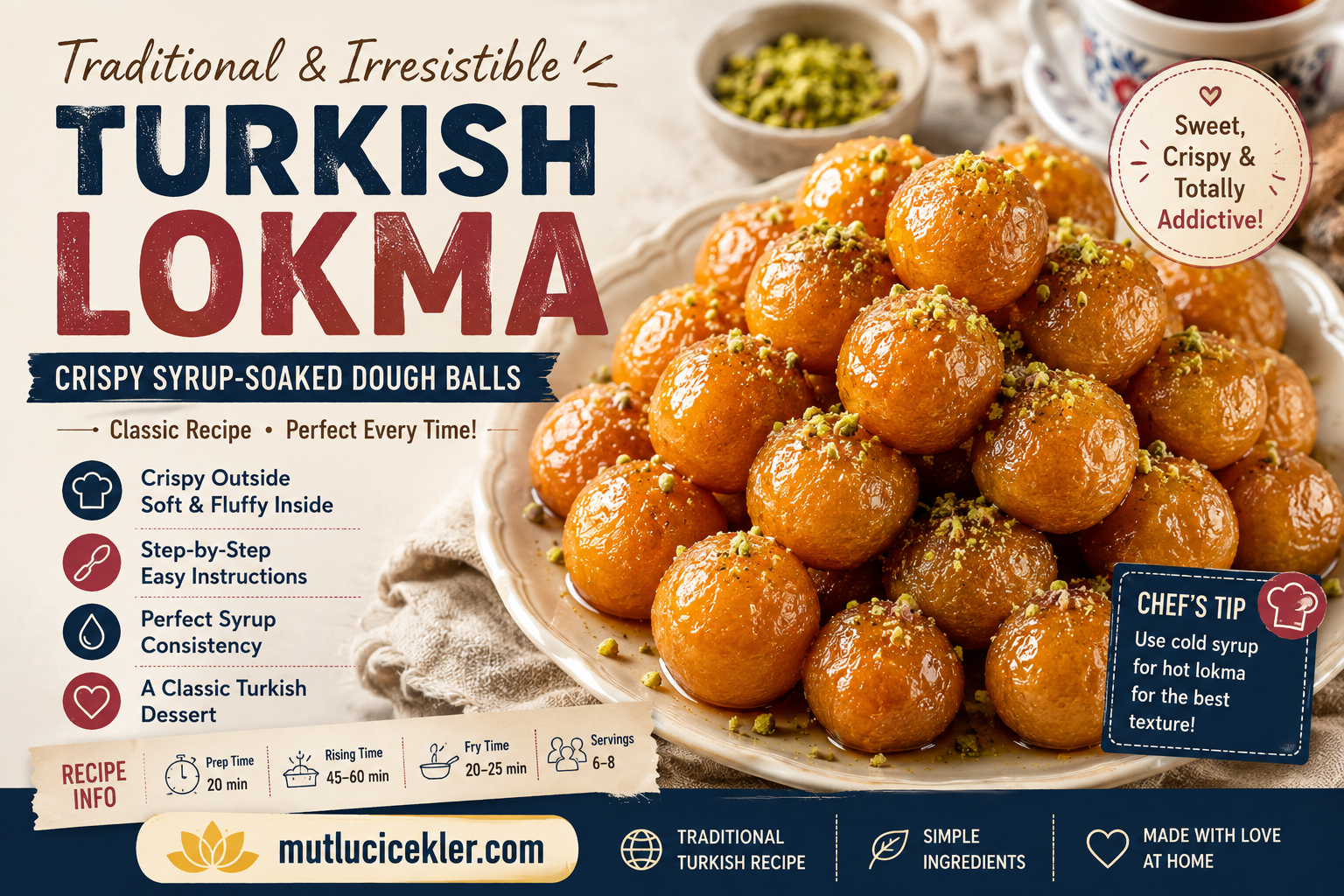
Crispy and golden on the outside, soft and airy on the inside, and coated in sweet syrup, Turkish Lokma is one of the most irresistible traditional desserts in Turkish cuisine.
These small fried dough balls are freshly cooked until beautifully golden and then dipped in cool sugar syrup. The contrast between the crisp exterior and soft center makes them especially delicious when served fresh.
If you are wondering how to make Turkish Lokma at home, this easy recipe will guide you through everything you need to know, from getting the dough consistency right to controlling the frying temperature and preparing the perfect syrup.
🍩 What Is Turkish Lokma?
Lokma is a traditional Turkish dessert made from a soft yeast dough that is shaped into small balls, deep-fried until golden, and soaked in sugar syrup.
The Turkish word lokma roughly refers to a “bite” or “morsel,” which perfectly describes these small bite-sized treats.
Lokma is especially associated with Turkish food culture and is often prepared for gatherings, celebrations, special occasions, and community events.
Depending on the region and preparation style, the shape and size can vary slightly.
Quick Recipe Information
- Cuisine: Turkish
- Category: Dessert
- Preparation Time: 20 minutes
- Rising Time: 45–60 minutes
- Cooking Time: 20–25 minutes
- Servings: 6–8
- Cooking Method: Deep-frying
- Difficulty: Medium
🥣 Turkish Lokma Ingredients
For the Dough
- 3 cups all-purpose flour
- 2 cups lukewarm water
- 1 packet instant yeast (about 10 g / 0.35 oz)
- 1 tablespoon granulated sugar
- ½ teaspoon salt
For the Syrup
- 3 cups granulated sugar
- 2 cups water
- 1 teaspoon lemon juice
For Frying
- Neutral vegetable oil, as needed for deep-frying
Important: Lokma dough should be much softer and stickier than regular bread dough. Avoid adding too much flour, as a stiff dough can result in dense lokma.
How to Make Turkish Lokma
1. Prepare the Sugar Syrup
Add the sugar and water to a saucepan.
Heat over medium heat, stirring until the sugar dissolves.
Once the mixture begins to boil, let it simmer for approximately 10–12 minutes.
Add the lemon juice and continue cooking for another couple of minutes.
Remove the syrup from the heat and allow it to cool completely.
Why Should the Syrup Be Cold?
In this recipe, freshly fried hot lokma are dipped into cooled syrup.
The temperature contrast helps the lokma absorb the syrup while maintaining a better exterior texture.
2. Make the Lokma Dough
Pour the lukewarm water into a large mixing bowl.
Add the instant yeast and sugar and mix well.
Gradually add the flour while stirring.
Add the salt and continue mixing until you have a smooth, very soft, sticky dough.
The consistency should be considerably softer than traditional bread or pizza dough.
Do not be tempted to keep adding flour simply because the dough feels sticky. A soft dough helps create a lighter interior.
3. Let the Dough Rise
Cover the bowl with plastic wrap or a clean kitchen towel.
Leave the dough in a warm place for approximately 45–60 minutes.
The dough should noticeably increase in volume and develop small bubbles on its surface.
These air bubbles are a good indication that the yeast has been working properly.
4. Heat the Oil
Pour enough vegetable oil into a deep saucepan or pot for deep-frying.
Heat the oil to approximately 340–350°F (170–175°C).
Maintaining the correct temperature is one of the most important steps in making crispy lokma.
If the oil is too hot, the outside may brown before the inside cooks properly. If it is not hot enough, the dough can absorb too much oil.
5. Shape the Lokma
Lightly wet or oil your hand.
Take some dough into your palm and gently squeeze your hand so that a small ball of dough appears between your thumb and index finger.
Use a lightly oiled teaspoon to scoop off the dough ball and carefully drop it into the hot oil.
Repeat with the remaining dough.
Try to make the pieces roughly the same size so they cook evenly.
Do not overcrowd the pan.
6. Fry Until Golden
Fry the lokma in batches.
Turn them occasionally so that every side becomes evenly golden and crisp.
Once they develop a beautiful golden-brown color, remove them from the oil using a slotted spoon.
Allow excess oil to drain briefly.
7. Dip the Lokma in Syrup
Immediately transfer the hot lokma into the cold syrup.
Gently turn them in the syrup for approximately 30 seconds to 1 minute.
For a sweeter and more syrup-soaked result, you can leave them in slightly longer.
Remove them from the syrup and transfer to a serving plate.
Serve while fresh.
⭐ How to Make Crispy Turkish Lokma
Although lokma uses only a few basic ingredients, technique makes a big difference.
For the best homemade lokma:
- Keep the dough soft and sticky.
- Use lukewarm, not hot, water for the yeast.
- Allow enough time for the dough to rise.
- Keep the frying oil around 340–350°F (170–175°C).
- Fry in small batches.
- Make the lokma relatively small and evenly sized.
- Prepare the syrup in advance so it has time to cool.
- Fry the lokma shortly before serving whenever possible.
Why Is My Lokma Raw Inside?
If your lokma looks beautifully golden outside but remains doughy inside, the oil may be too hot.
Very hot oil cooks and browns the exterior quickly without giving the center enough time to cook.
Making the dough balls too large can cause the same problem.
Keep them relatively small and maintain a steady frying temperature.
Why Does Lokma Absorb Too Much Oil?
Lokma may become excessively oily when:
- The frying oil is not hot enough.
- Too many pieces are added at once.
- The oil temperature drops significantly during frying.
- The dough consistency is incorrect.
A cooking thermometer can be especially useful for maintaining a temperature of around 340–350°F (170–175°C).
👨🍳 Chef’s Tips for Perfect Lokma
For crispier lokma, make the dough balls relatively small. Smaller pieces cook more evenly and develop a greater proportion of crispy exterior.
Once the dough has risen, avoid aggressively mixing it for a long time. Handle it gently so you retain some of the airy structure created during fermentation.
Frying in several small batches rather than one large batch will also help maintain a consistent oil temperature.
And most importantly, serve lokma fresh. Their texture is at its best shortly after frying and dipping in syrup.
🍯 Turkish Lokma Topping Ideas
Traditional lokma can be served simply with syrup, but you can also add a small amount of:
- Ground pistachios
- Chopped walnuts
- Chopped hazelnuts
- Cinnamon
- Tahini
For the most traditional experience, however, syrup-soaked lokma served without elaborate toppings is an excellent choice.
☕ What to Serve with Turkish Lokma
Because lokma is a rich, syrupy dessert, it pairs especially well with beverages that are not overly sweet.
Try serving it with:
- Turkish coffee
- Turkish black tea
- Unsweetened coffee
- Black tea
The slight bitterness of coffee or tea balances the sweetness of the syrup beautifully.
🔥 How Many Calories Are in Lokma?
The calorie content of lokma depends on its size, the amount of oil absorbed during frying, and how much syrup it absorbs.
As a general estimate, one medium syrup-soaked lokma may contain around 70–100 calories.
This is only an approximate figure and can vary significantly depending on preparation and serving size.
How to Store Turkish Lokma
Lokma is best eaten fresh on the day it is made.
As the fried dough sits in the syrup, it gradually absorbs more moisture and loses some of its crispy exterior.
If you have leftovers, they can be kept in a covered container for a short period, but the texture will not be as crisp as freshly prepared lokma.
For the best experience, make only as much as you expect to serve.
Can You Reheat Lokma?
Syrup-soaked lokma generally does not return to its original crispy texture after reheating.
Reheating can also affect the consistency of the syrup.
For this reason, freshly prepared lokma is highly recommended.
Frequently Asked Questions About Turkish Lokma
Is lokma the same as a doughnut?
Lokma and doughnuts are both made from fried dough, but they are not exactly the same. Traditional Turkish lokma consists of small yeast-based dough balls that are deep-fried and then dipped in sugar syrup.
What does lokma taste like?
Lokma has a sweet, syrupy flavor with a golden fried exterior and a soft, airy center. When freshly prepared, the contrast between the crisp outside and tender inside is one of its most distinctive characteristics.
How long should lokma dough rise?
Approximately 45–60 minutes is usually sufficient, depending on room temperature. Look for a noticeable increase in volume and bubbles on the surface of the dough.
Why is lokma dough so sticky?
A sticky, soft consistency is normal for lokma dough. It should be much softer than standard bread dough.
Adding too much flour to make it easier to handle can produce heavier and denser lokma.
What is the best oil for frying lokma?
Use a neutral vegetable oil suitable for deep-frying. The oil should have a relatively neutral flavor so it does not overpower the dessert.
Should lokma syrup be hot or cold?
For this recipe, use cold syrup with freshly fried hot lokma.
Why is my lokma hard?
Common causes include making the dough too stiff, insufficient rising time, or frying the lokma for too long.
Can I prepare lokma dough the night before?
Traditional same-day preparation is the easiest approach for this recipe. Overnight fermentation requires adjusting the yeast quantity and controlling the fermentation temperature.
Turkish Lokma vs. Loukoumades: Are They the Same?
Turkish lokma and Greek loukoumades are closely related fried-dough desserts found in the culinary traditions of the Eastern Mediterranean and surrounding regions.
Both can feature small pieces of yeast dough fried until golden. However, recipes, serving styles, syrups, toppings, and regional traditions vary.
Rather than treating them as completely interchangeable, it is more accurate to appreciate lokma as part of Turkey’s own long-established culinary tradition while recognizing the broader family of similar fried-dough desserts found across neighboring cuisines.
Conclusion
Making traditional Turkish Lokma at home is surprisingly achievable once you understand the three most important elements: a soft yeast dough, controlled frying temperature, and properly prepared sugar syrup.
The result is a wonderfully indulgent Turkish dessert with a golden, crisp exterior, soft and airy center, and sweet syrup coating.
Whether you are exploring Turkish cuisine for the first time or looking for a traditional dessert to serve with coffee or tea, homemade lokma is well worth trying.
🌸 For more traditional recipes, international dishes, cooking tips, and delicious homemade desserts, follow mutlucicekler.com.











Bir Cevap Yazın