
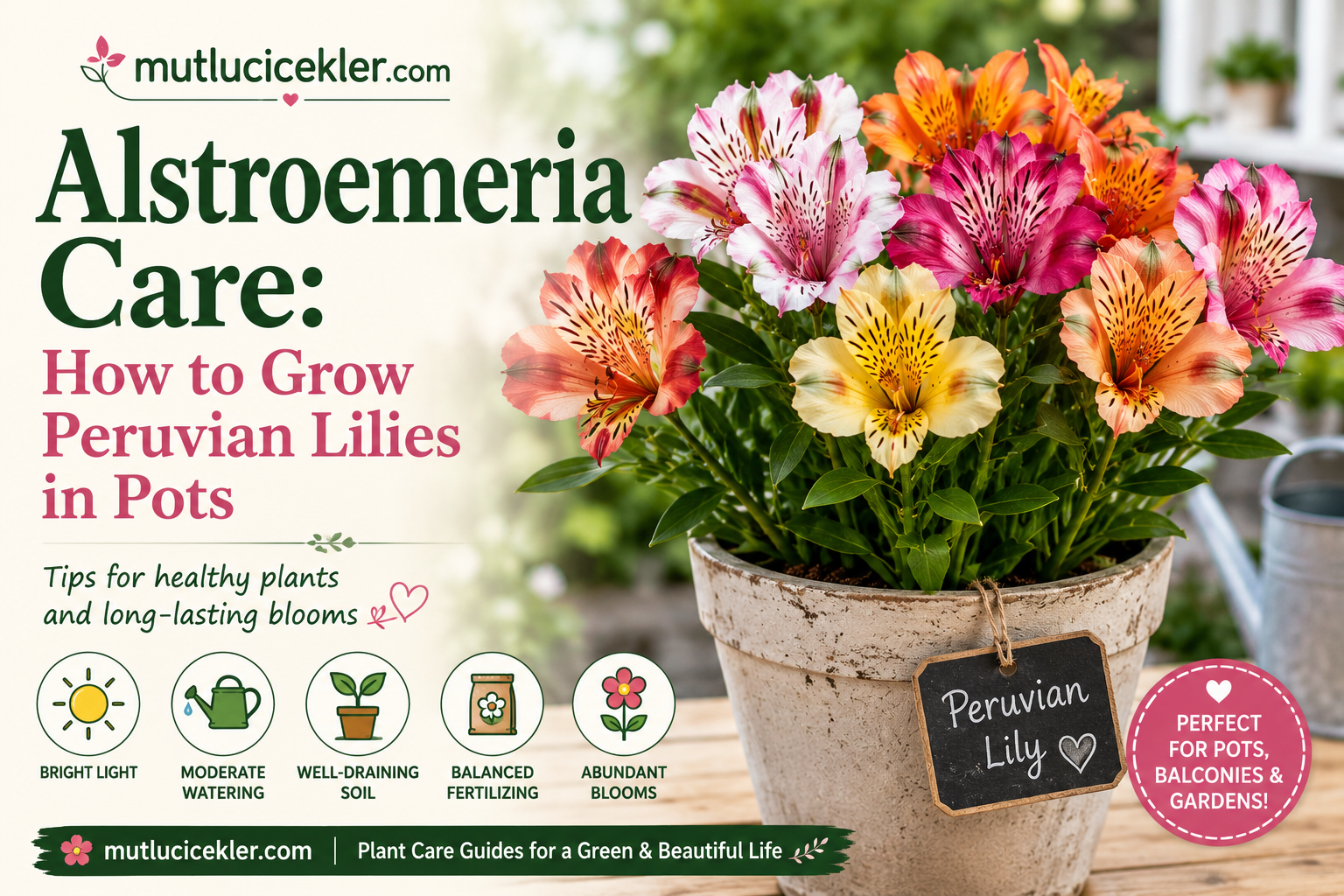
Colorful, elegant, and famous for their long-lasting blooms, Alstroemeria, commonly known as the Peruvian lily or Lily of the Incas, is a beautiful flowering plant that can be grown both in gardens and containers. Although these flowers are often seen in bouquets and floral arrangements, they can also thrive on balconies, patios, and terraces when given the right care.
Native to South America, Alstroemeria produces striking flowers in shades of pink, orange, yellow, red, purple, white, and many beautiful color combinations. Their distinctive petals, often decorated with delicate streaks and markings, make them easy to recognize.
So, how do you grow Alstroemeria in pots? How much sunlight does it need, how often should you water it, and why might it stop flowering? Here is a complete guide to Alstroemeria care.
🌸 What Is Alstroemeria?
Alstroemeria belongs to the Alstroemeriaceae family and includes numerous species and cultivated varieties. It is native primarily to South America, with many species originating from Chile and Brazil.
Alstroemeria is a perennial plant that grows from underground rhizomes and fleshy storage roots. Once established, it can return and produce new growth year after year under suitable conditions.
🌿 Alstroemeria at a Glance
| Feature | Information |
|---|---|
| Botanical name | Alstroemeria spp. |
| Common names | Peruvian lily, Lily of the Incas |
| Plant type | Perennial flowering plant |
| Light | Full sun to partial shade |
| Soil | Fertile, well-draining soil |
| Watering | When the upper layer of soil begins to dry |
| Flowering season | Usually late spring through summer and into fall |
| Growing location | Containers and gardens |
| Propagation | Division and seeds |
🪴 Can Alstroemeria Grow in Pots?
Yes. Alstroemeria grows very well in containers, especially compact varieties developed for smaller spaces.
Container growing is an excellent choice for patios, balconies, terraces, and small gardens.
Because Alstroemeria develops underground rhizomes and fleshy roots, avoid containers that are extremely small or shallow. Choose a pot that provides enough room for healthy root development.
Most importantly, the container should have adequate drainage holes. Waterlogged soil can lead to root and rhizome rot.
☀️ How Much Sun Does Alstroemeria Need?
Alstroemeria needs plenty of light to produce abundant flowers.
Around 4–6 hours of sunlight per day is generally beneficial. However, the ideal location can vary depending on your climate.
In areas with extremely hot summers, intense afternoon sunlight can stress the plant. A location with:
- Morning sunlight,
- Some afternoon shade,
- Good air circulation
can provide excellent growing conditions.
If you grow Alstroemeria indoors, place it close to a bright window where it can receive as much natural light as possible.
Plants grown in insufficient light may continue producing leaves but often develop fewer flowers.
🌱 Best Soil for Alstroemeria
Good drainage is one of the most important requirements for healthy Alstroemeria.
The ideal soil should be:
- Loose and well-draining,
- Fertile,
- Rich in organic matter,
- Moisture-retentive without becoming waterlogged.
For container-grown plants, use a high-quality potting mix with good drainage.
Heavy soil that remains wet for long periods should be avoided because excessive moisture around the roots can encourage rot.
Remember: Alstroemeria appreciates moisture, but its roots should never remain submerged in water.
💧 How to Water Alstroemeria
Alstroemeria prefers consistent moisture during its active growing and flowering season, but overwatering can be just as harmful as underwatering.
Check the soil before watering. When the upper few centimeters or roughly the top inch of soil feels slightly dry, it is usually time to water.
Watering Tips
- Always use containers with drainage holes.
- Never allow the pot to sit permanently in standing water.
- Water more frequently during hot weather when necessary.
- Reduce watering during cooler or dormant periods.
- Check the soil instead of following a rigid watering schedule.
Yellow leaves do not necessarily mean the plant needs more water. Overwatering can also cause yellowing leaves and root problems.
🌡️ Ideal Temperature for Alstroemeria
Alstroemeria generally prefers mild to moderate temperatures.
Extremely hot weather can slow growth, especially when the root zone of a container-grown plant becomes overheated.
During summer, avoid placing pots on surfaces that become extremely hot throughout the day.
Cold tolerance varies considerably among Alstroemeria species and cultivars. Some varieties tolerate lower temperatures better than others.
If you live in an area with harsh winters, container-grown Alstroemeria may need additional winter protection or a sheltered location.
🌿 How to Fertilize Alstroemeria
Regular feeding during the growing season can encourage healthy development and abundant flowering.
When new growth appears in spring, you can begin using a fertilizer suitable for flowering plants. Always follow the manufacturer’s recommended application rate and frequency.
Avoid excessive use of fertilizers that are very high in nitrogen.
Too much nitrogen may encourage lush green foliage at the expense of flowers.
More fertilizer does not necessarily mean more blooms.
🌺 When Does Alstroemeria Bloom?
The exact flowering period depends on the variety and local climate.
In many regions, Alstroemeria begins flowering in late spring or early summer and continues blooming throughout the summer.
Under favorable conditions, some varieties may continue producing flowers into fall.
Removing spent flowers and old flowering stems helps keep the plant tidy and may support continued growth and flowering.
✂️ Does Alstroemeria Need Pruning?
Alstroemeria generally does not require heavy pruning.
Remove yellow, damaged, or dead growth when necessary. Old flowering stems can also be removed after they have finished blooming.
Be gentle when working around the plant because its underground root system can be relatively delicate.
🪴 Choosing the Right Pot for Alstroemeria
When selecting a container, consider the plant’s future root development rather than simply choosing a pot based on its current size.
A suitable container should be:
- Deep enough for root development,
- Wide enough to accommodate growth,
- Equipped with several drainage holes.
If repotting becomes necessary, early in the active growing season is generally a convenient time.
Instead of moving a small plant directly into an excessively large container, increase pot size gradually as the plant develops.
🌱 How to Propagate Alstroemeria
Alstroemeria can be propagated from seeds, but division is often the more practical method for established plants.
A mature plant can be carefully removed from its container and divided into sections, ensuring that each healthy division retains viable roots and growing points.
Handle the fleshy roots carefully because they can be damaged relatively easily.
Plant each division into its own container and keep the soil moderately moist while the roots become established.
Growing Alstroemeria from seed is also possible, but germination can take time and young plants may require longer to reach flowering maturity.
🌼 Why Is My Alstroemeria Not Flowering?
If your Alstroemeria appears healthy but fails to bloom, several factors may be responsible.
Not Enough Sunlight
Plants grown in excessive shade may produce foliage without many flowers. Moving the container to a brighter position may improve blooming.
Too Much Nitrogen
Excess nitrogen encourages leafy growth and can reduce flower production.
Incorrect Watering
Both consistently waterlogged soil and prolonged drought can stress the plant and interfere with flowering.
Recently Planted or Divided
Newly planted or divided Alstroemeria may need time to establish a strong root system before producing abundant flowers.
Excessive Heat
Very high temperatures, particularly around the root zone, may reduce growth and flowering.
🍃 Why Are My Alstroemeria Leaves Turning Yellow?
Yellow leaves can have several causes, including:
- Overwatering,
- Poor drainage,
- Underwatering,
- Nutrient imbalance,
- Excessive heat,
- Natural aging of older foliage.
If yellow leaves are accompanied by soft stems, persistently wet soil, or an unpleasant smell from the potting mix, check the plant for possible root rot.
🐛 Common Alstroemeria Pests
Like many ornamental plants, Alstroemeria can occasionally be affected by common garden pests.
Watch for:
- Aphids,
- Spider mites,
- Thrips,
- Slugs and snails.
Inspect the undersides of leaves and new shoots regularly. Catching an infestation early usually makes it much easier to manage.
Good airflow and appropriate watering also help maintain healthier plants.
⚠️ Common Alstroemeria Care Mistakes
Avoid these common mistakes when growing Peruvian lilies in pots:
- Using a container without drainage holes.
- Keeping the soil constantly waterlogged.
- Growing the plant in deep shade.
- Exposing the container to intense heat all day.
- Applying excessive fertilizer.
- Disturbing the roots unnecessarily.
- Leaving standing water in the saucer beneath the pot.
🌸 Tips for Growing Healthy Alstroemeria
The basic formula for healthy and colorful Alstroemeria is simple:
Plenty of light + good drainage + balanced watering + appropriate feeding.
When growing the plant in a container, pay particular attention to drainage and root-zone temperature.
With the right conditions, Alstroemeria can grow as a long-lived perennial and reward you with colorful flowers season after season.
Frequently Asked Questions About Alstroemeria
Can Alstroemeria Be Grown Indoors?
Yes, but it needs a very bright position. A sunny balcony, patio, or terrace often provides better conditions than a low-light indoor room.
Does Alstroemeria Like Full Sun?
Alstroemeria generally performs well with plenty of sunlight. However, in very hot climates, some protection from intense afternoon sun can be beneficial.
How Often Should I Water Alstroemeria in Pots?
There is no universal watering schedule. Check the soil and water when the upper layer begins to dry. Temperature, container size, sunlight, and soil type all influence how quickly the pot dries.
Is Alstroemeria a Perennial?
Yes. Alstroemeria is a perennial plant. Its underground root and rhizome system can survive and produce new growth in following seasons when conditions are suitable.
Can Alstroemeria Grow on a Balcony?
Yes. A bright balcony with several hours of sunlight can be an excellent place to grow Alstroemeria in containers.
Why Is My Alstroemeria Wilting?
Wilting can result from underwatering, excessive moisture, high temperatures, root problems, or the natural aging of flowers. Check soil moisture and drainage first.
When Should You Plant Alstroemeria?
Planting time varies with climate, but spring is generally a suitable period because it allows the plant to establish as temperatures become milder. In colder regions, wait until the risk of severe frost has passed.
Can Alstroemeria Come Back Every Year?
Yes. Because Alstroemeria is perennial, healthy plants can return year after year. Winter survival depends on the cultivar, local climate, and whether the plant is grown in the ground or in a container.
🌺 Conclusion
Alstroemeria (Peruvian lily) is an excellent choice for gardeners who want colorful, long-lasting flowers in containers, balconies, patios, or garden beds.
A bright location, fertile but well-draining soil, consistent watering, and appropriate feeding form the foundation of successful Alstroemeria care. Avoiding waterlogged soil and protecting container roots from extreme summer heat can make a significant difference to the plant’s health.
With proper care, your Peruvian lilies can produce beautiful flowers throughout the growing season and return to brighten your garden year after year.
🌿 For more plant care tips, flower-growing guides, and gardening inspiration, follow mutlucicekler.com.











Bir Cevap Yazın