
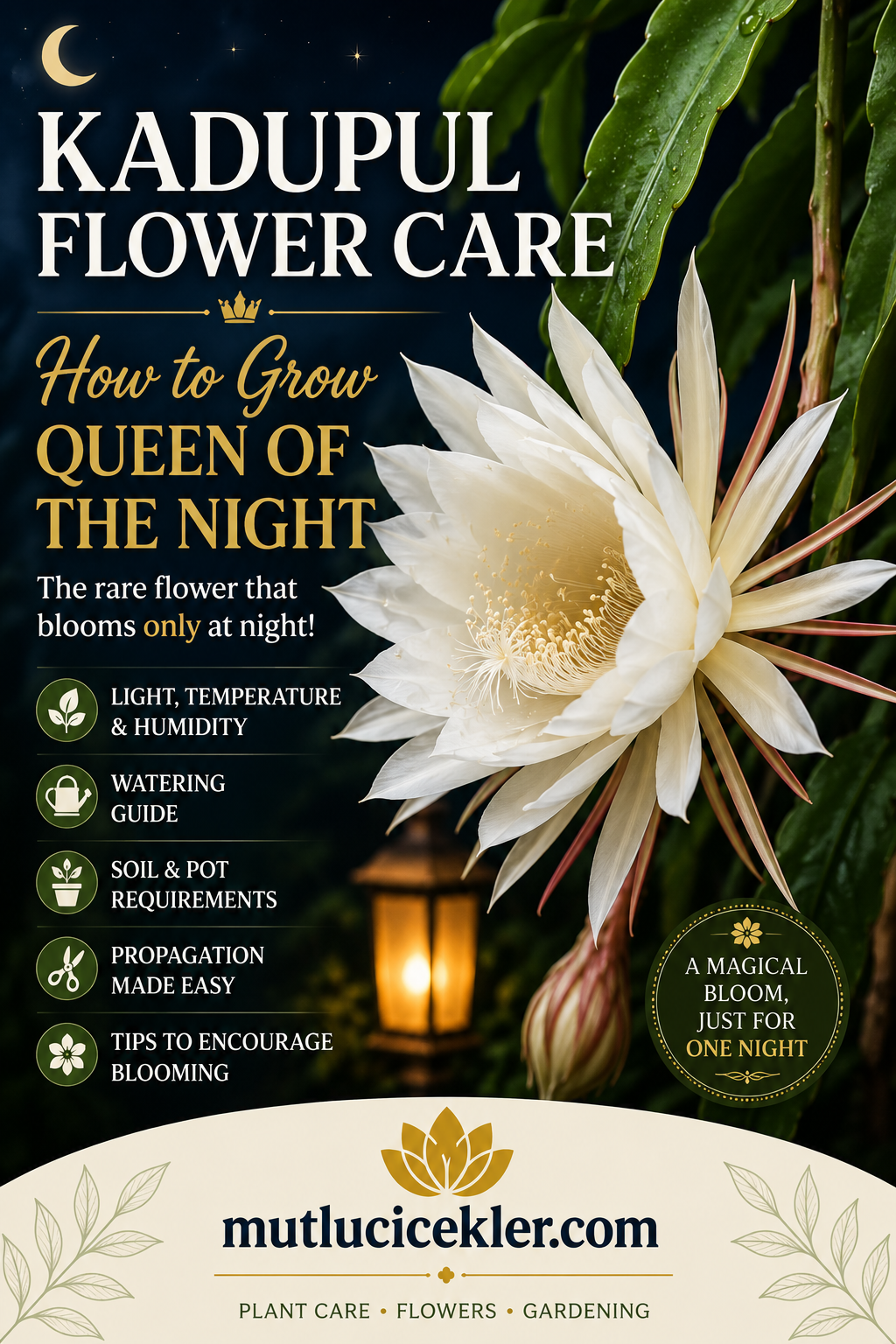
Blooming under the cover of darkness, the Kadupul flower (Epiphyllum oxypetalum) is one of the most fascinating flowering plants in the world. Its spectacular white flowers, intense fragrance, and remarkably short blooming period have earned it names such as Queen of the Night and Night-Blooming Cereus.
Kadupul also has a special cultural association with Sri Lanka, where its rare nighttime blooms have contributed to its popularity. However, contrary to a common misconception, Kadupul is not the official national flower of Sri Lanka. Sri Lanka’s national flower is the Nil Manel, commonly known as the blue water lily.
Can you grow a Kadupul flower at home? When does it bloom, and what conditions does it need to thrive? This detailed Kadupul flower care guide covers everything you need to know.
Fascinating Characteristics of the Kadupul Flower
Kadupul belongs to the Cactaceae family and is an epiphytic cactus. Unlike typical desert cacti, it naturally prefers warmer environments with more humidity and grows in tropical and subtropical conditions.
Some of its most distinctive characteristics include:
- ✓ Large, spectacular white flowers
- ✓ Flowers that usually open at night
- ✓ A strong and pleasant fragrance
- ✓ Extremely short-lived blooms
- ✓ Ability to grow successfully in containers
- ✓ Long, flat, leaf-like stems
Watching a Kadupul bud slowly transform and open during the evening is one of the most exciting experiences for anyone growing this remarkable plant.
When Does the Kadupul Flower Bloom?
One of the most famous characteristics of Kadupul is its nighttime blooming habit.
Once a flower bud has fully developed, it generally begins opening during the evening. As the night progresses, the flower gradually unfolds until its impressive white petals are completely open.
By morning, the flower usually begins to wilt.
This means that a flower bud that has taken weeks to develop may display its full beauty for only a single night.
The exact flowering season can vary depending on climate, growing conditions, light exposure, and the maturity of the plant.
Young plants may also require several years before producing their first flowers.
Ideal Growing Conditions for Kadupul
1. Light and Location
Kadupul prefers bright but indirect light.
Long periods of intense direct sunlight, particularly during the hottest part of the day, may scorch its stems.
When growing Kadupul indoors, place it close to a bright window where it can receive plenty of filtered light. Gentle morning or late-afternoon sunlight may also be beneficial.
Tip: A healthy-looking Kadupul that receives insufficient light may continue growing but struggle to produce flowers.
2. Temperature and Humidity
Kadupul is adapted to tropical and subtropical environments, so it prefers warm conditions and should be protected from frost.
Temperatures of approximately 18–27°C (65–81°F) are generally suitable for healthy growth.
During winter, avoid exposing the plant to extremely cold temperatures.
Unlike many desert cacti, Kadupul appreciates moderate humidity. However, high humidity does not mean the soil should remain constantly wet.
Good airflow and proper drainage are essential for preventing root problems.
How to Water a Kadupul Flower
Proper watering is one of the most important aspects of Kadupul flower care.
Allow the upper layer of the soil to dry slightly before watering again. When watering, thoroughly moisten the growing medium and allow excess water to drain freely from the bottom of the pot.
Never allow the container to sit in standing water.
Rather than following a strict watering schedule, check the moisture level of the soil first.
During warm summer weather, Kadupul may require more frequent watering. During cooler winter months, watering can usually be reduced.
Signs of Overwatering
Watch for symptoms such as:
- Soft or mushy stems
- Yellowing
- Unpleasant-smelling soil
- Root rot
- General weakening of the plant
If these symptoms appear, check both the watering frequency and drainage of the growing medium.
Best Soil and Pot for Kadupul
Kadupul roots need access to both moisture and air.
Heavy garden soil that remains wet for long periods should therefore be avoided. Instead, choose a loose, well-draining growing medium.
A cactus potting mix can be improved with materials such as perlite or orchid bark to increase aeration and drainage.
The container should always have drainage holes at the bottom.
Avoid placing a small plant directly into an excessively large container. A pot that is appropriately sized for the root system generally makes moisture management easier.
How to Fertilize Kadupul
During spring and summer, when the plant is actively growing, Kadupul can benefit from an appropriate liquid fertilizer.
Always follow the dosage instructions provided with the fertilizer and avoid overfeeding the plant.
Too much fertilizer can damage the roots rather than encourage faster growth.
During winter, when growth naturally slows, fertilizing can usually be reduced or temporarily stopped.
How to Encourage Kadupul to Bloom
A healthy Kadupul plant does not necessarily flower immediately. Several factors can influence flower production.
To encourage blooming:
- Provide plenty of bright, indirect light.
- Avoid overwatering.
- Feed appropriately during the active growing season.
- Maintain suitable temperatures.
- Avoid constantly moving the plant.
- Give young plants enough time to mature.
Patience is particularly important. A young Kadupul may need considerable time to become mature enough to produce flower buds.
How to Propagate Kadupul
Kadupul is commonly propagated through stem cuttings.
Choose a healthy section of stem from a mature plant and make a clean cut.
Allow the cut end to dry and form a callus before planting it. This can help reduce the risk of rot.
Place the cutting into a well-draining growing medium and keep it lightly moist rather than soaking wet.
Provide warm temperatures and bright, indirect light while the cutting develops roots.
Once established, the young plant can gradually be cared for like a mature Kadupul.
Common Kadupul Care Mistakes
Overwatering
Overwatering is one of the most common mistakes. Although Kadupul appreciates more moisture than many desert cacti, its roots should never remain waterlogged.
Too Much Direct Sunlight
Strong midday sunlight can scorch the plant, especially during hot summer weather.
Insufficient Light
A plant may survive in lower light conditions but could struggle to bloom.
Using a Pot Without Drainage
Water accumulating around the roots significantly increases the risk of root rot.
Expecting Flowers Too Soon
Kadupul plants need sufficient maturity before flowering. A young plant that does not bloom is not necessarily unhealthy.
Why Is the Kadupul Flower So Special?
Much of the Kadupul flower’s fame comes from the extraordinary brevity of its bloom.
A flower bud can take a considerable amount of time to develop, yet the fully opened flower generally lasts for only one night.
Because of this unusual characteristic, Kadupul has become associated with ideas such as rarity, fleeting beauty, and impermanence.
You may also encounter claims online describing Kadupul as the “world’s most expensive flower” or a “priceless flower.” These descriptions should not be interpreted as an actual market price.
Its reputation as “priceless” is largely symbolic and reflects the flower’s short-lived beauty rather than a standard commercial value.
Frequently Asked Questions
Can Kadupul be grown indoors?
Yes. Kadupul can grow successfully indoors when provided with bright indirect light, suitable temperatures, good drainage, and careful watering.
Why does the Kadupul flower bloom at night?
Kadupul’s flowering biology is adapted to nighttime blooming. Its pale, fragrant flowers help attract nocturnal pollinators in its natural environment.
How long does a Kadupul flower last?
A fully opened flower generally remains at its best for only one night and begins wilting by morning.
Why is my Kadupul not blooming?
Possible causes include insufficient light, unsuitable temperatures, improper watering, nutritional issues, or simply that the plant is not mature enough to flower.
Does Kadupul like direct sunlight?
Bright indirect light is generally preferable. Protect the plant from prolonged exposure to strong midday sunlight.
Is Kadupul a cactus?
Yes. Epiphyllum oxypetalum belongs to the Cactaceae family. However, as an epiphytic cactus, its care requirements differ considerably from those of typical desert cacti.
Is Kadupul the national flower of Sri Lanka?
No. Although Kadupul is strongly associated with Sri Lanka in popular culture, it is not Sri Lanka’s official national flower. The country’s national flower is the Nil Manel, or blue water lily.
Conclusion
The Kadupul flower (Epiphyllum oxypetalum) is an extraordinary plant famous for its magnificent white flowers that open after dark and fade by morning.
Despite its exotic appearance, Kadupul can be successfully grown at home when its basic requirements are met. Bright indirect light, careful watering, excellent drainage, warm temperatures, and patience are the foundations of successful Kadupul flower care.
The greatest reward comes when, after patiently watching a flower bud develop, the plant finally opens its spectacular fragrant bloom for a single unforgettable night.
🌿 For more plant care guides, flower-growing tips, and gardening inspiration, follow mutlucicekler.com.











Bir Cevap Yazın