
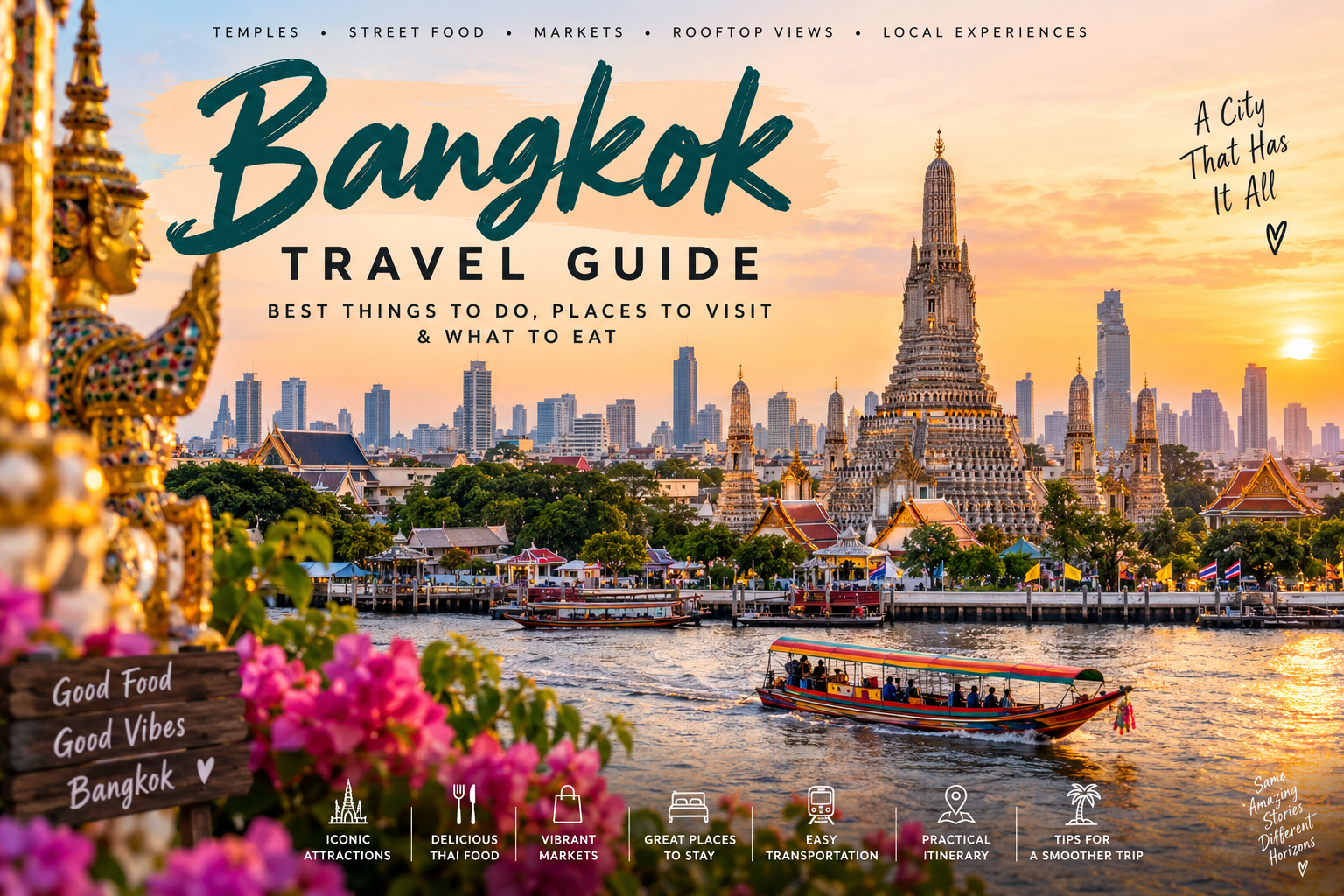
Bangkok is a city of contrasts. Golden temples rise beside modern skyscrapers, traditional long-tail boats cross the Chao Phraya River, colorful markets fill narrow streets, and some of Thailand’s best food can be found at simple roadside stalls.
For first-time visitors, Bangkok can initially feel overwhelming. The city is large, energetic, hot, and constantly moving. But with the right plan, it is also one of the most exciting destinations in Southeast Asia.
This Bangkok travel guide covers the best things to do in Bangkok, famous attractions, hidden corners, Thai food, transportation, where to stay, shopping, costs, and a practical 3-day Bangkok itinerary.
About Bangkok
Bangkok is the capital and largest city of Thailand and one of Asia’s most important tourism, cultural, and economic centers.
Known locally as Krung Thep Maha Nakhon, Bangkok combines centuries-old Buddhist heritage with a modern metropolitan lifestyle.
Bangkok at a Glance
- Country: Thailand
- Region: Southeast Asia
- Language: Thai
- Currency: Thai Baht (THB)
- Best for: Culture, temples, food, nightlife, shopping and city breaks
- Recommended stay: 3–5 days
- Main airport: Suvarnabhumi Airport (BKK)
- Second airport: Don Mueang International Airport (DMK)
- Famous for: Temples, street food, floating markets, rooftop views and the Chao Phraya River
Best Places to Visit in Bangkok
Bangkok has hundreds of attractions, but first-time visitors should prioritize a combination of historic landmarks, temples, neighborhoods and local experiences.
1. The Grand Palace
The Grand Palace is one of Bangkok’s most recognizable landmarks and an essential stop for first-time visitors.
Built in 1782, the enormous palace complex served as the official residence of Thailand’s kings for generations. Its architecture, colorful roofs, detailed decorations and sacred buildings make it one of the most impressive cultural attractions in Thailand.
The complex also contains the famous Temple of the Emerald Buddha (Wat Phra Kaew).
Visitor Tip
The Grand Palace has a strict dress code. Visitors should wear clothing covering the shoulders and knees.
Because Bangkok can become extremely hot during the day, visiting earlier in the morning is generally more comfortable.

2. Wat Pho – Temple of the Reclining Buddha
Located near the Grand Palace, Wat Pho is famous for its enormous reclining Buddha statue.
The temple is also closely associated with traditional Thai massage and is considered one of Thailand’s important centers of traditional medicine and education.
Spend some time exploring the courtyards rather than visiting only the famous Buddha. The temple complex contains beautiful stupas, statues and architectural details.

3. Wat Arun – Temple of Dawn
Across the Chao Phraya River stands one of Bangkok’s most photographed landmarks: Wat Arun.
Its central tower is decorated with intricate ceramic and porcelain details that become especially beautiful in changing sunlight.
One of the best ways to experience this area is to combine Wat Pho and Wat Arun in the same trip and cross the river by ferry.
Photography Tip
The opposite side of the Chao Phraya River provides excellent views of Wat Arun, particularly around sunset.

4. Chinatown – Yaowarat Road
Bangkok’s Chinatown is one of the most atmospheric parts of the city.
During the day, visitors can explore traditional shops, markets, temples and narrow streets. After sunset, Yaowarat Road transforms into one of Bangkok’s famous street-food destinations.
Popular foods to look for include:
- Grilled seafood
- Noodles
- Dim sum
- Mango sticky rice
- Thai desserts
- Fresh tropical fruit
Come hungry and try several small dishes instead of choosing only one restaurant.

5. Chao Phraya River
The Chao Phraya River has shaped Bangkok’s history and remains one of the best ways to see the city.
Passenger boats and ferries connect many important attractions while providing views of temples, hotels, old neighborhoods and modern buildings.
For travelers, using the river is not only an attraction—it can also be a practical transportation option.

More Beautiful Places to See in Bangkok
Once you have visited Bangkok’s major landmarks, there is much more to explore.
Chatuchak Weekend Market
Chatuchak is one of Bangkok’s best-known markets and contains thousands of stalls selling clothing, handicrafts, home decorations, souvenirs, plants and food.
The market is enormous, so do not expect to see everything in one visit.
Jim Thompson House
This traditional Thai-style house provides a quieter cultural experience away from Bangkok’s busiest streets.
The museum is associated with Jim Thompson, who played an important role in promoting Thailand’s silk industry internationally.
Lumphini Park
Need a break from traffic and temples?
Lumphini Park provides green space in central Bangkok and is popular for walking, jogging and relaxing.
Visitors may even spot the large monitor lizards that live around the park’s ponds.
Pak Khlong Talat Flower Market
Bangkok’s famous flower market is filled with orchids, roses, marigolds and elaborate floral arrangements.
It is particularly atmospheric when vendors are preparing large quantities of fresh flowers for temples, businesses and celebrations.
Talat Noi
Travelers looking for a different side of Bangkok should explore Talat Noi, an old neighborhood near Chinatown.
Historic buildings, small cafés, street art and narrow alleys make it particularly appealing for photographers and visitors who enjoy exploring neighborhoods on foot.

Best Things to Do in Bangkok
Bangkok is much more than sightseeing.
Some of the most memorable experiences involve simply experiencing daily life in the city.
Take a Chao Phraya River Boat
Seeing Bangkok from the water provides a completely different perspective and can help you avoid some road traffic.
Explore a Local Market
Markets remain an important part of everyday life in Bangkok. Try fresh fruit, local snacks and dishes you may not encounter in tourist-oriented restaurants.
Experience a Thai Massage
Traditional Thai massage is one of Thailand’s best-known wellness traditions. Choose established and reputable massage centers.
Watch Bangkok from a Rooftop
Bangkok’s skyline becomes particularly impressive after sunset. Numerous rooftop venues provide panoramic views across the city.
Try a Thai Cooking Class
A cooking class can be a great way to understand the ingredients behind dishes such as curry, pad Thai and tom yum.
What to Eat in Bangkok
Food alone is a reason to visit Bangkok.
Thai cuisine combines sweet, sour, salty and spicy flavors, often using fresh herbs, lime, chili, coconut milk and aromatic spices.
Pad Thai
Perhaps Thailand’s most internationally famous dish, Pad Thai combines stir-fried rice noodles with ingredients such as egg, tofu, shrimp, peanuts and lime.
Recipes vary considerably, so trying it from more than one place can be worthwhile.
Tom Yum Goong
Tom yum is a hot and sour soup commonly prepared with shrimp, lemongrass, galangal, lime and chili.
It delivers some of the flavors most strongly associated with Thai cuisine.
Green Curry
Thai green curry typically combines coconut milk with green curry paste, vegetables and meat or other proteins.
It is usually served with rice.
Som Tam
Som tam is a refreshing yet often spicy green papaya salad prepared with ingredients such as lime, chili, tomatoes and peanuts.
Mango Sticky Rice
One of Thailand’s classic desserts combines ripe mango with sticky rice and coconut milk.
It is simple, sweet and particularly popular with visitors.

Bangkok Street Food Tips
Bangkok is famous worldwide for street food, but a few simple habits can make the experience better.
Choose busy stalls with high ingredient turnover. Food that is cooked fresh in front of you is generally preferable to dishes that have been sitting out for long periods.
If you are sensitive to spicy food, learn the phrase “mai phet”, meaning “not spicy.”
Keep in mind that even food described as mildly spicy in Thailand may feel quite hot to visitors unfamiliar with Thai cuisine.
Where to Stay in Bangkok
The best neighborhood depends on the kind of trip you want.
Sukhumvit
A convenient choice for first-time visitors who want restaurants, shopping, nightlife and easy access to public transportation.
Siam
Ideal for travelers interested in major shopping centers and a central location.
Riverside
A good choice for scenic views and a calmer atmosphere, although some hotels in this area can be more expensive.
Silom
Offers a useful combination of business districts, restaurants, nightlife and transportation connections.
Old Town
Staying around Bangkok’s historic center places travelers closer to temples and famous cultural attractions.
However, rail connections may be less convenient in some parts of the historic district.
Getting Around Bangkok
Traffic congestion can make road journeys unpredictable, so choosing the right transportation is important.
BTS Skytrain
The BTS is one of the easiest ways to travel around many modern areas of Bangkok.
It is particularly useful around Sukhumvit, Siam and Silom.
MRT
Bangkok’s metro network connects numerous neighborhoods and can be combined with the BTS.
River Boats
Boats along the Chao Phraya River are useful for reaching several historic attractions.
Taxi
Taxis are widely available, but traffic can significantly increase journey times.
Tuk-Tuk
A tuk-tuk ride can be a fun Bangkok experience, but visitors should agree on the price before starting the journey.
Bangkok Airports
Bangkok is primarily served by two major airports.
Suvarnabhumi Airport (BKK)
Suvarnabhumi handles many international and domestic flights and is the primary gateway for numerous international travelers.
Rail and road transportation connect the airport with central Bangkok.
Don Mueang International Airport (DMK)
Don Mueang is commonly used by regional and low-cost airlines.
Always check which airport your flight uses, particularly when making a connection in Bangkok.
Best Time to Visit Bangkok
Bangkok is a year-round destination, but the weather can significantly influence your experience.
November to February
These months are generally popular because temperatures tend to be more comfortable compared with the hottest part of the year.
This is also a busy tourism period.
March to May
Bangkok can become extremely hot during these months.
Plan outdoor sightseeing for mornings and evenings and stay hydrated.
June to October
This period generally brings more rain.
Rainfall does not necessarily last all day, and travelers willing to deal with occasional heavy showers can still enjoy the city.
How Many Days Do You Need in Bangkok?
For most first-time visitors, three to five days provides a good introduction.
Three days are enough for the essential attractions, while four or five days allow more time for neighborhoods, markets, food experiences and slower exploration.
3-Day Bangkok Itinerary
Day 1 – Historic Bangkok
Start your trip with Bangkok’s most famous cultural landmarks.
Morning: Grand Palace and Wat Phra Kaew
Late morning: Wat Pho
Afternoon: Cross the Chao Phraya River and visit Wat Arun
Evening: Enjoy dinner near the river and watch the city illuminate after sunset.
Day 2 – Markets and Modern Bangkok
Morning: Explore a local market or Jim Thompson House
Afternoon: Visit Siam and Bangkok’s modern shopping district
Evening: Explore Chinatown and eat your way through Yaowarat Road.
Day 3 – Local Bangkok
Morning: Explore Talat Noi
Afternoon: Relax at Lumphini Park or take a river journey
Evening: Finish your trip with a panoramic Bangkok skyline view.
Bangkok Travel Budget
Bangkok can accommodate almost every travel budget.
Budget travelers can find inexpensive accommodation, local food and public transportation, while luxury travelers have access to internationally renowned hotels, restaurants and rooftop experiences.
Your total spending will depend heavily on accommodation and entertainment.
A useful strategy is to eat at local restaurants and markets while using BTS, MRT and river transportation whenever practical.
Shopping in Bangkok
Bangkok is one of Asia’s major shopping destinations.
Travelers can choose between enormous modern malls, traditional markets and independent shops.
Popular purchases include:
- Thai silk
- Handmade crafts
- Clothing
- Spices
- Tea
- Local snacks
- Home decorations
- Traditional souvenirs
Check customs regulations before purchasing plants, food products or other items you intend to take internationally.
Important Bangkok Travel Tips
A little preparation can make Bangkok significantly easier to explore.
- Carry lightweight and breathable clothing.
- Keep modest clothing available when visiting temples.
- Carry drinking water, especially during hotter months.
- Use public transportation when road traffic is heavy.
- Keep small amounts of Thai baht available for markets and smaller businesses.
- Confirm prices before taking services without meters or displayed fares.
- Protect yourself from strong tropical sun.
- Leave additional travel time when heading to the airport.
- Respect temple rules and local customs.
- Consider travel insurance for international trips.
Is Bangkok Safe for Tourists?
Bangkok is visited by millions of international travelers, but visitors should use the same precautions they would in any major city.
Keep valuables secure in crowded areas, use reputable transportation services and be cautious when strangers offer unusually cheap tours, jewelry deals or other unsolicited services.
Traffic is another important consideration. Always pay close attention when crossing busy roads.
Is Bangkok Worth Visiting?
Absolutely.
Few cities combine historic temples, modern architecture, markets, nightlife, river culture and internationally famous food as intensely as Bangkok.
It can be chaotic and peaceful within the same day.
For first-time visitors to Thailand, Bangkok also provides an excellent introduction to Thai history, culture and cuisine before traveling to destinations such as Chiang Mai, Phuket, Krabi or the Thai islands.
Frequently Asked Questions About Bangkok
What is Bangkok famous for?
Bangkok is famous for Buddhist temples, the Grand Palace, the Chao Phraya River, street food, markets, shopping, nightlife and its combination of traditional and modern Thai culture.
How many days should I spend in Bangkok?
Three days are sufficient for major attractions, but four or five days provide a more relaxed experience.
Is Bangkok expensive?
Bangkok can be relatively affordable for budget travelers, although luxury hotels, rooftop venues and premium restaurants can significantly increase costs.
What is the best area to stay in Bangkok for first-time visitors?
Sukhumvit and Siam are convenient because of their transportation connections, restaurants and shopping. Travelers primarily interested in historical attractions may prefer the Old Town or Riverside areas.
What food should I try in Bangkok?
Pad Thai, tom yum, green curry, som tam and mango sticky rice are excellent starting points.
What is the easiest way to get around Bangkok?
The BTS Skytrain and MRT are generally convenient for areas served by the networks, while river boats are particularly useful around Bangkok’s historic attractions.
When is the best time to visit Bangkok?
November through February is popular because weather conditions are generally more comfortable, although Bangkok can be visited throughout the year.
Can I visit Bangkok without a car?
Yes. In fact, most international visitors do not need one. Bangkok has rail systems, boats, taxis and other transportation options.
Final Thoughts
Bangkok is not a city that can be understood from a single temple, market or viewpoint.
Its appeal comes from the combination of experiences: watching sunlight reflect from Wat Arun, navigating the Chao Phraya River, discovering a tiny food stall in Chinatown, walking through a peaceful temple courtyard and then returning to the energy of one of Asia’s largest cities.
For a first visit, spend at least three days exploring both historic and modern Bangkok. Take your time, try unfamiliar foods and leave some room in your itinerary for places you discover along the way.
Bangkok rewards curiosity—and that is exactly what makes Thailand’s capital a city many travelers want to visit again.
Bir Cevap Yazın