
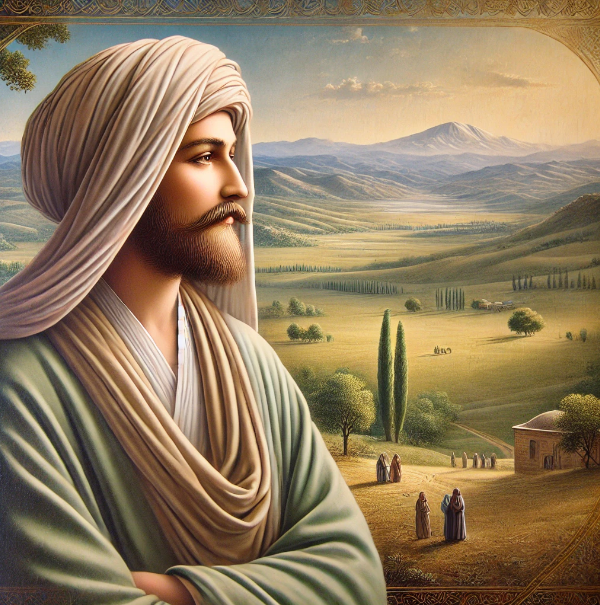
Yunus Emre (1238–1328), one of the most revered poets in Turkish literature, was a Sufi mystic whose words transcended his time and continue to inspire countless generations. His poems, known for their simplicity yet profound depth, touch upon themes of love, unity, humility, and the divine.
Yunus Emre lived during the 13th century in Anatolia, a period of great spiritual awakening. He was deeply influenced by the Sufi tradition, a mystical branch of Islam that emphasizes inner purification and the pursuit of divine love. His poetry is considered a reflection of his journey toward God, where love, rather than rigid adherence to rules, is the key to attaining spiritual fulfillment.
Themes in Yunus Emre’s Poetry
- Love: For Yunus Emre, love was the most powerful force, one that could bridge the gap between humans and the divine. His words encourage people to seek love in their hearts, not just for others but for God.“Yaratılanı hoş gör, Yaradan’dan ötürü.” (“Love the created for the Creator’s sake.”)
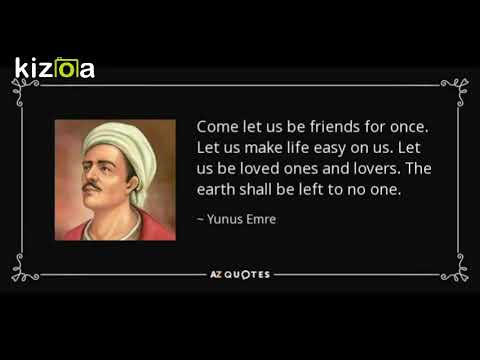
- Unity and Oneness: A recurring theme in his poetry is the oneness of all existence. He believed that all things are manifestations of God, and that there is no separation between the divine and the material world.“Gelin tanış olalım, işi kolay kılalım. Sevelim sevilelim, dünya kimseye kalmaz.” (“Let us be one, let us be friends, and make life easier. Let us love and be loved, for this world is no one’s forever.”)
- Humility: Despite his wisdom, Yunus Emre always emphasized humility. He often wrote about his own limitations and encouraged others to remain humble before God and their fellow human beings.“Bir kez gönül yıktın ise bu kıldığın namaz değil.” (“If you have broken a heart once, the prayer you made is not counted.”)
- Simplicity: Yunus Emre’s poetic style is simple, making his profound messages accessible to everyone, regardless of their education or status. His use of the vernacular Turkish language was revolutionary for his time, making spiritual knowledge available to the common people.
Poems by Yunus Emre
Here are a few of Yunus Emre’s famous poems:
- “Aşkın aldı benden beni”Aşkın aldı benden beni, Bana seni gerek seni. Ben yanarım dün ü günü, Bana seni gerek seni.(Love has taken me from myself, I need only You, You alone. I burn day and night, I need only You, You alone.)
- “Bana Seni Gerek Seni”Aşkın şarabından içtim, mest oldum, Bana seni gerek seni. Derdine düştüm, pes ettim, Bana seni gerek seni.(I drank the wine of love, and I am intoxicated, I need only You, You alone. I have surrendered to your love’s anguish, I need only You, You alone.)
- “Dervişlik”Dervişlik olaydı taç ile hırka, Biz dahi alırdık otuza kırka. Dervişlik dedikleri kalb kırmaktır, Sözünü söyleyip beli bükmektir.(If being a dervish was about wearing a crown and a cloak, We would have bought them for thirty or forty coins. What they call being a dervish is breaking the heart, It is speaking humbly and bowing down.)
Yunus Emre’s poetry, through its timeless wisdom, continues to remind us of the beauty of simplicity, the power of love, and the unity of all things.
Yunus Emre’s Literary Personality
Yunus Emre was a poet and thinker who left a profound mark on Turkish literature and the Sufi tradition. His literary personality and works are renowned for their close connection to the common people’s language and their deep spiritual messages. Here are some key points about Yunus Emre’s literary identity:
1. Writing in the Vernacular
One of the most important features of Yunus Emre is his use of simple, accessible language. While the 13th-century literary scene was dominated by Arabic and Persian influences, Yunus Emre chose to write in Turkish. His aim was to deliver his spiritual messages to the masses, and this approach made him widely accepted among the people. His works were passed down orally, which contributed to his widespread influence.
2. Sufism and Spirituality
Yunus Emre was deeply influenced by Sufism, the mystical branch of Islam. His poetry reflects his intense love for God, the journey of the soul, humility, and tolerance. His poems embody the core principles of Sufi thought, especially the belief in the unity of all existence (vahdet-i vücut) and the concept of divine love. Yunus Emre focused more on the inner spiritual journey rather than the external world.
3. Value of Love and Humanity
In Yunus Emre’s poetry, love and human value hold a central place. He emphasizes the importance of loving all creations for the Creator’s sake, advocating for tolerance and compassion. One of his most famous lines, “Love the created for the Creator’s sake”, reflects this deep sense of human love and acceptance.
4. Religious and Philosophical Depth
Yunus Emre’s poetry has profound religious and philosophical depth, strongly reflecting the influence of Sufism. His works are filled with contemplation on divine love and the relationship between the human soul and God. However, despite this deep intellectual content, Yunus expresses these themes in a simple and understandable way, making his works timeless and accessible to all.
5. Didactic (Educational) Elements
Yunus Emre’s poetry also contains significant didactic elements. He not only conveys his love for God but also offers moral and spiritual advice. Concepts such as humility, tolerance, and modesty are recurrent themes in his poems. His works often guide readers on how to live both in the material world and on a spiritual journey.
6. Divan and Risaletü’n-Nushiyye
Two key works that best reflect Yunus Emre’s literary personality are Divan and Risaletü’n-Nushiyye. Divan is a collection of Yunus’s poems that showcases his Sufi thoughts, love, and views on humanity. Risaletü’n-Nushiyye, on the other hand, is more of an instructional work, written in the form of a mesnevi (rhyming couplets) and contains moral advice.
Conclusion
Yunus Emre, with his simple yet profound style, delivered universal messages about the inner world of the individual, divine love, and human compassion. His poetry continues to resonate with both his contemporaries and modern readers. Recognized as one of the most important representatives of Turkish folk poetry, Yunus Emre’s works remain timeless due to their clarity, sincerity, and deep meaning.













Bir Cevap Yazın