
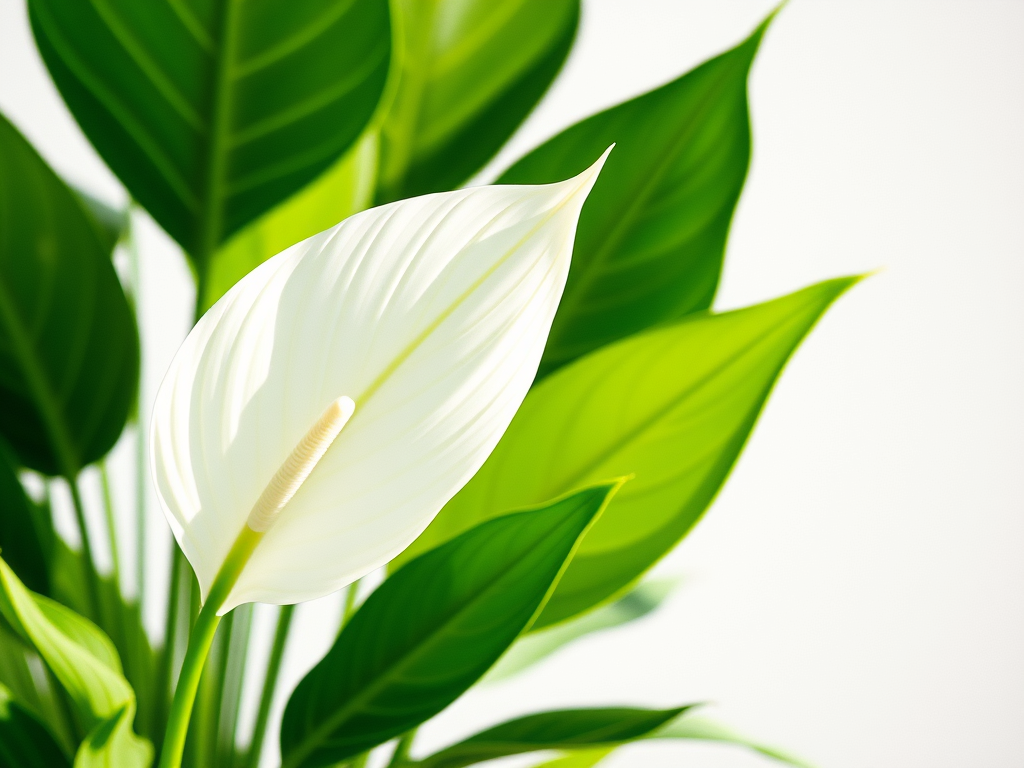
The Peace Lily (Spathiphyllum), known for its striking white blooms and lush green foliage, is a popular houseplant that’s easy to care for. Its ability to purify the air makes it not only a beautiful addition to any indoor space but also a beneficial one. Here’s everything you need to know about taking care of a Peace Lily:
Light Requirements
Peace Lilies thrive in indirect or low light conditions, making them perfect for indoor environments. Avoid direct sunlight, as it can scorch the leaves. However, they do best in bright, filtered light, which encourages blooming. If placed in darker areas, the plant may grow well but might not produce as many flowers.
Watering
Peace Lilies prefer consistently moist soil, but they do not like to sit in water. Overwatering can lead to root rot. It’s best to water them when the top inch of the soil feels dry to the touch. The plant’s leaves will droop slightly when it needs water, which makes it easy to know when it’s time to hydrate. Always use well-draining soil to avoid waterlogging.
Humidity and Temperature
These plants love humidity and will thrive in a humid environment, which is why they often do well in bathrooms. Mist the leaves occasionally to boost moisture levels. Peace Lilies prefer temperatures between 65-80°F (18-27°C). Keep them away from cold drafts, air conditioners, or heaters, as temperature extremes can harm the plant.
Soil and Potting
A well-draining potting mix is essential for Peace Lilies. You can use standard indoor plant potting soil mixed with a bit of perlite for improved drainage. Repotting should be done once every 1-2 years, or when the plant becomes root-bound, ideally in spring.
Fertilizing
Feed your Peace Lily with a balanced, water-soluble fertilizer every 6-8 weeks during the growing season (spring and summer). Be careful not to over-fertilize, as this can burn the roots and lead to poor growth.
Toxicity
Peace Lilies are mildly toxic to pets and humans if ingested. If you have curious pets or small children, it’s best to keep the plant out of their reach.
Common Problems
- Yellow Leaves: This can indicate overwatering or underwatering. Check the soil moisture to adjust your watering schedule.
- Brown Tips: Low humidity or over-fertilizing can cause the tips of the leaves to brown.
- No Flowers: Insufficient light is usually the cause when a Peace Lily doesn’t bloom. Move the plant to a brighter location, but avoid direct sunlight.
Air-Purifying Qualities
Peace Lilies are one of the top air-purifying plants, according to NASA’s Clean Air Study. They help remove toxins such as formaldehyde, benzene, and carbon monoxide, making them a great choice for improving indoor air quality.
By providing the right balance of light, water, and care, your Peace Lily can thrive and bring a sense of tranquility and beauty to your home.













noga noga için bir cevap yazınCevabı iptal et