
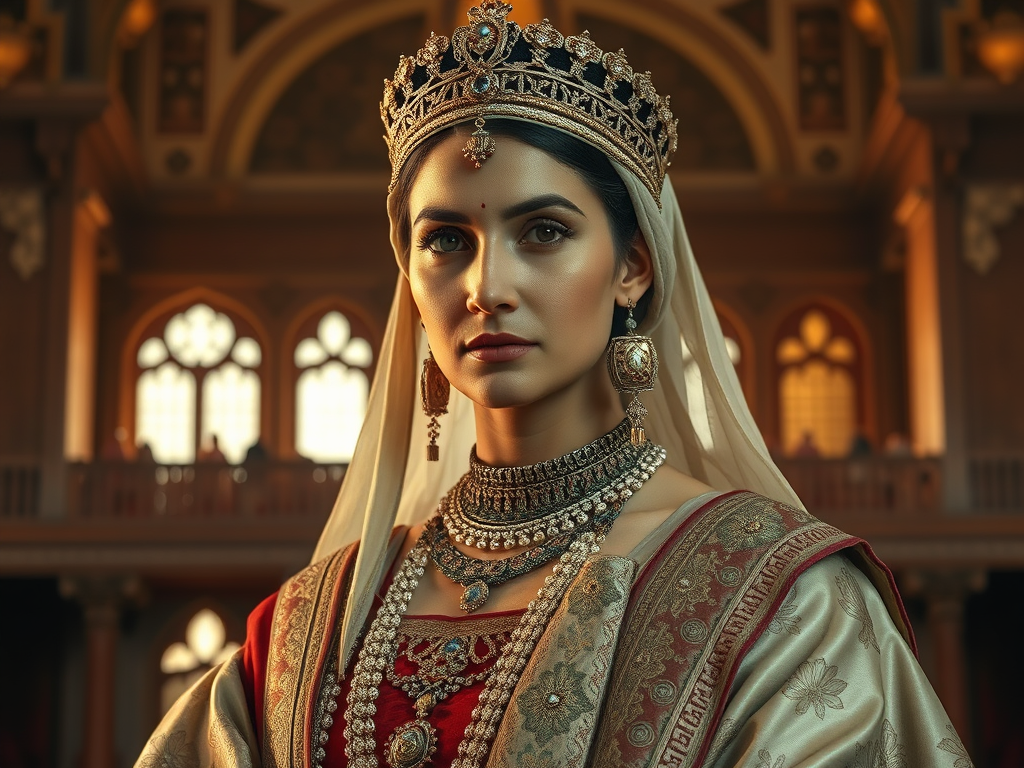
Razia Begum holds a significant place in history as the first and only female ruler of the Turkish Sultanate of Delhi. Her reign is notable not only for breaking gender barriers in a male-dominated era but also for her administrative skills, courage, and visionary leadership. Razia Begum’s story is a testament to the strength and determination of women in history.
Early Life and Ascension to the Throne
Razia Begum was born in 1205 as the daughter of Sultan Iltutmish, one of the most prominent rulers of the Delhi Sultanate. Unlike many women of her time, Razia received an education in administration, warfare, and governance, thanks to her father’s progressive mindset. Recognizing her capabilities, Iltutmish appointed her as his successor, bypassing his sons.
After Iltutmish’s death, the throne initially passed to his son, Ruknuddin Firuz. However, his incompetence and mismanagement led to widespread discontent. Taking advantage of the situation, Razia seized the throne in 1236, becoming the first female ruler of the Delhi Sultanate.
Razia Begum’s Reign
Razia Begum’s reign was marked by her efforts to strengthen the administration and ensure justice for all. Some of her notable achievements include:
- Administrative Reforms: Razia implemented several reforms to improve governance. She appointed capable officials based on merit rather than lineage, which helped stabilize the empire.
- Military Leadership: Razia personally led military campaigns to protect her empire from external threats. Her bravery and strategic acumen earned her the respect of her soldiers.
- Promotion of Trade and Culture: Razia encouraged trade and cultural exchanges, contributing to the economic and cultural prosperity of the Delhi Sultanate.
- Breaking Gender Norms: Razia challenged traditional gender roles by adopting male attire and riding horses in public, symbolizing her authority and determination.
Challenges and Downfall
Despite her capabilities, Razia faced significant opposition from the nobility and conservative factions who were unwilling to accept a female ruler. Her decision to appoint an Abyssinian slave, Jamal-ud-Din Yaqut, to a high-ranking position further fueled resentment among the nobles.
In 1240, a rebellion led by the nobles forced Razia to flee Delhi. She attempted to regain her throne with the help of allies but was ultimately defeated and killed. Her reign, though short-lived, left an indelible mark on history.
Razia Begum’s Legacy
Razia Begum’s legacy as a trailblazer for women in leadership continues to inspire generations. Her courage, intelligence, and determination in the face of adversity make her a symbol of empowerment. Razia’s story reminds us of the importance of breaking barriers and challenging societal norms to achieve equality and justice.
A Poem Attributed to Razia Begum
My name rises to the sky, my throne unshaken,
With justice, I write the course of time.
No chains can ever break my will,
I am a light burning in the hearts of the people.
Both sword and pen rest in my hand,
I erase oppression with my righteous words.
Even a woman may be a mighty sultan,
Fighting for her people, never falling in battle!
Conclusion
Razia Begum’s reign as the first female ruler of the Delhi Sultanate is a remarkable chapter in history. Her leadership, administrative reforms, and unwavering resolve in the face of challenges make her a timeless figure of inspiration. Razia’s story is not just a part of history but also a beacon of hope for women striving to make their mark in the world.













Bir Cevap Yazın