
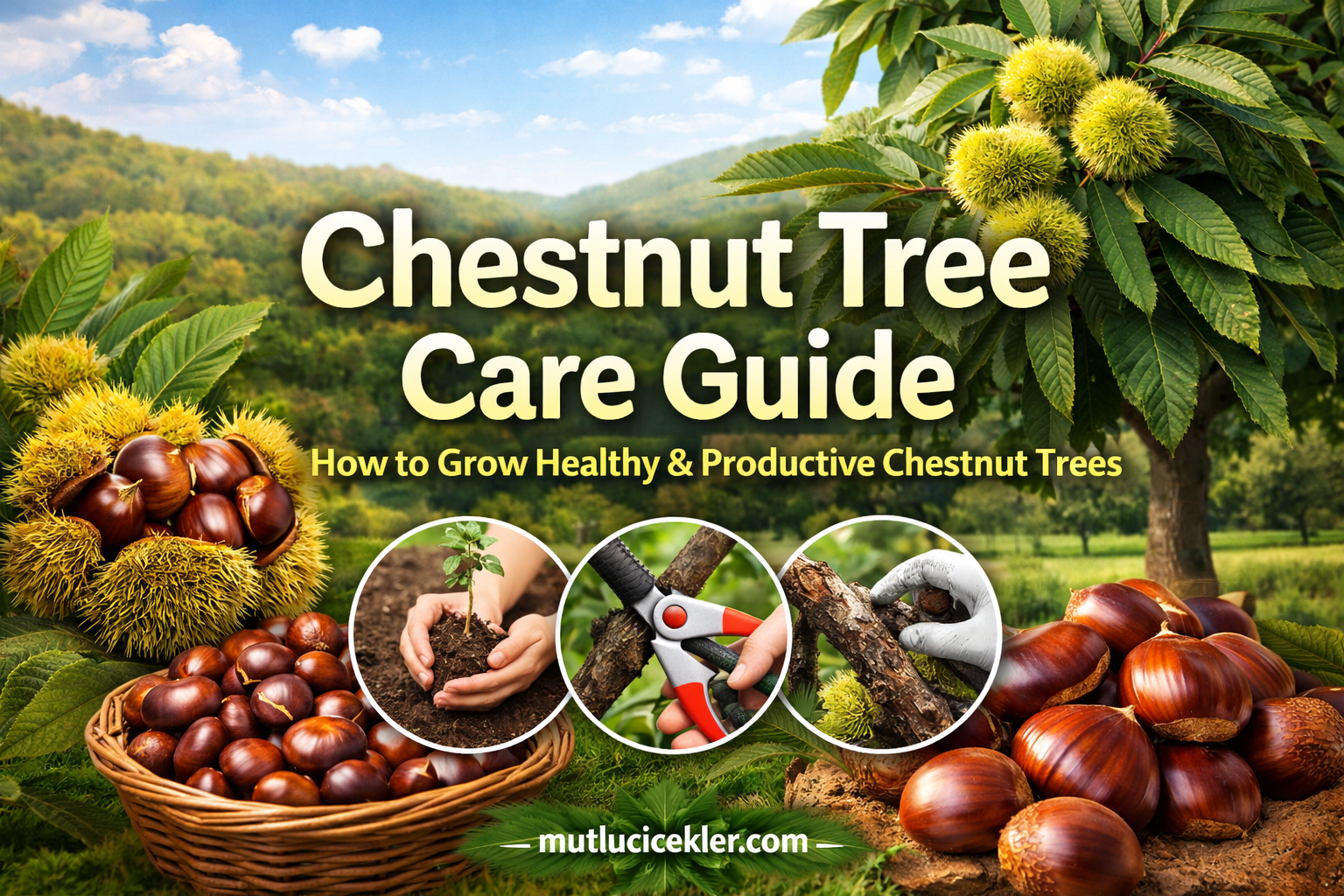
How to Grow Healthy, Long-Living and Highly Productive Chestnut Trees
The chestnut tree is one of nature’s most valuable trees, admired for both its majestic appearance and nutritious fruit. With proper care, chestnut trees can live for centuries and produce abundant harvests year after year. In this guide, you’ll learn everything you need to know about chestnut tree care—from planting and watering to pruning and disease prevention.
🌳 What Is a Chestnut Tree?
The chestnut tree (Castanea sativa) belongs to the beech family (Fagaceae). It is a deciduous, long-living tree that can grow 20–30 meters tall under suitable conditions. Chestnut trees are widely cultivated in temperate regions and are known for their durability and productivity.
📍 Ideal Growing Conditions for Chestnut Trees
Climate Requirements
- Prefers mild and humid climates
- Sensitive to severe frost
- Best grown at elevations between 100–1000 meters
Soil Requirements
- Slightly acidic soil (pH 5.5–6.5)
- Deep, well-drained, and rich in organic matter
- Avoid calcareous or highly alkaline soils
🌱 How to Plant a Chestnut Tree
Best Planting Time
- Autumn (after leaf fall)
- Early spring (after the risk of frost has passed)
Planting Steps
- Dig a hole 60–80 cm deep
- Mix soil with well-rotted farm manure or compost
- Place the sapling so the root collar remains at soil level
- Water thoroughly after planting
💧 Watering Chestnut Trees
- Regular watering is essential during the first 2–3 years
- Water once or twice a week during dry summer months
- Mature trees are more drought-tolerant
- Avoid overwatering to prevent root rot
✂️ Pruning Chestnut Trees
Pruning plays a crucial role in maintaining tree health and productivity.
When to Prune
- Late winter or early spring (dormant period)
Pruning Goals
- Remove dead, weak, or diseased branches
- Shape the tree canopy
- Improve air circulation and sunlight penetration
🌼 Fertilization and Nutrient Needs
- Apply nitrogen-rich fertilizers in spring
- Use phosphorus and potassium in autumn
- Organic fertilizers such as compost or aged manure are highly recommended
👉 Soil testing helps determine the most accurate fertilization plan.
🐛 Common Diseases and Pests
Common Diseases
- Chestnut Blight (Cryphonectria parasitica)
- Root rot
- Leaf spot diseases
Pests
- Chestnut gall wasp
- Aphids
➡️ Remove and destroy infected branches immediately and prioritize biological or cultural control methods.
🌰 When Do Chestnut Trees Bear Fruit?
- Seed-grown trees: 8–12 years
- Grafted trees: 3–5 years
- Harvest season: September to November
🌿 Essential Chestnut Tree Care Tips
- Plant multiple chestnut varieties to improve pollination
- Avoid lime-rich soils
- Use mulching to retain soil moisture
- Inspect trees regularly to detect diseases early
📌 Conclusion
Chestnut trees are a long-term investment in both nature and nutrition. With proper planting, care, and patience, they can thrive for generations and reward growers with healthy, abundant harvests.
🌿 For more plant care guides, nature tips, and gardening inspiration, follow us.
Welcome to the elegant world of knowledge at mutlucicekler.com 🌸












Bir Cevap Yazın