
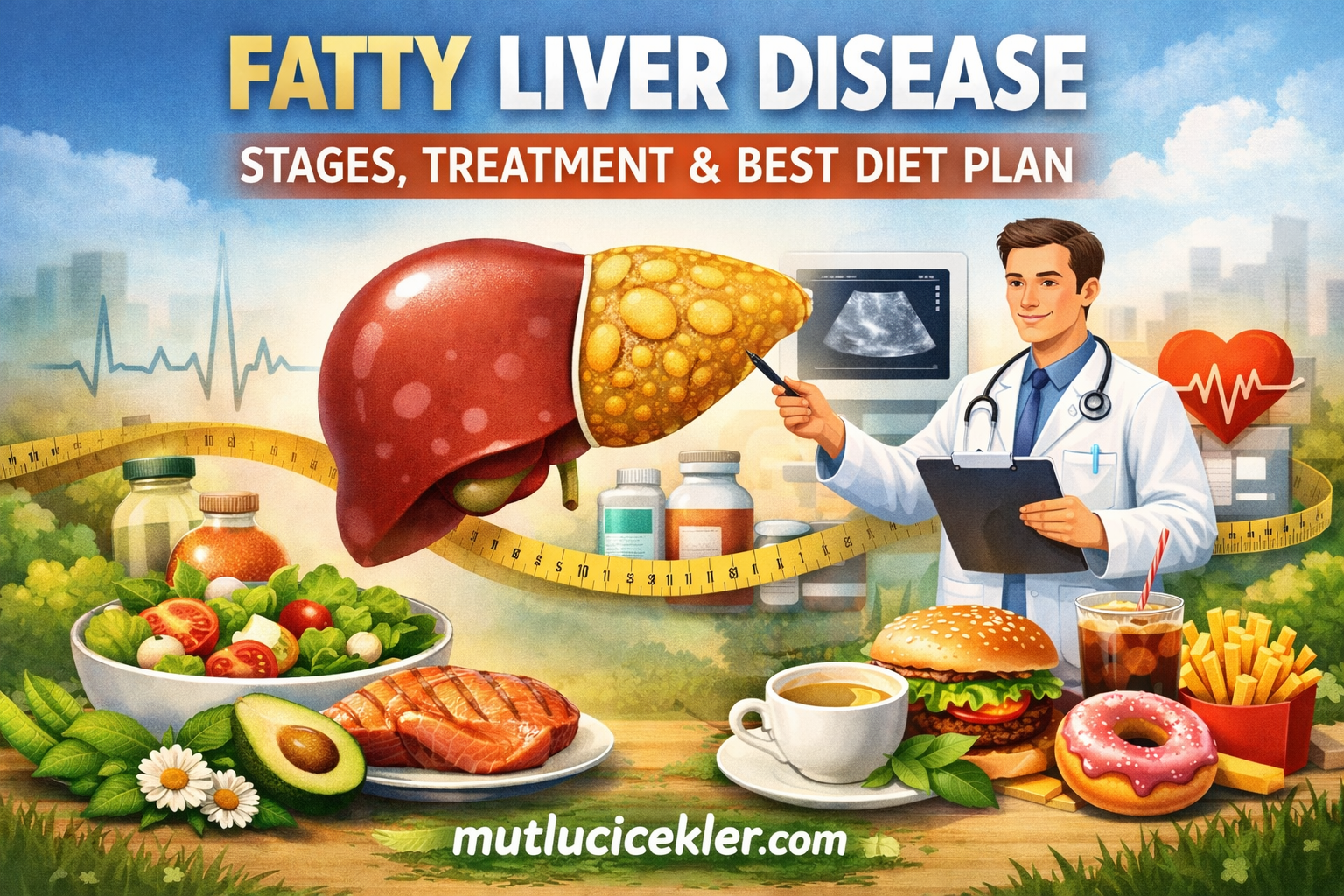
Fatty liver disease is one of the most common liver conditions worldwide. Due to sedentary lifestyles, processed foods, obesity, and insulin resistance, it has become increasingly prevalent.
So, what is fatty liver disease, what are its stages, and how can it be treated? In this comprehensive guide, we explain everything you need to know — including diet recommendations.
🧬 What Is Fatty Liver Disease?
Fatty liver disease (hepatic steatosis) occurs when excess fat accumulates in liver cells. While a small amount of fat in the liver is normal, when fat makes up more than 5% of the liver’s weight, it is considered fatty liver.
There are two main types:
- Alcoholic Fatty Liver Disease (AFLD) – caused by excessive alcohol consumption
- Non-Alcoholic Fatty Liver Disease (NAFLD) – not related to alcohol, often linked to metabolic issues
Today, NAFLD is the most common type, especially among individuals with obesity, type 2 diabetes, and metabolic syndrome.
📊 Stages of Fatty Liver Disease
Fatty liver disease is typically divided into three stages:
🟢 Stage 1 – Mild Fatty Liver
- Small amount of fat accumulation
- Usually no symptoms
- Fully reversible with lifestyle changes
🟡 Stage 2 – Moderate Fatty Liver
- Increased fat buildup
- Possible fatigue and mild discomfort in the upper right abdomen
- Requires medical monitoring
🔴 Stage 3 – Severe Fatty Liver
- Significant fat accumulation
- May progress to inflammation (NASH – Non-Alcoholic Steatohepatitis)
- Risk of fibrosis, cirrhosis, or liver failure
⚠️ Early diagnosis through blood tests and ultrasound is crucial.
⚠️ Symptoms of Fatty Liver Disease
Many people experience no symptoms in early stages. However, possible signs include:
- Persistent fatigue
- Abdominal discomfort (upper right side)
- Bloating
- Brain fog
- In advanced cases, jaundice
Routine health check-ups are important for early detection.
🏥 How Is Fatty Liver Disease Treated?
Currently, there is no specific medication that completely cures fatty liver disease. Treatment focuses on lifestyle improvements.
✔️ 1. Weight Loss
Losing 7–10% of body weight can significantly reduce liver fat.
✔️ 2. Reduce Sugar & Refined Carbs
Limit white bread, pastries, sugary drinks, and processed foods.
✔️ 3. Exercise Regularly
At least 30–45 minutes of moderate exercise 4–5 times per week.
✔️ 4. Avoid Alcohol
Alcohol worsens liver damage.
✔️ 5. Control Blood Sugar & Insulin Resistance
Medical supervision may be required.
🥗 What to Eat for Fatty Liver Disease
Certain foods support liver health:
🥬 Leafy Greens
Spinach, arugula, kale
🐟 Omega-3 Rich Fish
Salmon, sardines, mackerel
🫒 Olive Oil
Extra virgin preferred
🥑 Avocado
Healthy fats that reduce inflammation
🍵 Green Tea
Rich in antioxidants
🫘 High-Fiber Foods
Oats, whole grains, legumes
🚫 What to Avoid
- Sugary beverages
- White flour products
- Fast food
- Fried foods
- Processed meats
- Excess salt
💧 Best Drinks for Liver Health
- Plenty of water (2–2.5 liters daily)
- Unsweetened herbal teas
- Warm lemon water
- Black coffee (in moderation, without sugar)
Studies suggest moderate coffee consumption may protect liver health.
❓ Frequently Asked Questions
Can fatty liver disease be reversed?
Yes. Stages 1 and 2 are often completely reversible with lifestyle changes.
Is fatty liver dangerous?
If untreated, it can progress to inflammation, fibrosis, or cirrhosis.
Does fatty liver cause pain?
Usually not in early stages, but mild discomfort may occur in advanced cases.
📝 Final Thoughts
Fatty liver disease is a silent but common health issue. The good news? It is largely preventable and reversible with proper diet, exercise, and medical monitoring.
Taking care of your liver today means protecting your overall health tomorrow.













Uğurcan BAL için bir cevap yazınCevabı iptal et