

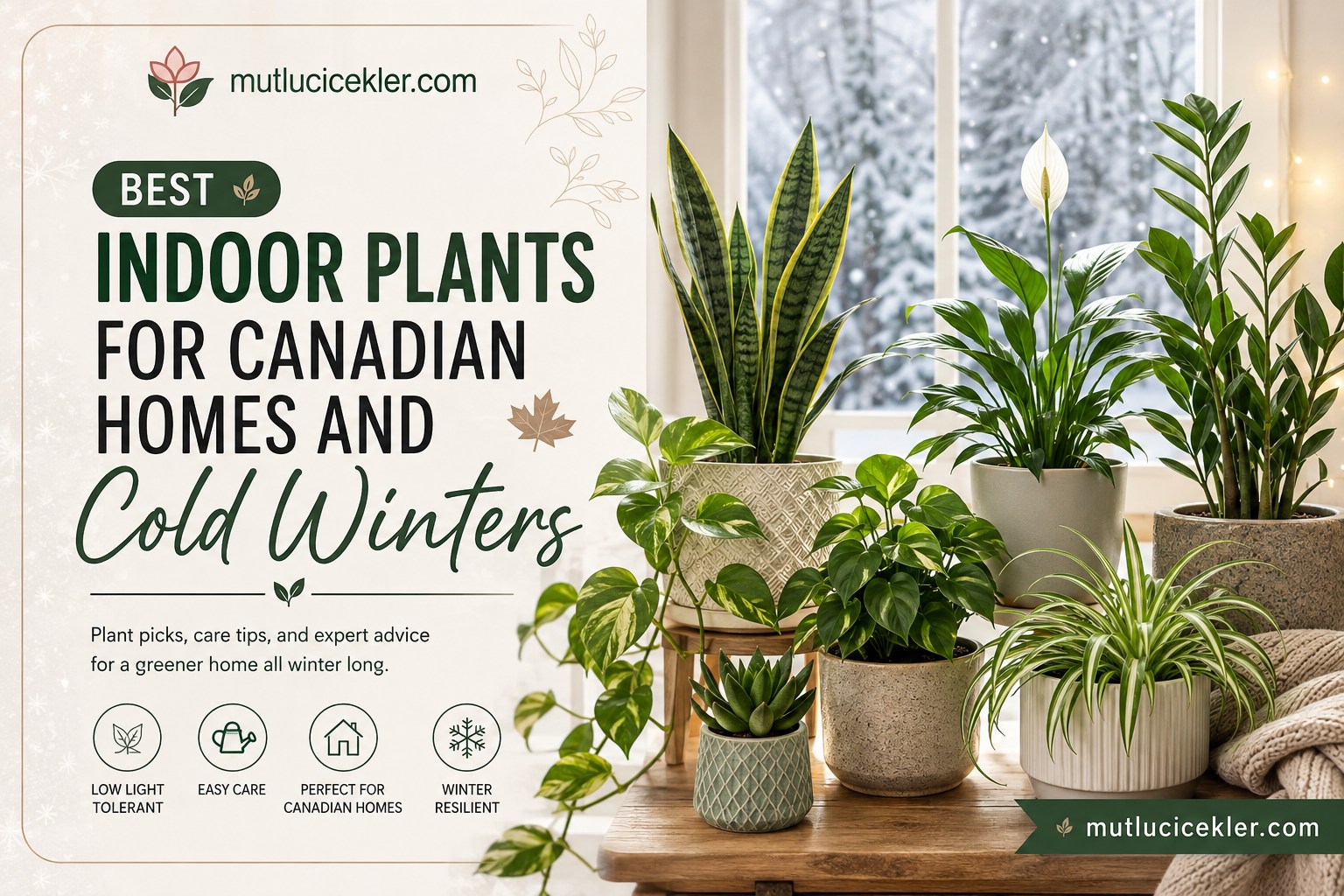
Canadian winters can be beautiful, but they are not always easy on houseplants. Short daylight hours, freezing temperatures outside, dry indoor air, heating systems, and cold windows can create challenging conditions for plants inside the home.
Fortunately, you do not need to give up on indoor greenery when winter arrives. Many houseplants adapt surprisingly well to Canadian homes, especially when you choose species that tolerate lower light levels, occasional dry air, and slower winter growth.
In this guide, we explore some of the best indoor plants for Canadian homes and cold winters, along with practical tips to help them stay healthy from autumn through spring.
🌿 Why Canadian Winters Can Be Difficult for Houseplants
Even though indoor plants are protected from snow and freezing outdoor temperatures, winter changes their environment considerably.
The most common challenges include:
- Shorter daylight hours
- Lower natural light intensity
- Dry air caused by indoor heating
- Cold drafts near doors and windows
- Sudden temperature fluctuations
- Slower plant growth
- Increased risk of overwatering
One of the biggest winter mistakes is treating a houseplant exactly as you would during summer.
As light decreases, many plants grow more slowly and use less water. Their care routine should therefore change with the season.
🪴 10 Best Indoor Plants for Canadian Homes
1. Snake Plant
Snake Plant (Dracaena trifasciata) is one of the easiest houseplants for Canadian homes.
Its upright leaves store moisture, allowing the plant to tolerate periods of dry soil. It can also adapt to a wide range of indoor light conditions.
Why It Works Well in Canadian Homes
- Tolerates relatively low light
- Does not require frequent watering
- Handles typical indoor conditions well
- Requires little maintenance
- Excellent for apartments and offices
Winter Care Tip
Reduce watering during winter. Allow much of the potting mix to dry before watering again.
Keep the plant away from extremely cold window glass and freezing drafts.
2. Pothos
Pothos (Epipremnum aureum) is a popular choice for beginners because it is adaptable and forgiving.
Its trailing vines can grow beautifully from shelves, hanging baskets, bookcases, or plant stands.
Why Pothos Is a Good Winter Plant
Pothos can tolerate moderate and lower-light indoor environments better than many demanding tropical plants.
However, lower light usually means slower growth.
Winter Care Tip
Place your pothos close to bright, indirect light whenever possible. Water only after the upper portion of the soil begins to dry.
If the vines become unusually long with large spaces between leaves, the plant may need more light.
3. ZZ Plant
The ZZ Plant (Zamioculcas zamiifolia) is particularly suitable for people who want an attractive indoor plant without a demanding care schedule.
Its thick rhizomes store water, helping it tolerate occasional neglect.
Best Features
- Tolerates lower-light rooms
- Requires relatively little water
- Attractive glossy foliage
- Suitable for modern interiors
- Excellent beginner plant
Winter Care Tip
Overwatering is usually a greater danger than underwatering.
During periods of slow winter growth, always check the potting mix before adding more water.
4. Spider Plant
Spider Plant (Chlorophytum comosum) has been a household favourite for generations.
Its arching green-and-white foliage works especially well in hanging baskets and bright rooms.
Why Choose a Spider Plant?
Spider plants are relatively adaptable and can produce small plantlets that are easy to propagate.
They prefer bright, indirect light but can tolerate less-than-perfect conditions.
Winter Care Tip
Indoor heating may contribute to brown leaf tips.
Keep the plant away from heating vents and extremely dry locations. Moderate indoor humidity can help maintain healthier foliage.
5. Heartleaf Philodendron
Heartleaf Philodendron (Philodendron hederaceum) combines attractive foliage with relatively simple care.
Its heart-shaped leaves and trailing growth habit make it suitable for shelves, hanging planters, and indoor plant displays.
Why It Works in Winter
It adapts reasonably well to normal household conditions and does not need constant direct sunlight.
Winter Care Tip
Give it bright, indirect light when possible and reduce watering as growth slows.
Avoid leaving the potting mix constantly wet.
6. Peace Lily
The elegant Peace Lily (Spathiphyllum) is known for its dark green foliage and distinctive white blooms.
It can tolerate lower light levels, although brighter indirect light generally supports stronger growth and better flowering.
Important Winter Consideration
Peace lilies prefer more consistent moisture than snake plants or ZZ plants.
However, this does not mean the soil should remain waterlogged.
Winter Care Tip
Keep your peace lily away from cold drafts and heating vents. Check soil moisture regularly rather than watering according to a fixed calendar.
7. Rubber Plant
Rubber Plant (Ficus elastica) is a striking choice for Canadian homes with good natural light.
Its broad, glossy leaves can make it an attractive focal point in living rooms and home offices.
Ideal Conditions
- Bright indirect light
- Stable indoor temperatures
- Well-draining soil
- Protection from cold drafts
Winter Care Tip
Avoid placing a rubber plant directly beside a frequently opened exterior door.
Temperature shocks and cold drafts can stress the plant and may contribute to leaf drop.
8. Chinese Evergreen
Chinese Evergreen (Aglaonema) is valued for both its decorative foliage and its ability to adapt to indoor environments.
Different varieties feature combinations of green, silver, cream, pink, or red.
Why It Is Useful in Canadian Homes
Chinese evergreens generally cope well with typical household conditions and can tolerate moderate light.
Variegated or colourful cultivars may need brighter indirect light to maintain their best appearance.
Winter Care Tip
Protect Aglaonema from cold air.
A plant that looks perfectly comfortable in the middle of a room may struggle when placed directly beside an icy window.
9. Cast Iron Plant
Its name provides a good clue about its reputation.
The Cast Iron Plant (Aspidistra elatior) is known for being resilient and relatively tolerant of imperfect indoor conditions.
Advantages
- Tolerates lower light
- Does not require constant attention
- Attractive upright foliage
- Useful for rooms without intense natural light
Winter Care Tip
Do not compensate for low winter light by watering more frequently.
Lower light often means the soil will remain moist for longer.
10. Christmas Cactus
The Christmas Cactus (Schlumbergera) is an especially fitting plant for Canadian winters because it can bring colour indoors during the colder months.
Unlike desert cacti, Schlumbergera originates from more humid environments and prefers a somewhat different care routine.
Why People Love It
- Attractive winter blooms
- Long-lived with proper care
- Can become a meaningful family plant
- Relatively compact
Winter Care Tip
Bright indirect light and appropriate watering can support healthy growth. Avoid placing the plant immediately beside strong heating vents.
❄️ Best Plants for Low-Light Canadian Apartments
Winter daylight can become particularly limited in apartments with north-facing windows or buildings surrounded by other structures.
Some of the more forgiving choices include:
- ZZ Plant
- Snake Plant
- Pothos
- Cast Iron Plant
- Chinese Evergreen
- Heartleaf Philodendron
Remember that low-light tolerant does not mean no light.
All green plants require light for photosynthesis. A plant may survive in a dim location while growing very slowly or losing some of its visual quality.
☀️ How to Give Houseplants Enough Light During a Canadian Winter
Light is often the biggest seasonal challenge.
During summer, a plant may receive plenty of indirect sunlight several metres away from a window. In winter, the same location can become significantly darker.
Consider moving plants closer to suitable windows during the darker months.
A grow light can also be useful for rooms with very limited natural light.
When using artificial plant lighting, follow the manufacturer’s recommendations regarding distance and duration because light intensity varies considerably between products.
🌡️ Protect Plants From Cold Windows
A sunny windowsill may appear to be the perfect location for a houseplant, but winter changes the equation.
When outdoor temperatures fall well below freezing, the area immediately beside a window can become considerably colder than the rest of the room.
Leaves touching very cold glass may become damaged.
Try to maintain a small gap between sensitive tropical foliage and cold windows.
🔥 Keep Plants Away From Heating Vents
Canadian homes depend heavily on heating during winter.
Forced-air heating can create very dry pockets of air around vents.
Plants positioned directly in the path of hot air may experience:
- Brown leaf edges
- Faster moisture loss
- Curling foliage
- General stress
Move sensitive plants away from radiators, fireplaces, space heaters, and heating vents whenever possible.
💧 How Often Should You Water Indoor Plants in Winter?
There is no universal winter watering schedule.
A rule such as “water every Sunday” may lead to problems because plants use water at different rates depending on:
- Species
- Pot size
- Soil composition
- Room temperature
- Humidity
- Light exposure
- Plant size
- Growth rate
Instead, check the soil before watering.
For drought-tolerant plants such as snake plants and ZZ plants, allowing the soil to dry considerably between waterings is generally safer than keeping it constantly moist.
Plants such as peace lilies prefer more consistent moisture but still require adequate drainage.
⚠️ Why Overwatering Becomes More Dangerous in Winter
Plants frequently grow more slowly when light levels decline.
Slower growth usually means slower water consumption.
If you continue using your summer watering schedule, the potting mix may remain wet for too long.
Constantly saturated soil reduces oxygen around the roots and can contribute to root problems.
Possible Signs of Overwatering
- Yellowing leaves
- Soft stems
- Persistent wet soil
- Leaf drop
- Unpleasant smell from the potting mix
- Declining plant health despite frequent watering
Always use containers with appropriate drainage whenever possible.
💦 Does Indoor Humidity Matter?
Yes.
Cold outdoor air combined with indoor heating can result in relatively dry household conditions.
Some tropical plants tolerate this better than others.
If humidity becomes very low, sensitive plants may develop crispy leaf edges or brown tips.
You can consider using a household humidifier where appropriate. Grouping compatible plants together may also help create a slightly more humid microenvironment around their foliage.
Good air circulation remains important.
🪟 Best Window Direction for Indoor Plants in Canada
Window orientation can significantly influence plant growth.
South-Facing Windows
Usually provide some of the strongest natural winter light.
These locations can be useful for plants that appreciate brighter conditions.
East-Facing Windows
Provide gentler morning sunlight and can work well for many tropical houseplants.
West-Facing Windows
Can receive stronger afternoon light.
Monitor sensitive foliage, particularly as seasons change.
North-Facing Windows
Typically provide lower light levels and may be better suited to more shade-tolerant species.
Remember that nearby buildings, balconies, trees, curtains, and window size can dramatically change actual light levels.
🏠 Best Indoor Plants for Canadian Apartments
If you live in a smaller apartment, consider plants that do not require large containers or huge amounts of space.
Good choices include:
| Plant | Light Preference | Water Needs | Difficulty |
|---|---|---|---|
| Snake Plant | Low to bright indirect | Low | Easy |
| ZZ Plant | Low to bright indirect | Low | Easy |
| Pothos | Moderate to bright indirect | Moderate | Easy |
| Spider Plant | Bright indirect | Moderate | Easy |
| Heartleaf Philodendron | Moderate to bright indirect | Moderate | Easy |
| Chinese Evergreen | Moderate indirect | Moderate | Easy |
Actual watering frequency will always depend on your individual home environment.
🌿 Winter Houseplant Care Checklist
Before the coldest part of winter arrives:
✓ Move sensitive plants away from freezing drafts.
✓ Check whether your plants are still receiving enough daylight.
✓ Reduce watering when growth and soil drying slow down.
✓ Keep tropical foliage away from direct blasts of heated air.
✓ Check regularly for common indoor plant pests.
✓ Clean dusty leaves gently when appropriate.
✓ Make sure containers can drain properly.
✓ Avoid unnecessary stress such as excessive repotting during periods of very slow growth.
🍃 Should You Fertilize Houseplants During Winter?
Many indoor plants grow considerably more slowly during winter because they receive less light.
For plants that have entered a period of minimal growth, heavy fertilization is generally unnecessary.
Plants growing actively under strong natural light or supplemental grow lights may have different requirements.
Rather than fertilizing automatically according to the calendar, observe the plant’s growth and follow recommendations appropriate for the particular species and fertilizer product.
🌱 What Is the Easiest Indoor Plant for a Canadian Beginner?
For most beginners, Snake Plant, ZZ Plant, and Pothos are excellent starting points.
They tolerate a wider range of household conditions than many sensitive tropical species and do not require complicated routines.
The key is remembering one simple principle:
Do not give a plant more water simply because you want to take better care of it.
During a dark Canadian winter, excessive watering can often cause more problems than slight underwatering for drought-tolerant species.
🇨🇦 Creating a Winter-Friendly Indoor Garden
A successful indoor garden in Canada does not require turning your home into a tropical greenhouse.
Start with plants suited to your actual environment.
If your apartment has limited daylight, choose plants that tolerate lower light. If your home becomes extremely dry during heating season, avoid placing humidity-sensitive species beside heating vents.
Most importantly, observe how quickly the soil dries and how the plant responds as the seasons change.
Houseplant care should adapt to the environment rather than follow a rigid calendar.
❓ Frequently Asked Questions
What are the best indoor plants for Canadian winters?
Snake plants, ZZ plants, pothos, spider plants, heartleaf philodendrons, Chinese evergreens, cast iron plants, and several other adaptable houseplants can perform well in Canadian homes when protected from cold drafts and excessive watering.
Can indoor plants survive near a window during winter?
Yes, but temperature matters. Avoid allowing tropical foliage to touch extremely cold glass, and watch for cold drafts around poorly insulated windows.
Should I water houseplants less during winter?
Often, yes. Reduced light and slower growth can cause plants to use water more slowly. Always check soil moisture rather than following a fixed watering schedule.
Do indoor plants need grow lights in Canada?
Not always. Homes with suitable windows may provide enough natural light for many plants. Grow lights can be useful in very dark apartments or rooms with limited winter daylight.
Why are my plant leaves turning brown during winter?
Possible causes include dry indoor air, inconsistent watering, cold drafts, heating vents, excessive fertilizer, or other environmental stress. Examine the plant’s overall conditions before assuming one cause.
Can houseplants stay beside a radiator?
It is usually better to keep plants away from direct heat. Hot, dry airflow can cause the soil and foliage to lose moisture quickly and may stress sensitive species.
What is the easiest houseplant for a Canadian apartment?
Snake plants and ZZ plants are particularly beginner-friendly because they tolerate relatively low light and infrequent watering. Pothos is another excellent option.
🌿 Final Thoughts
The best indoor plants for Canadian homes are not necessarily the plants that tolerate outdoor cold. Indoor houseplants still live in a heated environment.
What matters most is choosing plants that can adapt to the conditions created by a Canadian winter: shorter days, reduced indoor light, dry heated air, cold windows, and slower growth.
Snake plants, ZZ plants, pothos, spider plants, Chinese evergreens, philodendrons, and cast iron plants are excellent places to start.
Choose the right location, adjust watering as the seasons change, protect your plants from temperature extremes, and your indoor garden can remain green even while snow covers the world outside.
Follow mutlucicekler.com for practical houseplant care guides, seasonal growing tips, and inspiration for creating a healthier indoor garden all year round.
Bir yanıt yazın